Benefits of nitinol sheet 0.3 mm for wearable actuation systems
2026-02-26 20:51:17
The emergence of wearable actuation systems has revolutionized fields ranging from medical rehabilitation to soft robotics, demanding materials that combine flexibility, durability, and responsive mechanical properties. Nitinol sheet 0.3 mm stands at the forefront of this technological evolution, offering unprecedented advantages for designers and engineers developing next-generation wearable devices. This specialized thickness of superelastic nitinol alloy provides an optimal balance between mechanical strength and conformability, making it exceptionally suited for applications where devices must adapt to complex body geometries while delivering reliable actuation performance. As wearable technology continues to advance, understanding the specific benefits of this material becomes essential for innovation in haptic feedback systems, assistive exoskeletons, and smart textile integration.
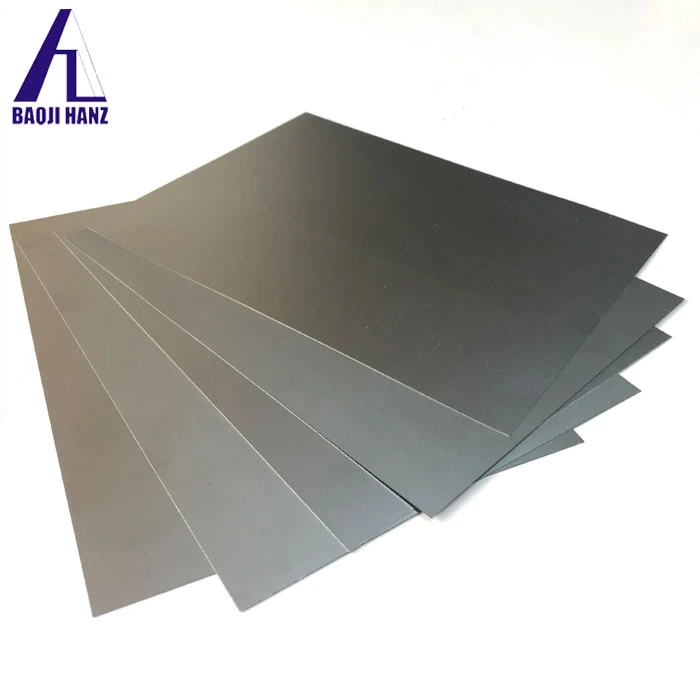
The adoption of nitinol sheet 0.3 mm in wearable actuation systems addresses critical challenges in portable device design. This particular thickness provides sufficient structural integrity for generating meaningful actuation forces while remaining thin enough to maintain user comfort during extended wear periods. The superelastic properties inherent in Superelastic Nitinol Sheets enable these materials to undergo substantial deformation without permanent damage, a crucial requirement for devices that must withstand the dynamic movements of the human body. Furthermore, the biocompatibility and corrosion resistance of nitinol make it ideal for applications involving direct or near-direct skin contact, ensuring both safety and longevity in demanding operational environments.
Enhanced Mechanical Performance in Compact Form Factors
Optimal Thickness for Force Generation and Flexibility Balance
The 0.3 mm thickness specification of nitinol sheet represents a carefully engineered compromise between actuation capability and mechanical compliance. At this dimension, the material retains sufficient cross-sectional area to generate meaningful actuation forces while remaining flexible enough to conform to curved body surfaces without creating pressure points or discomfort. Superelastic Nitinol Sheets at this thickness can produce actuation strains of up to eight percent, significantly outperforming conventional spring steel or polymer actuators of comparable dimensions. The superelastic plateau stress, typically around 400-500 MPa for properly processed material, allows designers to predict and control actuation forces with remarkable precision. This predictability is essential in wearable applications where consistent haptic feedback or controlled compression must be delivered across varying environmental conditions. The material's ability to maintain performance characteristics across temperature ranges from -20°C to 100°C ensures reliable operation in diverse climates and usage scenarios, from outdoor rehabilitation exercises to climate-controlled medical facilities.
Superior Fatigue Resistance for Long-Term Wearable Applications
One of the most compelling advantages of nitinol sheet 0.3 mm lies in its exceptional fatigue resistance, a property critical for wearable systems that undergo millions of actuation cycles throughout their operational lifetime. Unlike conventional metal actuators that suffer from work hardening and eventual failure, properly processed Superelastic Nitinol Sheets can endure over ten million loading cycles at strains up to six percent without significant degradation in performance. This extraordinary durability stems from the reversible martensitic phase transformation that underlies nitinol's superelastic behavior, which occurs without the dislocation motion that causes fatigue in traditional metals. For wearable actuation systems integrated into garments or orthotic devices, this translates to years of reliable service without material replacement. The 0.3 mm thickness provides optimal stress distribution during cyclic loading, minimizing stress concentration at edges or attachment points that could otherwise serve as crack initiation sites. Manufacturing standards such as ASTM F2063 and GB 24627 ensure consistent material quality, with careful control of nickel content above 50.4% and titanium content minimum 44% to achieve the desired superelastic properties without compromising fatigue performance.
Lightweight Construction Without Sacrificing Actuation Power
Weight reduction represents a paramount concern in wearable device design, where every gram affects user comfort and adoption rates. Nitinol sheet 0.3 mm offers an exceptional strength-to-weight ratio, with a density of approximately 6.45-6.5 g/cm³ that remains significantly lower than many engineering alloys while delivering superior mechanical performance. A typical actuation element measuring 50mm x 10mm x 0.3mm weighs less than one gram yet can generate sufficient force for meaningful haptic feedback or assistive motion. This lightweight characteristic becomes particularly valuable in multi-actuator arrays, where traditional electromagnetic or pneumatic systems would add prohibitive bulk and weight. The cold-rolled manufacturing technique employed in producing Superelastic Nitinol Sheets ensures uniform thickness tolerance and consistent mechanical properties throughout the material, eliminating performance variations that could compromise actuation precision. The polished surface treatment not only enhances biocompatibility by minimizing surface roughness that could irritate skin but also reduces friction in sliding applications, improving energy efficiency in wearable systems where battery life constitutes a critical design constraint.
Biocompatibility and Safety Advantages for Body-Worn Devices
Non-Toxic Material Composition for Extended Skin Contact
The biocompatibility of nitinol sheet 0.3 mm represents one of its most significant advantages for wearable actuation systems, particularly in medical and healthcare applications. The nickel-titanium alloy composition, with nickel content above 50.4%, undergoes passivation to form a protective titanium oxide layer that prevents nickel ion leaching, addressing concerns about nickel sensitivity in prolonged skin contact scenarios. This oxide layer, typically 3-5 nanometers thick, provides a stable interface that has demonstrated excellent biocompatibility in both in-vitro and in-vivo studies. For wearable devices intended for rehabilitation, assistive mobility, or therapeutic compression, this characteristic ensures patient safety during extended wear periods that may span months or years. Superelastic Nitinol Sheets manufactured by reputable suppliers like Baoji Hanz Metal Material Co., Ltd. undergo rigorous quality control testing to verify compliance with international biocompatibility standards, including ISO 10993 series evaluations for cytotoxicity, sensitization, and irritation. The material's resistance to protein adsorption and bacterial adhesion further enhances its suitability for healthcare applications, reducing infection risks in devices that may be worn continuously or in hygiene-challenging environments.
Corrosion Resistance in Physiological and Environmental Conditions
The exceptional corrosion resistance of nitinol sheet 0.3 mm ensures long-term reliability and safety in wearable actuation systems exposed to perspiration, humidity, and other environmental challenges. The titanium oxide passive layer that naturally forms on Superelastic Nitinol Sheets provides outstanding protection against chloride-containing solutions, including human sweat with salt concentrations up to 100 millimoles per liter. This resistance prevents the degradation that would compromise both material performance and biocompatibility, eliminating concerns about corrosion products contacting skin or entering the body. Laboratory testing demonstrates that properly processed nitinol exhibits corrosion rates below 0.1 micrometers per year in simulated physiological conditions, orders of magnitude lower than stainless steel or cobalt-chromium alloys. For wearable devices incorporating electrical components alongside mechanical actuators, the corrosion resistance of nitinol sheet 0.3 mm prevents galvanic coupling issues that could accelerate material degradation. The polished surface finish specified for medical-grade material further enhances corrosion resistance by minimizing surface defects where corrosive attack might initiate, while simultaneously reducing particle generation that could trigger inflammatory responses in sensitive applications.
Hypoallergenic Properties Through Surface Treatment and Processing
Advanced surface treatment protocols transform nitinol sheet 0.3 mm into a truly hypoallergenic material suitable for even the most sensitive users of wearable actuation systems. While nickel allergy affects approximately ten to twenty percent of the population, the controlled oxidation and passivation processes applied to Superelastic Nitinol Sheets create a barrier that effectively prevents allergenic nickel ion release. Electropolishing techniques can further enhance this protective layer, reducing surface nickel concentration to below detectable limits while maintaining the superelastic properties essential for actuation functionality. For manufacturers developing wearable devices intended for broad consumer markets, this hypoallergenic characteristic expands potential user populations without requiring alternative materials that might compromise performance. The stability of the passive layer remains robust across the pH range encountered in physiological environments, from slightly acidic sweat (pH 4.5-7.0) to neutral interstitial fluids. Testing protocols developed by leading research institutions confirm that properly processed nitinol sheet 0.3 mm releases nickel ions at rates three to four orders of magnitude below threshold levels for sensitization, even under accelerated aging conditions that simulate years of continuous wear in compressed timeframes.
Integration Advantages for Smart Textile and Robotic Applications
Seamless Incorporation into Flexible Circuit and Fabric Architectures
The dimensional characteristics of nitinol sheet 0.3 mm facilitate unprecedented integration opportunities with emerging smart textile platforms and flexible electronic systems. This thickness aligns perfectly with the substrate requirements for textile-integrated actuation, allowing designers to embed Superelastic Nitinol Sheets within fabric layers without creating obtrusive rigid sections that would compromise garment drapeability or user comfort. Advanced manufacturing techniques enable laser cutting of intricate geometries from nitinol sheet 0.3 mm, creating actuator arrays with feature resolutions below 100 micrometers that can be patterned to follow textile weave structures or ergonomic contours. The material's compatibility with textile adhesives and encapsulation polymers ensures durable mechanical and electrical connections that withstand repeated laundering cycles and mechanical flexing. For soft robotic applications, the thin profile enables stacking of multiple nitinol layers to create compound actuators with programmable force-displacement characteristics, expanding design possibilities beyond single-sheet configurations. The electrical resistivity of nitinol, typically 80-100 microohm-centimeters, supports resistive heating activation methods where electrical current passing through the material triggers thermal actuation, eliminating the need for separate heating elements and dramatically simplifying system architecture in thermally-activated shape memory applications.
Customizable Actuation Responses Through Heat Treatment and Patterning
The versatility of nitinol sheet 0.3 mm extends beyond its as-manufactured properties, with heat treatment protocols enabling precise customization of transformation temperatures and actuation characteristics for specific wearable applications. Through controlled annealing processes at temperatures between 400°C and 550°C, manufacturers can program the austenite finish temperature (Af) within the range of -20°C to 100°C, tailoring material response to match application requirements from body-temperature activation to external heating requirements. This programmability proves invaluable in wearable actuation systems where different zones may require distinct activation profiles, such as exoskeletons with varying assistance levels across joint groups. Superelastic Nitinol Sheets from quality-certified suppliers like Baoji Hanz Metal Material Co., Ltd. maintain consistent composition and processing history, ensuring reproducible heat treatment results across production batches. Selective heat treatment techniques, including laser or localized resistance heating, enable creation of functionally graded actuators where different regions of a single nitinol sheet 0.3 mm piece exhibit unique transformation characteristics. This capability supports sophisticated control strategies in wearable robotics, where graduated assistance or variable stiffness across device segments optimizes biomechanical efficiency and user experience.
Miniaturization Potential for Next-Generation Wearable Devices
The thin profile of nitinol sheet 0.3 mm unlocks miniaturization pathways critical for next-generation wearable actuation systems where device visibility and obtrusiveness must be minimized. Micro-fabrication techniques developed for medical device manufacturing, including photochemical etching and micro-electrical discharge machining, enable creation of actuator elements with overall dimensions below five millimeters while retaining functional actuation stroke and force generation. These microscale actuators fabricated from Superelastic Nitinol Sheets can be distributed throughout garments or orthotic devices to create spatially distributed actuation fields, delivering localized haptic feedback or compression therapy with unprecedented resolution. The consistent thickness tolerance achievable through cold rolling processes, typically within ±0.02mm for precision-grade material, ensures predictable performance even in miniaturized geometries where dimensional variations would otherwise create unacceptable performance scatter. For emerging applications in augmented reality interfaces, gesture recognition systems, and biomechanical monitoring devices, the ability to integrate thin, lightweight nitinol actuators without compromising device aesthetics or wearability represents a transformative enabling technology. The minimum order quantity of just one piece from suppliers like Baoji Hanz Metal Material Co., Ltd. supports rapid prototyping and iterative design processes essential for innovation in this fast-evolving field, allowing researchers and developers to explore novel actuation concepts without prohibitive material procurement barriers.
Conclusion
The strategic advantages of nitinol sheet 0.3 mm for wearable actuation systems encompass mechanical performance, biocompatibility, and integration versatility that collectively position this material as an enabling technology for next-generation body-worn devices. The optimal thickness balances actuation capability with user comfort while the superelastic properties and exceptional fatigue resistance ensure reliable long-term operation. Combined with hypoallergenic characteristics and seamless integration potential into smart textiles, nitinol sheet 0.3 mm represents an ideal solution for designers pushing the boundaries of wearable technology innovation.
Partner with a trusted China nitinol sheet 0.3 mm manufacturer for your next breakthrough project. As a leading China nitinol sheet 0.3 mm supplier and China nitinol sheet 0.3 mm factory, Baoji Hanz Metal Material Co., Ltd. brings seven years of specialized expertise in Nitinol Shape Memory Alloy, Superelastic Nitinol Alloy, and Nickel Titanium Alloy to every collaboration. Our direct supply model delivers significant cost advantages while maintaining the highest quality standards certified by ISO9001, SGS, and TUV. With substantial inventory of standard sizes, we guarantee fast delivery to keep your development timelines on track. Whether you need custom dimensions, specific surface treatments, or China nitinol sheet 0.3 mm wholesale quantities, our OEM services are designed to transform your vision into reality. Contact our technical team today at baojihanz-niti@hanztech.cn to discuss how our Superelastic Nitinol Sheets can elevate your wearable actuation system performance and accelerate your path to market success.
References
1. Morgan, N.B. "Medical Shape Memory Alloy Applications—The Market and Its Products." Materials Science and Engineering: A, vol. 378, no. 1-2, 2004, pp. 16-23.
2. Duerig, T., Pelton, A., and Stöckel, D. "An Overview of Nitinol Medical Applications." Materials Science and Engineering: A, vol. 273-275, 1999, pp. 149-160.
3. Elahinia, M.H., Hashemi, M., Tabesh, M., and Bhaduri, S.B. "Manufacturing and Processing of NiTi Implants: A Review." Progress in Materials Science, vol. 57, no. 5, 2012, pp. 911-946.
4. Mohd Jani, J., Leary, M., Subic, A., and Gibson, M.A. "A Review of Shape Memory Alloy Research, Applications and Opportunities." Materials & Design, vol. 56, 2014, pp. 1078-1113.
5. Lecce, L. and Concilio, A. "Shape Memory Alloy Engineering: For Aerospace, Structural and Biomedical Applications." Butterworth-Heinemann, 2015, pp. 412-445.