Comparing the Pros and Cons of Nitinol Tube and Stainless Steel Tubes
2026-07-15 19:51:12
When buying tubing for medical devices or industrial uses, the choice of material affects not only how well the product works, but also how reliable it will be in the long run and how well it meets legal requirements. Seamless nitinol tube and stainless steel tube are two very different ways to solve technical problems. Nitinol is an almost perfectly balanced nickel-titanium metal that has superelasticity and shape memory properties. It can be stretched up to 8% without permanently changing its shape. Most stainless steel tubes are made from the 316L grade, which has high tensile strength and protection to rust at a lower cost. To help technical buyers and engineers make smart sourcing choices, this guide talks about the important differences between these materials in terms of performance, making, and buying.
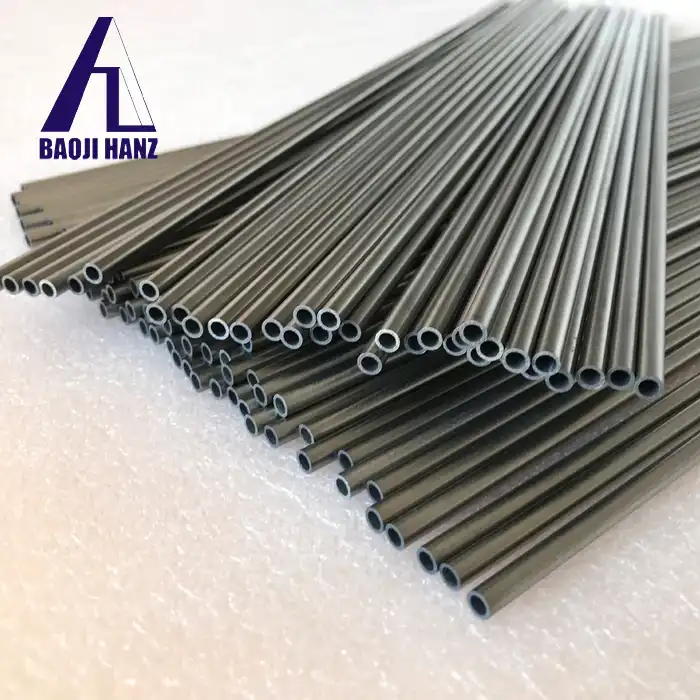
In both the medical and industry fields, picking the right tubing material is very important for performance, dependability, and compliance, which determine the success of the product. Material choice directly impacts gadget functionality, patient safety, governmental approval timelines, and total cost of ownership. This guide focuses on seamless nitinol tubes and stainless steel tubes, which are both commonly used materials with their own benefits. We want to help B2B buyers, engineers, and procurement managers make smart decisions about which products to buy based on their unique features and how they can be used. This way, they can get the best value for their money. When purchasing teams know the pros and cons of both superelastic behavior and rigid mechanical strength, they can make sure that material standards are in line with project needs, budgets, and source capabilities.
Understanding Seamless Nitinol Tubes and Stainless Steel Tubes
What Defines a Seamless Nitinol Tube?
Seamless nitinol tubes are made from nickel-titanium alloys that have about 55–56% nickel by weight. They are made by vacuum induction melting and hot extrusion or rotary cutting. The seamless construction gets rid of longitudinal weld gaps, which is important for high-cycle fatigue uses because it ensures uniform wall thickness and mechanical isotropy. The exact heat treatment methods that are used determine the austenite finish temperature (Af), which in turn determines whether the tube is superelastic at room temperature or has a shape memory effect that is activated by heat. This thermal setting makes it possible for customized mechanical reactions that can't be achieved with regular metal tubes.
Stainless Steel Tube Manufacturing and Grades
Stainless steel tubes, which are often made from types like 316L, are very strong and don't rust. They can be made by either welding or seamless ways. Seamless stainless steel tubes are made by extruding or pilgering the metal. Welded tubes are made from strip stock and then heated to make the joint zone uniform. Molybdenum in Grade 316L makes it more resistant to pitting in chloride environments. This makes it a good choice for medical tools and equipment used in chemical processes. The limits for wall thickness, surface finish quality, and dimensional stability are all very different between seamless and welded production methods, which can affect how well they work in precision applications.
Key Manufacturing Differences Affecting Performance
When purchasing workers understand the basics of these materials and how they are made, like the difference between seamless and soldered tubing, they can judge how durable, consistent, and up to code the products are for important uses. Seamless nitinol tubes go through complicated thermomechanical processing that needs special tools and quality control procedures. On the other hand, making stainless steel tubes is easier because the machinery for making them is well-established and can handle large amounts of production. Electropolishing and other surface processes get rid of tiny cracks and make regular layers of titanium oxide on Nitinol, which makes it much more resistant to corrosion and lasts longer when it wears out. Passivation or bright annealing are common ways to improve the rust resistance of stainless steel tubes. However, unlike heat treatment for Nitinol, these methods do not change the material's crystalline structure in a fundamental way.
Comparative Analysis of Performance and Properties
Superelasticity Versus Rigid Mechanical Strength
Seamless nitinol tube's superelasticity vs. stainless steel's stiffness has a big effect on how flexible and long-lasting an application is. Nitinol tubes show plateau stress behavior, rebounding from strains of up to 8% when the load is taken away. Stainless steel, on the other hand, permanently deforms beyond its elastic limit of about 0.2% strain. Nitinol tubes can go through winding paths without kinking because it is superelastic, while stainless steel stays the same size even when it is compressed. The upper peak stress of Nitinol, which can be anywhere from 400 to 600 MPa depending on the heat treatment, determines the force needed to start the stress-induced martensitic change. This has a direct effect on how easily the device can be pushed and how it feels to touch in catheter-based systems.
Corrosion Resistance in Demanding Environments
Corrosion resistance varies a lot. Nitinol works best in tough and biocompatible settings, while stainless steel can handle a wide range of industrial pressures. In physiologically salty conditions, Nitinol forms a stable, self-healing titanium oxide layer that is more resistant to pitting and crevice corrosion than 316L stainless steel in accelerated electrochemical tests. In most industrial fluid handling situations, stainless steel is resistant to rust well enough, but chloride contact can cause a limited attack. When choosing a material, it's important to think about the specific corrosive media, working temperature, and service life that is appropriate. These factors decide whether the higher cost of Nitinol is worth the corrosion benefits it offers.
Shape Memory Effect and Thermal Response
Nitinol's special shape memory effect also has an effect on how well it handles heat and on new design ideas. Tubes that have an austenite finish temperature higher than room temperature can be bent at low temperatures and set to return to fixed shapes when heated through the transformation range. This shape repair that is caused by heat makes it possible to build actuators that would not be possible with normal materials. However, the device needs to be carefully controlled when it is in use to avoid overheating. Stainless steel expands and contracts predictably at high temperatures without changing phases. This makes thermal design easier but takes away the ability to remember its shape. Cost analysis looks into the prices of raw materials, the costs of processing them, and factors that affect procurement, like wait time and minimum order amounts. This gives you a full picture of how to balance performance benefits with budget limits.
Cost Considerations and Economic Trade-offs
Because of the complicated vacuum heating requirements and the price of nickel as a product, raw Nitinol material costs about 10 to 15 times more per kilogram than 316L stainless steel. Processing costs make this gap even bigger because making Nitinol tubes needs special heat treatment ovens, careful atmosphere control, and a lot of quality testing rules. Standardized manufacturing methods and established supply lines help stainless steel, which cuts down on both wait times and minimum order quantities. Instead of just looking at the price of the material per unit, procurement managers should also look at the total cost of ownership, which includes material waste during cutting, the need for extra operations, and the cost of redesigning the product. Through better scheduling of production and control of supplies, long-term supplier ties and promises to buy a lot of Nitinol can cut costs by 15 to 20 percent.
Application Suitability and Industry Use Cases
Medical Device Applications Requiring Superelasticity
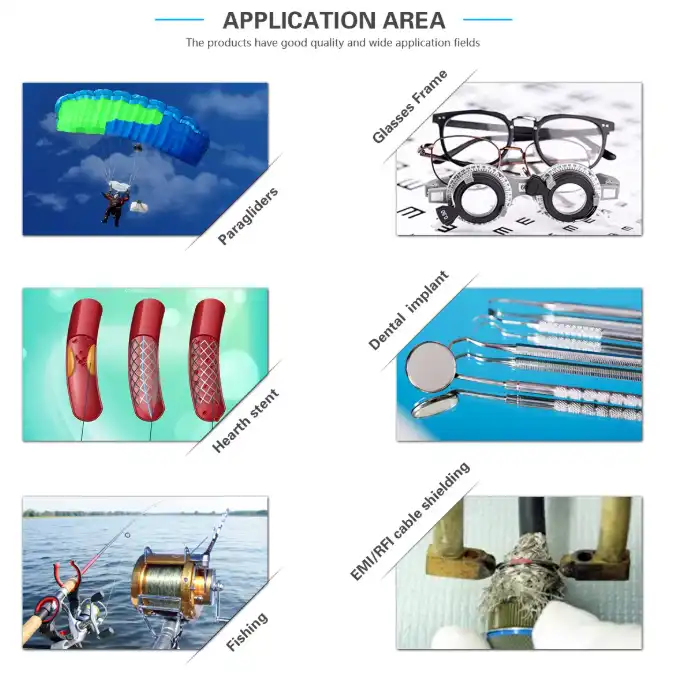
Seamless nitinol tube are used in stents and guidewires because they are biocompatible and can remember their shape, which is important for patient safety and getting approved by regulators. The superelastic trait lets designers make self-expanding stents that fit the shape of the vessel, and kink-resistant guidewire shafts can move through complicated vascular tissue without permanently changing shape. Biocompatibility testing according to ISO 10993 standards regularly shows that Nitinol is good for long-term insertion. This is because the stable titanium oxide layer on the surface stops nickel ions from leaking out. Manufacturers of medical devices have to list the change temperature ranges, radial force features, and dimensional tolerances that must meet the needs of different body parts and how the devices are deployed.
Industrial Applications Leveraging Stainless Steel Reliability
Stainless steel tubes are used in more industrial areas because they are reliable in dealing with structural, fluid, and chemical problems. For moving corrosive fluids, chemical processing systems use 316L tubes. Pneumatic and hydraulic systems, on the other hand, depend on stainless steel's reliable mechanical qualities and connections that don't leak. In high-pressure situations, stainless steel's yield strength of more than 200 MPa is better than Nitinol's lower resistance to lasting deformation under compression. Vehicle fuel systems, food processing equipment, and building structures made of stainless steel show how versatile it is in a range of temperatures and environments where shape memory doesn't add any value.
OEM Case Studies Demonstrating Material Selection Logic
This part has important OEM case studies that show the operational and supply chain benefits of both materials. They show how choosing the right material can help with meeting functional standards and compliance rules in a certain sector. A company that makes cardiovascular devices switched from using stainless steel to superelastic Nitinol tubes for catheter shafts. This made the devices 40% thinner while keeping the same column strength. The important change meant that the provider had to be qualified to meet ASTM F2063 standards and the electropolishing process had to be tested. This added six months to the development process but got rid of kinking-related problems in the field. On the other hand, an industrial robots company kept using stainless steel tubing for pneumatic actuator housings after testing Nitinol and deciding that the application's static loading and operation at room temperature did not support the higher material cost or the need for special machining.
Procurement Insights for B2B Buyers
Defining Technical Requirements and Specifications
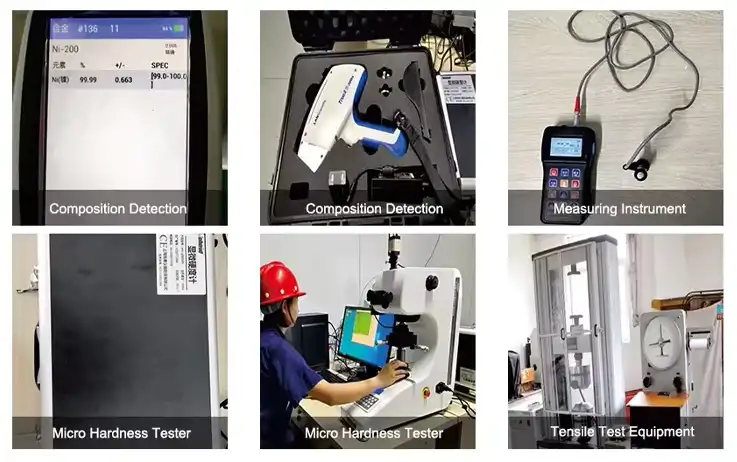
To buy seamless nitinol tube effectively, you need to know exactly what the project needs and find a balance between the qualities of the materials, price, and the reliability of the suppliers. For precision medical uses, the procurement specifications must clearly state the outer diameter, wall thickness tolerances (usually ±0.0003"), transformation temperature ranges for Nitinol (Af temperature ±5°C), and surface finish requirements (Ra values below 0.2 μm for electropolished Nitinol). For superelastic Nitinol, the mechanical property standards should list the upper plateau stress. For stainless steel, they should list the yield strength. They should also include acceptance criteria for fatigue tests and corrosion resistance proof. Making these factors clear stops expensive redesign cycles and quality disagreements during the start-up of production.
Supplier Qualification and Certification Requirements
This part tells buyers how to find certified, OEM-authorized makers, compare the benefits of different locations, and ask the right questions about minimum order quantities, wait times, and customization. Nitinol tube providers with a good reputation keep their ISO 9001 quality management certification up to date and provide material test results that show the chemical composition according to ASTM F2063 standards and the temperature at which the tube changes. Suppliers of stainless steel should show that they follow ASTM A269 or A213 and be able to fully trace their products back to mill test certificates. As part of doing your research, you should check the controls for the heat treatment process, the ability to do dimensional inspections using optical measurement tools with a precision of 1 micron, and the electropolishing or passivation methods. Standard Nitinol tube sizes usually have minimum order amounts of 50 to 200 pieces. Custom specifications, on the other hand, may need pledges of 500 pieces or more to support tooling investments.
Cost Management and Logistics Considerations
Cost management strategies that work, transportation issues to think about, and warranty rules are all meant to shorten the buying process and build trusting relationships that ensure long-term supply continuity. When buyers commit to buying more than 5,000 pieces of Nitinol tubes each year, volume pricing tiers can lower the cost of each tube by 20 to 30 percent. However, buyers must weigh the price benefits against the costs of keeping supplies on hand. Standard stainless steel tubes take between 4 and 6 weeks to get to you, but Nitinol tubes that have been heat treated to your specifications take 10 to 14 weeks from the time you place your order until you get them. When sending high-value Nitinol materials internationally, they need to be insured and packed safely, which adds 3 to 5 percent to the landing cost. Dimensional conformance, mechanical property proof, and surface quality flaws should all be covered by the warranty. There should also be clear instructions for how to get rid of and replace nonconforming materials.
Conclusion
A full analysis of seamless nitinol tube and stainless steel tubes shows their pros and cons in terms of how well they work, how much they cost, and how well they fit the purpose. Nitinol has unique superelasticity and shape memory properties that make it useful in situations where kink resistance, biocompatibility, or thermally activated shape recovery give real-world performance benefits. Nickel-titanium alloys have some benefits, but stainless steel is more reliable and costs less. It is used in industrial, structural, and fluid handling uses where rigid mechanical properties and established supply lines are more important. Based on the needs of the project, procurement managers and experts are told to put either technical excellence or cost-effectiveness first. Focusing on relationships with trustworthy providers guarantees quality, the ability to make changes, and service after the sale, which leads to long-term success and lowers sourcing risks.
FAQ
Why does seamless construction matter for nitinol medical tubes?
Nitinol tubes that don't have any cracks get rid of the lengthwise welds that cause stress concentration spots and mechanical anisotropy. Welded tubes don't last as long and don't change shape consistently near the heat-affected zone, so they can't be used for high-cycle bending uses like guidewires. Seamless production through rotor cutting or extrusion makes sure that the wall thickness and mechanical qualities are the same all the way around the tube, which is important for following regulations and making sure the device works well.
How does stainless steel compare to nitinol for corrosion resistance?
Compared to 316L stainless steel, Nitinol's titanium oxide top layer is better at resisting pitting in physiological conditions that contain salt. Electrochemical tests show that Nitinol breaks down at more than 800 mV compared to a full calomel electrode, while 316L usually breaks down below 400 mV. However, stainless steel has a much lower cost and still has enough corrosion resistance for most industrial fluid handling uses. This makes it the most cost-effective choice when extreme corrosion resistance is not needed.
What drives the cost difference between nitinol and stainless steel tubes?
Nitinol costs 10–15 times more than stainless steel because it has to be made in a special way and has to follow strict testing rules. Nitinol needs to be melted in a vacuum using induction, heated precisely in controlled atmospheres, and its transformation temperature must be checked many times. Stainless steel benefits from a well-established industrial system and economies of scale that come from making a lot of it. When it comes to small-diameter precision tubes, where processing complexity is higher than material costs, the difference in prices is smaller.
Partner with HANZ for High-Performance Nitinol and Stainless Steel Tubing Solutions
Baoji Hanz Metal Material Co., Ltd. makes precision seamless nitinol tubes, nickel-titanium alloy sheets, rods, and OEM parts. They have been doing this for seven years and are very good at handling shape memory and superelastic alloys. Our ISO 9001, SGS, and TUV-certified factories follow strict quality control procedures to make sure that medical-grade Nitinol meets ASTM F2063 standards and stainless steel tubing meets ASTM A269 standards. We offer lower prices through direct supply, fast shipping from a large collection of standard sizes, and full customization for custom metal compositions, size requirements, and surface treatments. Get in touch with our technical team at baojihanz-niti@hanztech.cn to talk about your project needs, ask for samples of the material, or get a detailed quote from a reliable seamless nitinol tube manufacturer that will deliver precise materials that meet your strictest engineering requirements.
References
T. Duerig, A. Pelton, and D. Stöckel. (1999). A Look at the Medical Uses of Nitinol. You can find it in Materials Science and Engineering: A, 273-275, 149–160.
The International ASTM. (2018). ASTM F2063-18 is a standard for wrought nickel-titanium shape memory alloys that are used in medical devices and surgical implants. ASTM International is based in West Conshohocken, Pennsylvania.
Morgan and N. B. (2004). Medical Shape Memory Alloy Uses: The Market and Its Goods. Wed, 378(1-2), 16–23. Materials Science and Engineering: A.
It's S. Shabalovskaya, J. Anderegg, and J. Van Humbeeck. (2008). A close study of Nitinol surfaces and how they can be changed for medical uses. 4, no. 3, pp. 447–467 in Acta Biomaterialia.
ASM Worldwide. (2015). Materials for Special Purposes and Nonferrous Alloys: Properties and Selection (ASM Handbook, Volume 2). ASM International is based in Materials Park, OH.
Shimazaki, S., and Otsuka, K. (1989). Making Shape Memory Alloys Better. 39, no. 5, ISIJ International, pp. 553-577.