Custom Nitinol Flat Wire: Manufacturing Options and Specifications
2026-07-07 00:00:00
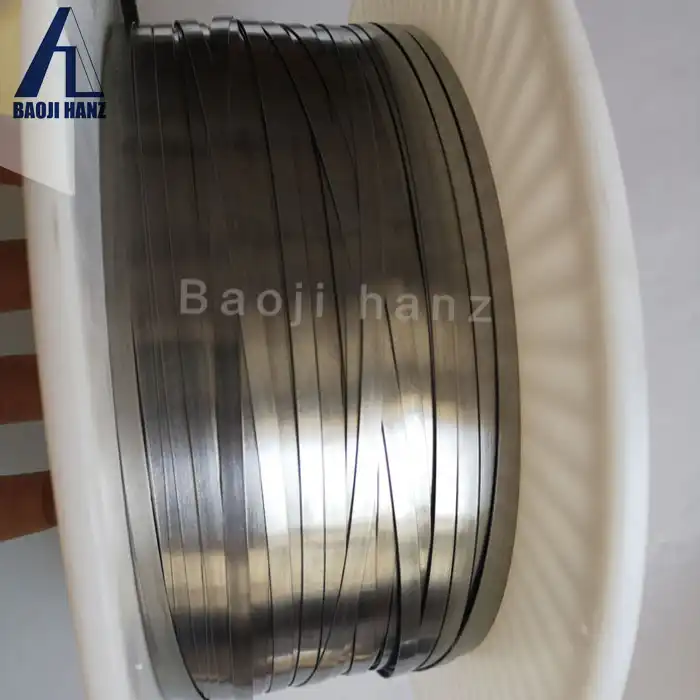
Understanding how high tensile nitinol flat wire can be made and its specs is very important when looking for new materials for high-performance uses. This nickel-titanium alloy comes in the form of a flat wire. It has great tensile strength, superelasticity, and shape memory, which makes it essential for medical devices, aircraft parts, and precision engineering. The flat shape has special mechanical benefits over round wire. For example, it has thinner walls for reinforcing catheters and better gluing surfaces for orthodontic uses. This is what we do at Baoji Hanz Metal Material Co., Ltd.: we make nitinol flat wire to exact measurements and performance standards. This way, we can guarantee consistent quality for tough industrial uses.
Understanding Nitinol Shape Memory Alloys: Foundation of High-Performance Materials
Nitinol shape memory alloys are the building blocks of high-performance materials. Nitinol and other nickel-titanium alloys are a big step forward in the field of useful materials engineering. Nickel and titanium have almost the same number of atoms, which makes them behave in two different ways: they have a shape memory effect and they are super springy. When temperature or stress changes, the crystal structures of austenite and martensite can change back and forth, giving the metal these traits.
Composition and Phase Transformation
The amount of nickel to titanium atoms directly affects the temperatures at which they change and how they behave mechanically. Most formulas have between 50.5% and 51.0% nickel by atomic weight, and precise control down to 0.1% can change the austenite finish temperature (Af) by about 10°C. When the metal is bent in its low-temperature martensitic phase, it goes back to its original shape when heated above Af. This is called the shape memory effect. When the temperature is above Af, superelasticity happens. At these temperatures, the material can stretch up to 8–10% and then fully rebound when it is unloaded.
Mechanical Properties of Flat Wire Configuration
When compared to round wire, flat wire shape changes how stress is distributed in a basic way. The rectangular cross-section gives it direction flexibility—it bends more easily along the minor axis (thickness) while staying stiff across the major axis (wide). This uneven behavior is helpful in situations where controlled diversion paths are needed. Tensile strength is usually between 800 and 1500 MPa, but it depends on how it was cold worked and heated. The flat shape allows for higher aspect ratios, which increase the load-bearing capacity per unit volume.
Material clarity has a huge effect on how well it resists wear. ASTM F2063 standards set strict limits on carbon (<0.050%), oxygen (<0.050%), and metallic inclusions to keep parts from breaking too soon when they are loaded and unloaded many times, which happens a lot in medical implants and aircraft motors.
Manufacturing Processes for Custom Nitinol Flat Wire
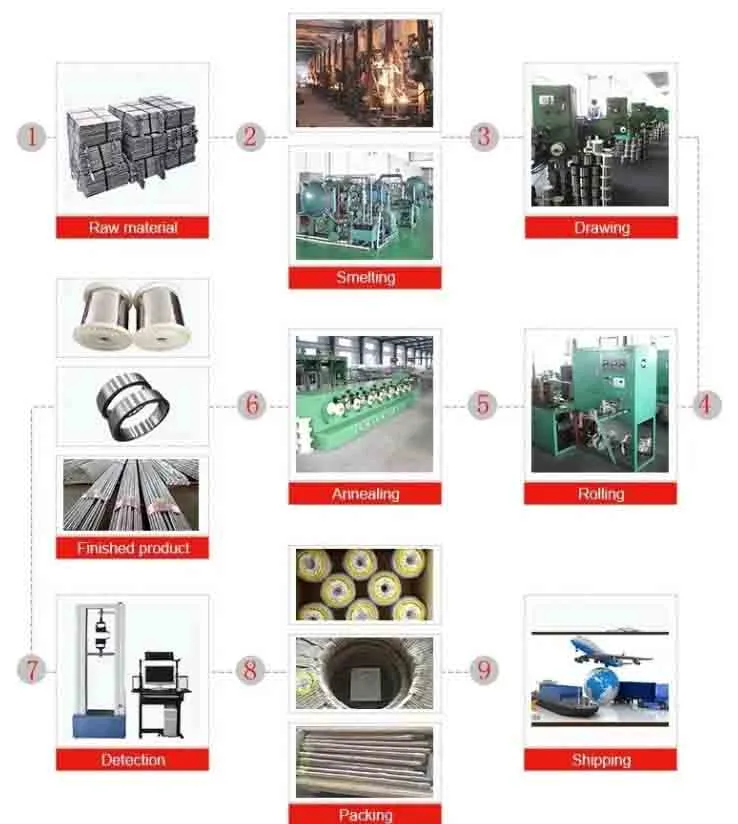
To make nitinol flat wire that meets strict technical requirements, you need combined manufacturing skills that cover everything from preparing the alloy to finishing it off.
Primary Fabrication Techniques
Wire drawing starts with ingots that have been melted by vacuum induction and gradually reduces their width through carbide dies while keeping the makeup constant. Precision rolling mills with temperature-controlled rollers make the change from round to flat shape. When you roll an alloy, the right factors keep the alloy's microstructure intact and allow thickness tolerances of ±0.005 mm for lengths up to 10 mm.
Dislocation density of high tensile nitinol flat wire is increased during cold working, which makes the material stronger but lowers the change temperatures. Planned annealing processes at 500–700°C fix the mechanical qualities and make the material more flexible. The final hardness and elastic stiffness are based on the total reduction ratio, which is usually between 30 and 60%.
Heat Treatment and Shape Setting
Nitinol flat wire's useful properties are set by controlled thermal processes. For shape setting, the material is held in the shape that is wanted and heated to 480–520°C for times that are determined by the cross-sectional area. The austenite phase structure is imprinted by this process, setting the "memory" form that the material returns to.
Transformation temperatures and peak stresses are changed by aging therapy. Using certain thermal patterns to help Ni4Ti3 particles form changes Af by 20 to 50°C and reduces the transformation hysteresis, which makes it possible for tighter functional limits. At our factory, we keep atmosphere-controlled ovens that are constant within ±3°C to make sure that each batch is the same.
Surface Finishing Options
Biocompatibility, corrosion protection, and fatigue life are all directly affected by the state of the surface. Three main styles are used for different things:
- Oxide condition keeps the black scale from the heat treatment, which makes it easier to work with but doesn't guard against corrosion very well. This finish works well for parts in the working process where other steps will be done later.
- Pickled surfaces result from chemical etching in hydrofluoric and nitric acid solutions, removing oxide layers to show a matte silver look on objects that have been pickled. The process gets rid of surface pollution and keeps the accuracy of the measurements to within 0.002 mm.
- Electropolishing removes material through electrochemistry, leaving surfaces that are as smooth as a mirror (Ra <0.1 μm). This luxury finish makes a solid, nickel-free titanium oxide layer that is necessary for implantable devices. This makes the finish more resistant to corrosion and biocompatibility.
Laser cutting makes it possible to make complicated shapes with better edge quality than mechanical slicing. This means that microcracking and work-hardening don't happen, which is bad for fatigue performance.
Material Specifications and Selection Criteria
To pick the right nitinol flat wire, you have to fit the material's properties to the needs of the application in a number of ways.
Dimensional Specifications
From 0.05 mm to 3.0 mm thick and from 0.5 mm to 15 mm wide, flat wires come in a range of sizes. The aspect ratio (width/thickness) affects how flexible and stress-spread something is; bigger ratios give more twisting compliance across the width plane. Edge shape choices include naturally round edges that protect tissue in medical settings versus sharp edges for certain mechanical joining needs.
Bending consistency is based on how regular the thickness is across the width. Our production controls make sure that the thickness changes by only ±0.003 mm across widths of up to 6 mm. This makes sure that the mechanical behavior of assemblies with multiple wire parts is reliable.
Transformation Temperature Selection
Transformation temperatures of high tensile nitinol flat wire are based on the surroundings of the application. For superelastic uses that work at body temperature (37°C), Af needs to be between 5°C and 25°C. This gives a safety buffer that makes sure the austenite phase stays stable. Shape memory apps use higher Af temperatures (40–90°C), which start healing when heated from the outside or when the body's temperature changes.
Differential scanning calorimetry (DSC) tests make sure that all output batches have the right change temperatures. Conformity checks for our quality standards include checking the Af, As, Mf, and Ms temperatures to within ±2°C of what they should be.
Mechanical Property Requirements
You can measure upper plateau stress (UPS), lower plateau stress (LPS), and ultimate tensile strength (UTS) with tensile tests. UPS for superelastic wire is between 400 and 600 MPa, and its recovered strain is between 6 and 8 percent. The useful superelastic stroke is shown by the length of the plateau, which is the range of stresses over which change takes place.
Service life is based on how well something resists fatigue under alternate pressure. Nitinol flat wire that has been properly treated and finished has fatigue limits that are higher than 10^7 cycles at a strain amplitude of 2 to 3 percent. This makes it better than stainless steel and cobalt-chromium alloys in high-cycle uses.
Standards Compliance
ASTM F2063 sets the standards for medical-grade nitinol's makeup, mechanical properties, and transformation temperatures. European standards that go with ISO 5832-11 are available. For nitinol metals used in aerospace, AMS 2631 is the standard to follow. Our production can be fully tracked because each lot comes with a mill certificate that lists the chemicals used, the results of any mechanical tests, and the settings for the heat treatment.
Procurement Considerations for B2B Buyers
To get a steady supply of custom nitinol flat wire, you need to carefully evaluate your suppliers and build partnerships with them.
Supplier Qualification Criteria
While ISO 9001 approval shows that quality management is systematic, nitinol-specific knowledge needs more proof. Check to see if the seller can do vacuum melting, processing in a controlled atmosphere, and use of advanced characterization tools like DSC and DMA. Site checks show the process controls and paperwork systems that make sure production stays the same over orders that last months or years.
Ask for certificates of the materials for high tensile nitinol flat wire that include chemical analysis using inductively coupled plasma (ICP) spectroscopy, mechanical test results with stress-strain curves, and data on the transformation temperature. Suppliers with a good reputation will gladly give you certificates of approval that reference either ASTM or ISO standards.
Minimum Order Quantities and Lead Times
The costs of making nickel-based flat wires in batches are important. Minimum order amounts are usually between 10 and 50 kilograms, but if the specifications are complicated, established sellers with a wide range of products may be able to handle smaller initial orders to test their capabilities. Due to the need to make shape-setting fixtures and improve heat treatment, wait times are extended by two to four weeks for custom sizes or transformation temperatures that are not normal.
Keeping a buffer inventory on hand helps keep the supply chain running smoothly. Framework deals that set prices, quality standards, and delivery times for annual volume promises can often save you 10–20% on costs compared to buying things on the spot.
Sample Testing and Validation
Before agreeing to full sales, pre-production samples let you make sure that everything works together. Ask for models that meet the final requirements for things like size, finish, and temperature changes. Do tension testing, bend testing, and, if needed, wear testing in-house to make sure the product will work in your application.
In order to test shape memory recovery, samples must be deformed while they are in the martensitic state and then reformed after being heated. Full recovery means that the processing went well; partial recovery means that the shape wasn't set correctly or there were compositional differences that need to be fixed by the seller before the production can go forward.
Pricing Structures and Value Assessment
The price of nickel flat wire depends on the cost of the raw materials, how hard the process is, and how many orders are placed. Prices for normal superelastic wire in standard sizes start at $150 to $400 per kilogram. Prices go up by 20 to 40 percent for custom specs, tight tolerances (±0.002 mm), and high-end treatments like electropolishing. Most of the time, volume savings start at 50 kg orders, and as the amount doubles, tiered pricing lowers unit costs by 5–8%.
The material price is only one part of the total cost of ownership. Consistent quality lowers the amount of waste in manufacturing that comes after. Unreliable delivery keeps production from stopping, which costs a lot more than the saves on materials from the lowest-bidder sources. Technical support, which includes handling advice and help with fixing problems, is hard to measure but very important during the growth stages of a product.
Conclusion
In conclusion, controlling the makeup, heating, shaping, and finishing the surface of custom high tensile nitinol flat wire all need to be done with great accuracy. Form memory effect, superelasticity, and high tensile strength all in a flat wire form make it possible to make materials that can't be made with regular metals. To do a good job of procurement, you need to know about the effects of transformation temperature, dimensional tolerances, mechanical property standards, and the supplier's abilities that go beyond basic output and include things like expert help and quality assurance. Working with an experienced nitinol expert is an investment that pays off with consistent material performance, shorter development processes, and a steady supply that can support your most demanding uses over the long run.

FAQ
What distinguishes superelastic from shape memory nitinol flat wire?
The austenite finish temperature (Af) compared to the working temperature is what makes the difference. When the application temperature drops below Af, the superelastic wire stays in the austenite phase and recovers like a spring from distortion up to 8% strain. Shape memory wire has an Af above its working temperature, which lets it bend in the softer martensite phase. It can only return to its original shape when heated above Af. Which material to use depends on whether the purpose needs the material to be stretchy all the time or to move when it gets hot.
How does a flat wire profile differ from a round wire profile in terms of how well it works mechanically?
Because its cross-section is not symmetrical, flat wire can bend in any direction. When you bend along the minor axis (thickness), you get lower surface stresses than with round wire of the same size. This makes the fatigue life 30–50% longer in high-cycle uses. When it comes to connection, the wider shape spreads the load over a larger bonding area. When catheter walls are braided, flat shape lets them be smaller, which makes internal lumens in medical devices bigger. As a trade-off, production is more complicated and needs precise rolling instead of easy drawing.
What kind of quality paperwork should sellers give you when they sell nitinol flat wire?
Full material certifications include a chemical analysis that shows the nickel-titanium ratio and trace elements like carbon, oxygen, and hydrogen; mechanical test results that show plateau stresses and recoverable strain; transformation temperature data from differential scanning calorimetry that shows As, Af, Ms, and Mf values; and dimensional inspection reports that confirm thickness and width tolerances and surface finish specifications. Traceability paperwork that connects materials to heat lot numbers lets you figure out what went wrong if performance problems happen during the manufacturing process.
Is it possible to join or connect nitinol flat wire to other materials?
Nitinol can be joined to other metals, such as stainless steel and titanium alloys, with laser welding. To keep the size of the heat-affected zone as small as possible and stop the formation of brittle intermetallic compounds, the process parameters must be carefully controlled. Mechanical crimping is a different way to join things that doesn't involve heat. Because titanium oxide forms so quickly, traditional bonding is hard to do. Biocompatible epoxies can be used for adhesive gluing to make links between structures that are not very important. Based on your unique assembly needs and performance standards, our expert team can suggest different ways to join things.
Advantages of Partnering with HANZ for Nitinol Flat Wire Supply
Choosing the right high tensile nitinol flat wire materials is only the first step in making a good product. When you work with a provider that has a wide range of skills and a history of trust, you can be sure that the project will be successful from the prototype stage to mass production.
For seven years, we've been making nitinol shape memory alloys, superelastic materials, and nickel-titanium alloys. This gives us the training we need for difficult jobs. This specialized knowledge gives us useful information that we share with customers during the specification creation process. This helps them spot possible processing problems before they cause delays or cost overruns.

When you work directly with a maker, you avoid the markups that distributors add, and you can talk to expert staff who understand your application needs. Our engineering team works together to choose materials and make suggestions based on the need for mechanical properties, the working conditions, and cost goals. This consultative method has helped clients improve designs, which has cut the amount of material used by 15–30% while keeping performance the same.
Quality assurance is used in every part of our business. Our systematic method to production control is backed up by SGS, TUV, and ISO 9001 approvals. For each production batch, thorough testing procedures include analyzing the chemical makeup, checking the mechanical properties, measuring the transformation temperature, and checking the surface quality. We keep records of our process tracking for five years. This way, if there are any questions years after delivery, we can fully find out what happened.
Inventory depth helps you stick to your output plans. We keep standard sizes and popular transformation temperature ranges in stock, which lets us complete orders quickly. For stocked specs, we usually ship within 3–5 business days. This ability to respond quickly is very helpful when demand spikes or problems in the supply chain threaten to stop production.
Custom OEM services are made to fit the needs of each job. Our production is very flexible, so we can meet all of your needs, whether they are non-standard sizes, specific aspect ratios, custom transformation temperatures, or special surface treatments. Dedicated project management makes sure that there is clear contact during development, delivery of prototypes, and the move to mass production.
To talk your high tensile nitinol flat wire needs, please contact our team at baojihanz-niti@hanztech.cn. As one of the biggest companies that makes nitinol flat wire, we give you example materials for approval testing and work closely with your engineering team to make sure that our materials fit in with your products without any problems.
References
Duerig, T., Pelton, A., & Stöckel, D. (2011). "An Overview of Nitinol Medical Applications." Materials Science and Engineering: A, 273-275, 149-160.
Otsuka, K., & Ren, X. (2005). "Physical Metallurgy of Ti-Ni-based Shape Memory Alloys." Progress in Materials Science, 50(5), 511-678.
Morgan, N. B. (2004). "Medical Shape Memory Alloy Applications—The Market and Its Products." Materials Science and Engineering: A, 378(1-2), 16-23.
ASTM International (2018). "ASTM F2063-18: Standard Specification for Wrought Nickel-Titanium Shape Memory Alloys for Medical Devices and Surgical Implants." West Conshohocken, PA: ASTM International.
Pelton, A. R., Schroeder, V., Mitchell, M. R., Gong, X. Y., Barney, M., & Robertson, S. W. (2008). "Fatigue and Durability of Nitinol Stents." Journal of the Mechanical Behavior of Biomedical Materials, 1(2), 153-164.
Wu, M. H., & Schetky, L. M. (2000). "Industrial Applications for Shape Memory Alloys." Proceedings of the International Conference on Shape Memory and Superelastic Technologies, Pacific Grove, California, 171-182.