How a 3mm Nitinol Rod Masters Shape-Memory Behavior?
2025-12-19 20:43:56
Imagine a medical device that bends during minimally invasive surgery but returns to its original shape inside the body, or an industrial actuator that activates precisely at a specific temperature without electrical power. These scenarios are not science fiction but everyday reality with a 3mm nitinol rod. Engineers and medical device designers face a critical challenge: finding materials that combine flexibility, durability, and programmable behavior in confined spaces. A 3mm nitinol rod solves this by mastering shape-memory behavior through reversible phase transformations between austenite and martensite structures. This article reveals how this specific diameter achieves optimal performance in applications ranging from cardiovascular stents to aerospace actuators, and why understanding its shape-memory mechanism is essential for anyone working with advanced materials.
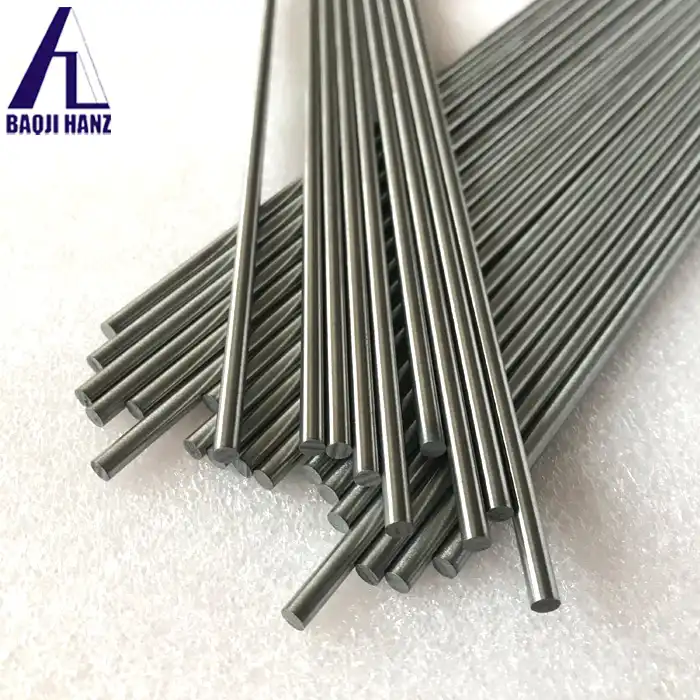
Understanding the Phase Transformation Mechanism in 3mm Nitinol Rods
The remarkable shape-memory behavior of a 3mm nitinol rod originates from its unique crystallographic phase transformation. This nickel-titanium alloy undergoes a reversible structural change between two distinct phases: the high-temperature austenite phase with its cubic crystal structure and the low-temperature martensite phase characterized by a monoclinic or twinned structure. When a 3mm nitinol rod is cooled below its transformation temperature, typically ranging from negative ten degrees Celsius to one hundred degrees Celsius depending on the specific alloy composition, the material transitions into the martensite phase. In this state, the rod becomes highly deformable and can be bent, twisted, or coiled without breaking. The martensite structure accommodates these large deformations through the movement of twin boundaries within the crystal lattice, allowing the material to change shape while maintaining its structural integrity.
The magic happens when heat is applied to the deformed 3mm nitinol rod. As the temperature rises above the austenite finish temperature, the material undergoes a reverse transformation back to its original austenite phase. This transformation is driven by the thermodynamically favorable cubic crystal structure reasserting itself, forcing the material to return to its pre-programmed shape with considerable force. The transformation temperatures can be precisely controlled during manufacturing through careful adjustment of the nickel-to-titanium ratio and specialized heat treatment processes. For medical applications, many 3mm nitinol rods are manufactured with transformation temperatures near body temperature at thirty-seven degrees Celsius, enabling them to deploy automatically when inserted into the human body. Industrial applications may require different transformation temperatures, which can be customized to activate at specific operating conditions ranging from cryogenic environments to elevated industrial temperatures.
Stress-Induced Martensite and Superelastic Properties
Beyond temperature-activated shape memory, a 3mm nitinol rod exhibits superelasticity, a property that distinguishes it from conventional metals. When the rod is in its austenite phase and subjected to mechanical stress, it undergoes a stress-induced martensitic transformation without requiring any temperature change. This phenomenon allows the 3mm nitinol rod to sustain strains up to eight percent or more while maintaining a nearly constant stress plateau during loading. Unlike ordinary metals that would permanently deform under such strain, the nitinol rod returns to its original shape immediately upon removal of the stress. This superelastic behavior occurs because the applied stress lowers the energy barrier for the austenite-to-martensite transformation, allowing the material to accommodate large deformations through phase change rather than plastic deformation.
The superelastic characteristics of a 3mm nitinol rod make it invaluable in applications requiring repeated cyclic loading. Testing has demonstrated that properly processed 3mm nitinol rods can endure millions of deformation cycles without fatigue failure, maintaining their superelastic response throughout their service life. The stress-strain curve of a superelastic 3mm nitinol rod displays distinctive upper and lower plateaus corresponding to the forward and reverse martensitic transformations. The hysteresis between loading and unloading represents the energy dissipated during the phase transformation, which is significantly smaller than the energy absorbed through plastic deformation in conventional metals. This exceptional resilience combined with the ability to recover from large deformations makes the 3mm nitinol rod diameter particularly suitable for applications in confined spaces where traditional materials would fail, such as in catheter-delivered medical devices or compact mechanical actuators.
Critical Manufacturing Parameters for Optimal Shape-Memory Performance
The production of high-performance 3mm nitinol rods demands rigorous control over composition and processing parameters. The alloy composition must be maintained within extremely tight tolerances, as even minor variations in the nickel-to-titanium ratio can significantly alter transformation temperatures and mechanical properties. Standard compositions typically contain fifty to fifty-six percent nickel and forty-four to fifty percent titanium by atomic percentage, conforming to ASTM F2063 specifications for medical-grade material. The manufacturing process begins with vacuum induction melting to achieve the required purity levels, followed by multiple remelting cycles to eliminate impurities and ensure compositional homogeneity. Any contamination with oxygen, carbon, or other elements can degrade the shape-memory effect and reduce the fatigue life of the finished 3mm nitinol rod.
After the initial melting and casting stages, the material undergoes extensive thermomechanical processing to achieve the final three-millimeter diameter. Hot working operations at elevated temperatures break down the cast structure and improve material homogeneity, followed by multiple cold drawing passes to gradually reduce the rod diameter. Each cold drawing step introduces work hardening and affects the microstructure, requiring intermediate annealing treatments to restore ductility and optimize the grain structure. The cold working process is particularly critical for 3mm nitinol rods because it imparts the crystallographic texture that enhances the shape-memory effect. Research has shown that proper alignment of the crystal orientation along the rod length can amplify the shape-memory response by up to twenty percent compared to material with random crystallographic orientation.
Heat Treatment and Shape Setting Procedures
The final heat treatment represents a crucial step in programming the shape-memory behavior of a 3mm nitinol rod. This process involves constraining the rod in the desired final shape and heating it to temperatures typically between four hundred fifty and five hundred fifty degrees Celsius for durations ranging from ten minutes to several hours, depending on the specific application requirements. During this shape-setting treatment, the high-temperature austenite structure becomes associated with the constrained geometry, establishing the "memory" that the material will return to when heated above its transformation temperature. The cooling rate after shape setting also influences the final properties, with rapid quenching in water generally producing optimal superelastic characteristics while slower cooling may enhance the shape-memory effect.
For applications requiring precise activation temperatures, additional aging treatments at lower temperatures can fine-tune the transformation characteristics of the 3mm nitinol rod. These aging processes, conducted at temperatures between three hundred and four hundred degrees Celsius, allow for precipitation of secondary phases that modify the matrix composition and consequently adjust the transformation temperatures. The surface condition of the 3mm nitinol rod also significantly impacts its performance and longevity. Mechanical polishing removes surface irregularities and work-hardened layers that could serve as crack initiation sites during cyclic loading. Chemical pickling or electropolishing treatments can further improve surface quality and enhance corrosion resistance, which is particularly important for medical applications where the nitinol rod will contact bodily fluids. Black oxide surface treatments provide additional protection while maintaining the core shape-memory properties that make the 3mm nitinol rod such a versatile engineering material.
Applications Leveraging 3mm Nitinol Rod Shape-Memory Capabilities
The medical device industry has embraced 3mm nitinol rods for numerous minimally invasive applications where their unique properties provide distinct advantages over traditional materials. Cardiovascular stents represent one of the most successful applications, where the 3mm diameter allows fabrication of self-expanding devices that can be compressed for catheter delivery and then autonomously expand to the proper diameter upon reaching body temperature. The superelastic nature of the 3mm nitinol rod enables these stents to accommodate the natural movements of blood vessels without causing irritation or damage to surrounding tissues. Orthodontic applications utilize 3mm nitinol rods in arch wires that exert continuous, gentle forces on teeth throughout the treatment period. Unlike stainless steel wires that require frequent adjustment, the superelastic properties of the nitinol rod maintain consistent force levels as teeth gradually move into proper alignment, reducing patient discomfort and decreasing the number of required office visits.
Surgical instruments incorporating 3mm nitinol rods can navigate tortuous anatomical pathways while maintaining sufficient stiffness to transmit forces and manipulate tissues at the working end. Endoscopic tools, catheter-based delivery systems, and guidewires all benefit from the flexibility and kink resistance provided by the superelastic 3mm nitinol rod construction. In orthopedic applications, particularly spinal instrumentation, nitinol rods offer a modulus of elasticity closer to natural bone compared to titanium or stainless steel alternatives. This more physiologically appropriate stiffness reduces stress shielding effects that can impede bone healing and fusion. Recent innovations have explored using the shape-memory effect of 3mm nitinol rods for fracture fixation devices that can be inserted in a deformed configuration and then activated by body temperature to apply corrective forces that aid in reducing fractures and maintaining proper alignment during healing.
Industrial and Aerospace Engineering Applications
Beyond the medical field, industrial engineers have discovered numerous applications where the three-millimeter diameter provides an ideal balance of force generation and compact packaging. Thermal actuators utilizing shape-memory 3mm nitinol rods can produce significant actuation forces without requiring electrical motors, gearboxes, or other complex mechanical systems. These actuators find application in automotive ventilation systems, where the nitinol rod extends or contracts in response to temperature changes to open or close air passages without electrical power consumption. Aerospace applications leverage the high strength-to-weight ratio and fatigue resistance of 3mm nitinol rods in mechanisms requiring reliable actuation in extreme environments. Temperature-responsive deployment systems, vibration damping elements, and adaptive aerodynamic surfaces have all incorporated nitinol rod technology to achieve functionality that would be difficult or impossible with conventional materials.
The fishing and sporting goods industries have also adopted 3mm nitinol rods for applications demanding exceptional flexibility and resilience. High-performance fishing rods and specialized sporting equipment benefit from the superelastic properties that allow extreme bending without permanent deformation or breakage. In construction and civil engineering, researchers are exploring the use of 3mm nitinol rods as reinforcement elements in concrete structures, where their superelastic behavior could provide enhanced seismic resistance by dissipating energy during earthquake loading. Active vibration control systems in precision machinery and sensitive instrumentation utilize the unique damping characteristics of nitinol rods to isolate equipment from environmental vibrations. The ability to tailor the mechanical properties through processing and heat treatment allows engineers to optimize the 3mm nitinol rod performance for each specific application, whether prioritizing maximum recoverable strain, activation temperature, or fatigue resistance.
Quality Control and Performance Verification for 3mm Nitinol Rods
Ensuring consistent performance of 3mm nitinol rods requires comprehensive quality control throughout the manufacturing process and rigorous testing of finished products. Compositional analysis using techniques such as inductively coupled plasma mass spectrometry or X-ray fluorescence verifies that the nickel and titanium content falls within specified tolerances. Even deviations of a fraction of a percent in composition can shift transformation temperatures by several degrees, potentially causing device malfunction in temperature-critical applications. Differential scanning calorimetry provides precise measurement of the phase transformation temperatures, including the martensite start, martensite finish, austenite start, and austenite finish temperatures. These measurements ensure that each batch of 3mm nitinol rods will activate at the intended temperature range for the specific application.
Mechanical testing evaluates the superelastic and shape-memory characteristics under controlled conditions. Tensile tests at various temperatures map the stress-strain behavior and verify that the material meets requirements for upper plateau stress, lower plateau stress, and recoverable strain. Cyclic loading tests assess the fatigue resistance by subjecting 3mm nitinol rod specimens to millions of deformation cycles while monitoring for changes in mechanical response or the development of surface cracks. Bend testing specifically evaluates the rod's ability to withstand severe deformation without fracture or permanent set, which is particularly important for medical devices that must navigate curved anatomical pathways. Non-destructive testing methods including ultrasonic inspection and eddy current analysis detect internal defects or surface anomalies that could compromise performance or safety.
Regulatory Compliance and Documentation Standards
For medical applications, 3mm nitinol rods must meet stringent regulatory requirements established by agencies such as the FDA in the United States and corresponding bodies in other jurisdictions. Compliance with ASTM F2063 standard specifications for wrought nickel-titanium shape memory alloys for medical devices represents the baseline requirement for surgical implant applications. This standard specifies acceptable composition ranges, mechanical property requirements, and surface condition criteria that manufacturers must satisfy. Additional biocompatibility testing following ISO ten nine nine three series standards verifies that the material does not produce adverse biological responses when in contact with tissues or bodily fluids. Quality management systems conforming to ISO thirteen four eight five for medical devices ensure that manufacturing processes remain under control and that comprehensive records document the production history of each batch of material.
Certification bodies including SGS and TUV conduct independent audits to verify compliance with quality standards and regulatory requirements. These third-party assessments provide additional assurance to customers that the 3mm nitinol rods meet all applicable specifications and have been manufactured following established quality protocols. Manufacturers maintain detailed documentation including material certificates, heat treatment records, dimensional inspection results, and mechanical test data for each production lot. This traceability allows customers to verify that the material supplied for their application possesses the required characteristics and enables investigation of any field issues that might arise during product use. For industrial applications not subject to medical device regulations, manufacturers may implement similar quality systems to ensure consistent performance and customer satisfaction. The complexity of nitinol processing and the sensitivity of properties to processing variations make rigorous quality control essential regardless of the intended application.
Conclusion
A 3mm nitinol rod masters shape-memory behavior through reversible phase transformations, offering engineers a unique combination of flexibility, strength, and programmable actuation that conventional materials cannot match for medical devices, industrial actuators, and specialized applications across multiple industries.
Cooperate with Baoji Hanz Metal Material Co., Ltd.
As a leading China 3mm nitinol rod manufacturer with seven years of specialized expertise in Nitinol Shape Memory Alloy, Superelastic Nitinol Alloy, and Nickel Titanium Alloy, Baoji Hanz Metal Material Co., Ltd. delivers High Quality 3mm nitinol rod solutions backed by ISO9001, SGS, and TUV certifications. Whether you need a reliable China 3mm nitinol rod supplier for standard sizes from our extensive inventory or a China 3mm nitinol rod factory partner for OEM custom specifications, we provide 3mm nitinol rod for sale with competitive 3mm nitinol rod price advantages through direct manufacturing. Our China 3mm nitinol rod wholesale services include comprehensive pre-sale technical consultation, order tracking with five-year production documentation retention, and dedicated after-sales support to ensure your applications succeed. Contact our professional team at baojihanz-niti@hanztech.cn to discuss your specific requirements and discover how our advanced R&D capabilities, sophisticated processing equipment, and commitment to quality can support your next project with fast delivery and reliable performance.
References
1. Otsuka, K., & Wayman, C.M. "Shape Memory Materials" Cambridge University Press, 1998.
2. Duerig, T.W., Melton, K.N., Stockel, D., & Wayman, C.M. "Engineering Aspects of Shape Memory Alloys" Butterworth-Heinemann, 1990.
3. Pelton, A.R., Schroeder, V., Mitchell, M.R., Gong, X.Y., Barney, M., & Robertson, S.W. "Fatigue and durability of Nitinol stents" Journal of the Mechanical Behavior of Biomedical Materials, 2008.
4. Morgan, N.B. "Medical shape memory alloy applications—the market and its products" Materials Science and Engineering A, 2004.
5. Jani, J.M., Leary, M., Subic, A., & Gibson, M.A. "A review of shape memory alloy research, applications and opportunities" Materials & Design, 2014.