How Corrosion-Resistant Is Superelastic TiNi Rope Really?
2026-01-15 11:22:34
When your critical industrial equipment or medical device fails prematurely due to corrosion, the consequences extend far beyond replacement costs. Superelastic TiNi rope stands out in harsh environments precisely because it forms a protective titanium oxide barrier that shields against aggressive chemical attack. This naturally occurring surface layer makes the material remarkably resistant to corrosion in marine settings, industrial atmospheres, and even within the human body, delivering performance that traditional steel ropes simply cannot match in demanding applications.
Understanding the Corrosion Resistance Mechanisms of Superelastic TiNi Rope
The exceptional corrosion resistance of Superelastic TiNi rope originates from its unique metallurgical composition and surface chemistry. When nickel-titanium alloy encounters oxygen, titanium atoms rapidly migrate to the surface and form a dense titanium dioxide layer, typically measuring between fifty and two hundred nanometers in thickness. This self-passivating oxide film acts as an impenetrable barrier that prevents further oxidation and dramatically reduces nickel ion release into surrounding environments. The formation process occurs naturally even at room temperature, though controlled heat treatments between four hundred and six hundred degrees Celsius significantly enhance the protective layer's thickness and stability. What distinguishes Superelastic TiNi rope from conventional corrosion-resistant materials is the oxide layer's remarkable tenacity and regenerative capacity. Should mechanical abrasion damage the protective film, the underlying material instantly reacts with available oxygen to restore the barrier without human intervention. This self-healing characteristic proves invaluable in dynamic applications where Superelastic TiNi rope experiences constant flexing, bending, and surface contact. The oxide composition primarily consists of titanium dioxide with trace amounts of nickel oxide, creating a chemical structure that resists attack from chloride ions, acidic solutions, and alkaline environments commonly encountered in marine, chemical processing, and biomedical applications.
Comparative Performance in Aggressive Environments
Laboratory testing demonstrates that Superelastic TiNi rope maintains structural integrity in conditions that rapidly degrade alternative materials. Cyclic potentiodynamic polarization tests conducted according to international standards reveal breakdown potentials exceeding eight hundred millivolts in simulated physiological solutions, indicating exceptional resistance to pitting and crevice corrosion. These electrochemical properties place Superelastic TiNi rope on par with or superior to surgical-grade stainless steel and pure titanium in terms of corrosion stability. Field applications in saltwater environments, chemical plants, and subsea installations confirm that the material withstands prolonged exposure to corrosive agents without significant degradation or loss of mechanical properties. The material's performance in marine settings deserves particular attention, as saltwater represents one of the most aggressive corrosive environments encountered in industrial applications. While galvanized steel wire rope shows visible surface deterioration within months of seawater exposure, Superelastic TiNi rope demonstrates negligible corrosion even after years of continuous immersion. The chloride-rich environment that accelerates pitting corrosion in most metals proves ineffective against the stable titanium oxide barrier. This durability translates directly into extended service life, reduced maintenance requirements, and enhanced safety margins for offshore platforms, underwater robotics, fishing equipment, and maritime rigging systems where reliability cannot be compromised.
Surface Treatment Impact on Corrosion Behavior
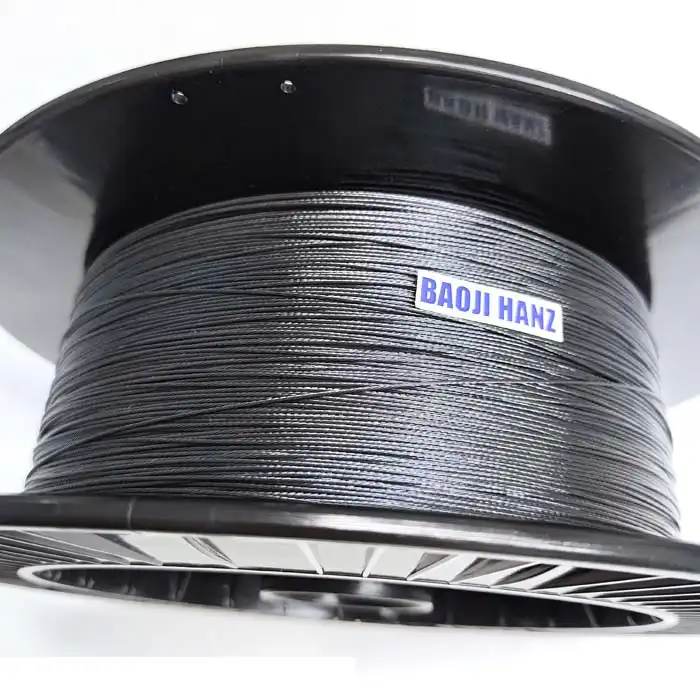
Surface preparation methods significantly influence the corrosion resistance characteristics of Superelastic TiNi rope. Electropolishing, mechanical polishing, and chemical etching each produce distinct surface topographies and oxide layer compositions that affect material performance in corrosive environments. Electropolishing creates the smoothest surface finish with a uniform oxide layer that minimizes crevices where localized corrosion might initiate. This electrically driven process removes surface irregularities at the atomic level while simultaneously thickening the protective titanium dioxide film. Medical-grade Superelastic TiNi rope almost universally undergoes electropolishing to achieve optimal biocompatibility and corrosion resistance for permanent implantation. Chemical etching with acid solutions removes heat-affected zones and surface contamination that could compromise corrosion performance. The process produces a microscopically textured surface that, despite appearing rougher than polished finishes, demonstrates excellent resistance to localized corrosion attack. Available in black and polished surface finishes with densities of six point five grams per cubic centimeter, Superelastic TiNi rope can be customized to meet specific application requirements. The black oxide finish results from controlled heat treatment in air, creating a thicker oxide layer that provides additional corrosion protection in certain industrial environments. Selection between surface treatments depends on application-specific factors including aesthetic requirements, biocompatibility needs, and expected environmental exposures.
Real-World Application Performance of TiNi Rope Corrosion Resistance
Medical Device Longevity and Biocompatibility
In biomedical applications, the corrosion resistance of Superelastic TiNi rope directly impacts patient safety and device functionality over decades of continuous use. Cardiovascular stents, orthodontic arch wires, surgical instruments, and minimally invasive therapy devices manufactured from this material demonstrate exceptional stability in aggressive body fluid environments. The human physiological system presents unique corrosive challenges including chloride concentrations approaching nine grams per liter, pH variations, protein adhesion, and inflammatory responses that would rapidly degrade lesser materials. Properly processed Superelastic TiNi rope exhibits nickel ion release rates below one nanogram per device per day after the initial week of exposure, levels ten thousand times lower than established safety thresholds for systemic toxicity. Long-term retrieval studies of implanted devices confirm that the titanium oxide protective layer remains intact and functional even after millions of loading cycles within the human body. This remarkable stability stems from the oxide film's chemical compatibility with biological tissues and its resistance to enzymatic breakdown. The superelastic properties of the material, allowing recovery from strain levels between five and eight percent, combine with corrosion resistance to create devices that move harmoniously with living tissues without triggering adverse immune responses. Superelastic TiNi rope specifications including one-by-two, one-by-three, and one-by-seven strand constructions with tensile strengths of four hundred fifty megapascals enable engineers to design sophisticated medical devices that balance mechanical performance with biological safety requirements.
Industrial and Marine Performance
Industrial applications ranging from chemical processing equipment to automated control systems exploit the corrosion resistance of Superelastic TiNi rope to extend operational lifespans and reduce maintenance burdens. In environments where exposure to acids, bases, solvents, or high-temperature gases would rapidly destroy conventional wire ropes, the material maintains its structural integrity and functional properties. The fishing industry has particularly embraced this technology, as Superelastic TiNi rope demonstrates superior resistance to the combined effects of saltwater corrosion, mechanical abrasion from nets and equipment, and biological fouling that plague traditional materials. Commercial fishing operations report significantly extended service intervals and reduced equipment failures when using properly specified TiNi rope assemblies. Offshore energy installations, including wind turbines and oil platforms, represent another domain where corrosion resistance proves financially critical. The initial cost premium for Superelastic TiNi rope compared to galvanized steel alternatives is recovered multiple times through elimination of premature failures, reduced inspection requirements, and extended maintenance cycles. In subsea applications where rope replacement requires expensive vessel mobilization and weather-dependent operations, the reliability of corrosion-resistant materials directly impacts operational economics. With minimum order quantities starting at just five meters and customizable lengths available, Baoji Hanz Metal Material Co., Ltd. enables both prototype development and large-scale production deployments across diverse industrial sectors.
Technical Specifications and Quality Assurance
The manufacturing process for high-quality Superelastic TiNi rope demands precision control over alloy composition, thermal treatment parameters, and surface finishing procedures to achieve optimal corrosion resistance. Titanium content must maintain a minimum of forty-five percent to ensure formation of the protective oxide layer, while the remaining nickel provides the shape memory and superelastic characteristics. Strand configurations including one-by-two, one-by-three, and one-by-seven constructions offer varying combinations of flexibility, strength, and fatigue resistance to match application requirements. Each construction type undergoes rigorous testing to verify tensile strength specifications of four hundred fifty megapascals, confirming that corrosion protection does not compromise mechanical performance. Quality control protocols implemented by leading manufacturers include cyclic potentiodynamic polarization testing per international standards, nickel ion release quantification through immersion studies, and metallurgical examination of oxide layer thickness and composition. Superelastic TiNi rope certified to ISO nine thousand one quality management standards, ISO thirteen thousand four hundred eighty-five medical device requirements, and European Union CE safety regulations represents the highest tier of material quality and consistency. Production process monitoring documents retained for minimum five-year periods enable full traceability and support continuous improvement initiatives. These comprehensive quality assurance measures ensure that delivered material consistently exhibits the corrosion resistance properties required for critical applications across medical, industrial, and marine domains.
Conclusion
Superelastic TiNi rope delivers exceptional corrosion resistance through its self-passivating titanium oxide layer, outperforming conventional materials in aggressive environments while maintaining superior mechanical properties and biocompatibility.
Cooperate with Baoji Hanz Metal Material Co., Ltd.
As a leading China Superelastic TiNi rope manufacturer and China Superelastic TiNi rope supplier, Baoji Hanz Metal Material Co., Ltd. brings seven years of specialized expertise in Nitinol Shape Memory Alloy, Superelastic Nitinol Alloy, and Nickel Titanium Alloy development. Our complete suite of sophisticated production and processing equipment, combined with advanced research and testing capabilities, ensures every Superelastic TiNi rope for sale meets the highest international quality standards including ISO nine thousand one, SGS, and TUV certifications. Direct factory supply provides competitive Superelastic TiNi rope prices while maintaining exceptional quality standards, with large stock availability enabling fast delivery of standard sizes. Our professional customer service team offers comprehensive technical consultation for nickel-titanium superelastic and memory alloys throughout the entire engagement, from pre-sale support through order tracking with retained production monitoring documentation, to detailed post-sale usage analysis and comprehensive industry solutions. Experience the advantage of working with a China Superelastic TiNi rope factory committed to converting scientific research into practical applications. Whether you require High Quality Superelastic TiNi rope for medical devices, aerospace actuators, industrial automation, or marine applications, our OEM services deliver customized solutions tailored to your exact specifications. Contact our expert team today at baojihanz-niti@hanztech.cn for technical consultation, samples, or China Superelastic TiNi rope wholesale inquiries. Bookmark this resource for future reference whenever corrosion-resistant material challenges arise in your projects.
References
1. Shabalovskaya, S. A. "On the Nature of the Biocompatibility and Medical Applications of NiTi Shape Memory and Superelastic Alloys." Biomedical Materials Engineering, Vol. 6, No. 4, 1996.
2. Duerig, T., Pelton, A., and Stöckel, D. "An Overview of Nitinol Medical Applications." Materials Science and Engineering A, Vol. 273-275, 1999.
3. Trepanier, C., Tabrizian, M., Yahia, L., and Bilodeau, L. "Effect of Modification of Oxide Layer on NiTi Stent Corrosion Resistance." Journal of Biomedical Materials Research, Vol. 43, No. 4, 1998.
4. Rondelli, G., and Vicentini, B. "Localized Corrosion Behaviour in Simulated Human Body Fluids of Commercial Ni-Ti Orthodontic Wires." Biomaterials, Vol. 20, No. 8, 1999.
5. Assad, M., Lemieux, N., Rivard, C. H., and Yahia, L. H. "Comparative In Vitro Biocompatibility of Nickel-Titanium Alloys." Biomedical Materials Engineering, Vol. 9, No. 1, 1999.