How to Choose the Best Medical Nitinol Wire Supplier in 2026?
2026-02-27 18:11:20
When medical device manufacturers face critical production delays due to inconsistent medical nitinol wire quality or unreliable supplier delivery schedules, the impact extends far beyond manufacturing timelines—it directly affects patient care and regulatory compliance. Selecting the right medical nitinol wire supplier in 2026 requires careful evaluation of technical capabilities, quality certifications, production capacity, and after-sales support to ensure your cardiovascular stents, orthodontic archwires, and minimally invasive surgical instruments meet the stringent standards required in modern healthcare applications.
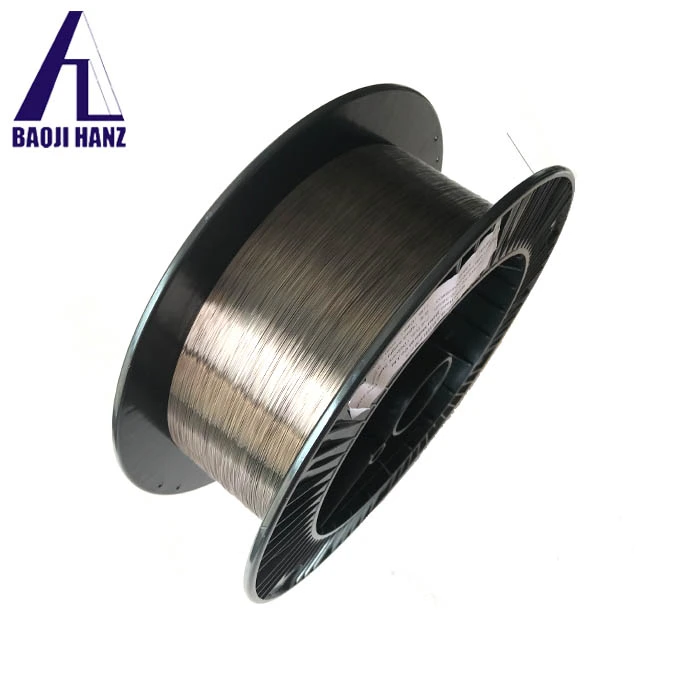
Understanding Medical Nitinol Wire Quality Standards and Certifications
The foundation of choosing a reliable medical nitinol wire supplier begins with understanding the technical standards that govern this specialized material. Medical nitinol wire must comply with ASTM F2063 standards, which specify the precise composition of 50-55% nickel and 45-50% titanium. This exact material composition is critical because even minor deviations can significantly impact the wire's shape memory effect and superelastic properties. When evaluating potential suppliers, manufacturers must verify that the medical nitinol wire meets specific performance criteria including tensile strength of 800-1100 MPa, yield strength in austenitic state of 150-300 MPa, and elongation of 20-40%. These parameters directly influence the wire's performance in demanding medical applications where device failure is not an option. Quality certifications represent more than bureaucratic requirements—they demonstrate a supplier's commitment to consistent manufacturing excellence. Reputable medical nitinol wire suppliers maintain ISO9001 certification, SGS verification, and TUV guidelines compliance. These certifications ensure that every production batch undergoes rigorous testing and quality control measures. The austenite finish temperature range of 25-40°C is particularly critical for medical applications, as this determines when the wire will activate its shape memory properties within the human body. Suppliers who maintain comprehensive documentation of their quality control processes, including production monitoring records retained for at least five years, provide the transparency necessary for regulatory submissions and traceability requirements that medical device manufacturers face.
Evaluating Manufacturing Capabilities and Technical Expertise
Advanced manufacturing capabilities distinguish exceptional medical nitinol wire suppliers from average producers. The production process for medical-grade nitinol wire requires sophisticated equipment for high-purity metal material preparation, ultra-large and ultra-thin casting, and precise control of material properties throughout the entire production line. Suppliers with dedicated R&D facilities and testing equipment demonstrate their commitment to continuous improvement and innovation in nitinol shape memory alloy technology. When assessing a supplier's manufacturing capabilities, examine whether they have integrated production lines covering everything from raw material selection through final inspection, with specialized workers responsible for each critical production step. Technical expertise extends beyond equipment ownership to encompass deep knowledge of how medical nitinol wire performs across different applications. Experienced suppliers understand the nuanced requirements for cardiovascular stent wire requiring 0.15-0.5 mm diameter with AF temperature of 32-37°C, versus orthodontic archwire specifications of 0.2-0.55 mm diameter with 28-35°C activation temperature. This application-specific knowledge enables suppliers to provide valuable consultation during product development, helping manufacturers optimize their designs for specific medical procedures. The superelasticity characteristic of medical nitinol wire, which allows strain far exceeding ordinary materials' elastic limits while automatically recovering upon unloading, requires precise manufacturing control that only experienced suppliers can consistently deliver.
Assessing Production Capacity and Supply Chain Reliability
Production capacity directly impacts a supplier's ability to meet your volume requirements and delivery schedules. When evaluating medical nitinol wire suppliers, investigate their minimum order quantities, typical lead times, and ability to scale production for larger orders. Suppliers offering MOQ of 1KG demonstrate flexibility for research and development projects or initial product launches, while maintaining sufficient capacity for volume production indicates readiness to support commercial manufacturing. The availability of standard sizes in stock enables fast delivery for urgent requirements, reducing time-to-market for medical device innovations. Understanding a supplier's production planning and inventory management systems helps predict their reliability during periods of high demand or supply chain disruptions. Geographic considerations and global reach provide insights into a supplier's logistical capabilities and market experience. Medical nitinol wire suppliers serving markets across North America, Europe, and Mid Asia demonstrate proven ability to navigate international shipping regulations, customs requirements, and quality documentation for different regulatory jurisdictions. This global experience translates to smoother transactions and fewer unexpected complications when importing medical-grade materials. Supply chain transparency, including clear communication about production schedules and proactive notification of potential delays, enables medical device manufacturers to maintain their own production timelines and inventory management with greater confidence.
Customization Capabilities and OEM Services
Modern medical device development increasingly requires customized medical nitinol wire specifications tailored to specific applications. Suppliers offering comprehensive OEM services can modify wire diameter, adjust austenite finish temperature ranges, or develop specific alloy compositions matching unique device requirements. This customization capability becomes particularly valuable when developing innovative medical devices for specialized procedures in urology, gynecology, or minimally invasive surgery where standard specifications may not adequately address performance requirements. The ability to produce custom sizes beyond standard offerings, such as stone retrieval basket wire ranging from 0.2-0.8 mm or instrument elastic component wire from 0.4-1.0 mm, expands design possibilities for medical device engineers. Effective customization requires collaborative technical support throughout the development process. Superior medical nitinol wire suppliers assign dedicated technical staff to work closely with customers from initial concept through final production, ensuring that custom specifications achieve intended performance characteristics. This includes understanding how the titanium oxide surface film affects biocompatibility, how different AF temperatures influence device activation within specific body cavities, and how wire diameter impacts the balance between flexibility and structural support. The corrosion resistance properties similar to stainless steel wire, combined with excellent resistance to body fluids and various chemical media, must be maintained even when customizing medical nitinol wire for novel applications.
Evaluating Customer Service and Technical Support
Comprehensive customer service distinguishes exceptional medical nitinol wire suppliers in an increasingly competitive market. Pre-sale support should include professional knowledge and technical consultation on nickel-titanium superelastic and memory alloys, with readily available customer service staff and technicians prepared to answer complex questions about material properties, application suitability, and regulatory compliance. This consultative approach helps medical device manufacturers make informed decisions about material selection early in the development process, potentially avoiding costly redesigns later. Suppliers who proactively share expertise about shape memory effects, demonstrating how medical nitinol wire transforms from austenitic phase to martensite phase under low temperature or high stress conditions, add significant value beyond simple material supply. Order tracking services and production transparency build confidence in supplier reliability. Suppliers committed to on-time delivery, high efficiency, and considerate service maintain detailed production process monitoring documents, enabling customers to verify compliance with specifications and trace material provenance for regulatory submissions. The retention of these documents for at least five years supports long-term product lifecycle management and post-market surveillance requirements. After-sales support including detailed product usage tracking, comprehensive industry solutions, and ongoing technical assistance ensures that suppliers remain partners throughout the entire product lifecycle, not just during initial procurement.
Biocompatibility and Safety Considerations
Biocompatibility represents a non-negotiable requirement for medical nitinol wire used in devices inserted into the human body. The titanium oxide film forming on the wire surface acts as a protective barrier inhibiting nickel release, which is critical given nickel's potential for allergic reactions in some patients. When evaluating suppliers, verify their understanding of biocompatibility testing requirements and their track record of producing medical nitinol wire that consistently passes cytotoxicity, sensitization, and irritation tests required for regulatory approval. The wire's non-toxic interaction with human tissue, combined with its ability to remain stable in the body environment, depends on precise manufacturing controls that only experienced suppliers maintain. Safety considerations extend to mechanical performance characteristics that prevent device failure during use. The high damping performance of medical nitinol wire, enabling absorption of vibration and impact energy, contributes to device stability and longevity within the body. The density of 6.5g/cc, elastic modulus in austenitic state of 70-80 GPa, and hardness of 250-350 HV must remain consistent across production batches to ensure predictable device performance. Suppliers who understand how these properties interact during cardiovascular stent deployment, orthodontic tooth movement, or urological stone retrieval demonstrate the comprehensive knowledge necessary to support safe medical device manufacturing.
Conclusion
Choosing the best medical nitinol wire supplier in 2026 requires evaluating technical expertise, quality certifications, production capabilities, customization services, and comprehensive customer support to ensure reliable supply of materials meeting stringent medical device requirements.
Cooperate with Baoji Hanz Metal Material Co., Ltd.
As a leading China medical nitinol wire manufacturer and China medical nitinol wire supplier, Baoji Hanz Metal Material Co., Ltd. combines seven years of expertise in nitinol shape memory alloy with sophisticated production equipment and comprehensive quality systems certified to ISO9001, SGS, and TUV standards. Our China medical nitinol wire factory offers competitive medical nitinol wire prices through direct supply advantages, while maintaining extensive stock of standard sizes for fast delivery. Whether you need high quality medical nitinol wire for cardiovascular applications, orthodontic devices, or minimally invasive surgical instruments, our China medical nitinol wire wholesale services and OEM customization capabilities ensure your specifications are precisely met. Contact our professional sales team at baojihanz-niti@hanztech.cn to discuss your medical nitinol wire for sale requirements and discover how our technical consultation, on-time delivery principles, and dedicated after-sales support can optimize your medical device manufacturing success.
References
1. "Shape Memory Alloys for Biomedical Applications" by Yoneyama T. and Miyazaki S., Woodhead Publishing Series in Biomaterials, Cambridge
2. "Nitinol Technical Reference Guide: A Comprehensive Resource for Material Science and Medical Applications" by ASTM International Committee F04 on Medical and Surgical Materials and Devices
3. "Biocompatibility and Performance of Medical Grade Nickel-Titanium Alloys" by Shabalovskaya S.A., Journal of Bio-Medical Materials Research International Standards Organization
4. "Manufacturing and Quality Control Standards for Medical Device Materials" by International Organization for Standardization Technical Committee 194
5. "Clinical Applications of Shape Memory Alloys in Minimally Invasive Surgery and Interventional Cardiology" by Pelton A.R. and Duerig T.W., Materials Science Forum Medical Device Standards Institute