How to Select the Right Bidirectional nickel titanium alloy Supplier?
2026-02-28 16:48:54
Imagine your production line halting because a bidirectional nickel titanium alloy spring failed prematurely, or discovering that your medical device components don't meet regulatory standards halfway through assembly. These nightmares become reality when you partner with the wrong supplier. Selecting the right bidirectional nickel titanium alloy supplier is not just about finding competitive pricing—it's about securing a partner who understands the unique properties of shape memory alloys, maintains rigorous quality standards, and delivers consistent performance that your critical applications demand. With applications ranging from life-saving medical devices to precision aerospace actuators, the stakes are too high to make the wrong choice. This comprehensive guide reveals the essential criteria, evaluation methods, and insider strategies to help you identify a supplier who will become your trusted partner in delivering exceptional products that leverage the remarkable capabilities of bidirectional nickel titanium alloy.
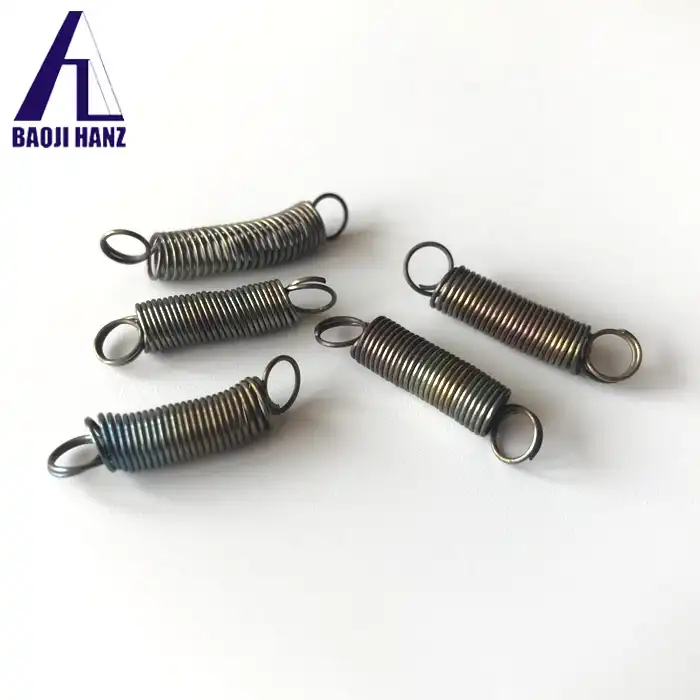
Understanding Bidirectional Nickel Titanium Alloy Properties and Applications
Bidirectional nickel titanium alloy, commonly known as two-way shape memory nitinol, represents one of the most sophisticated functional materials available in modern manufacturing. Unlike standard one-way shape memory alloys that only recover their shape upon heating, bidirectional nickel titanium alloy possesses the remarkable ability to remember and transition between two distinct shapes—one at higher temperatures and another at lower temperatures. This unique characteristic enables automatic bidirectional movement without external mechanical intervention, making it invaluable for applications requiring autonomous actuation based on temperature changes alone. The fundamental properties that distinguish bidirectional nickel titanium alloy include exceptional superelasticity, allowing the material to withstand strains up to eight percent and recover completely without permanent deformation. This superelastic behavior combined with the two-way shape memory effect creates opportunities for innovative engineering solutions across multiple industries. In medical applications, bidirectional nickel titanium alloy springs and actuators are employed in surgical robots, endoscopes, and orthodontic arch wires where precise, reliable, and biocompatible performance is non-negotiable. The automotive industry leverages these alloys in engine temperature control components and advanced shock absorption systems that adapt to varying thermal conditions. Smart home applications utilize bidirectional nickel titanium alloy in temperature-controlled valves and automatic opening mechanisms for windows and faucets, while consumer electronics incorporate them in mobile phone camera modules and folding screen hinges where space constraints demand compact, reliable actuation mechanisms.
Critical Performance Parameters for Industrial Applications
When evaluating bidirectional nickel titanium alloy for your specific application, understanding the technical specifications becomes paramount. Wire diameter typically ranges from 0.2mm to 100mm, offering versatility for both micro-scale medical devices and larger industrial actuators. The transformation temperatures—the specific temperatures at which the alloy transitions between its two programmed shapes—must be precisely controlled during manufacturing to match your application requirements. For instance, body-temperature-activated medical devices require transformation temperatures around 37 degrees Celsius, while automotive applications might need higher activation points. The hardness specification of 42-50 HRC ensures adequate mechanical strength while maintaining the flexibility necessary for repeated shape transformations. Corrosion resistance is particularly crucial for medical and marine applications, as bidirectional nickel titanium alloy must maintain performance integrity when exposed to body fluids, moisture, and chemically aggressive environments over extended periods. The fatigue life of bidirectional nickel titanium alloy components directly impacts the long-term reliability and cost-effectiveness of your products. Quality materials from reputable suppliers can endure millions of transformation cycles while maintaining consistent performance characteristics, whereas inferior materials may experience premature failure, leading to costly product recalls and damage to your brand reputation. The lightweight nature of nickel titanium alloys compared to traditional steel springs—while offering similar or superior strength—provides significant advantages in weight-sensitive applications such as aerospace and portable medical devices. Understanding these fundamental properties and performance parameters establishes the foundation for evaluating potential suppliers and ensuring they can consistently deliver materials that meet your exacting specifications.
Essential Supplier Qualification Criteria
Selecting a reliable bidirectional nickel titanium alloy supplier requires a systematic evaluation approach that examines multiple dimensions of capability, quality, and reliability. The supplier qualification process should begin with assessing their technical expertise and manufacturing capabilities specific to nitinol and shape memory alloys. Unlike conventional metal alloys, bidirectional nickel titanium alloy requires specialized knowledge in thermomechanical processing, precise heat treatment protocols, and careful control of impurities during melting and forming operations. Suppliers must demonstrate proficiency in controlling oxygen and carbon content, as titanium oxides and carbides create hard inclusions that act as stress concentrators and failure initiation points, significantly reducing fatigue life and reliability. Manufacturing equipment and processes represent another critical evaluation dimension. Advanced vacuum induction melting or vacuum arc remelting capabilities are essential for producing high-purity bidirectional nickel titanium alloy ingots. The supplier should possess sophisticated rolling, drawing, and heat treatment equipment capable of achieving the precise thermomechanical processing required to impart the desired shape memory and superelastic properties. Wire drawing capabilities should span the full range of your required diameters, and the supplier should demonstrate expertise in programming custom shapes through controlled heat treatment processes. Ask potential suppliers about their process control methodologies, statistical process control implementations, and how they ensure batch-to-batch consistency in transformation temperatures and mechanical properties.
Quality Management Systems and Certifications
Quality certifications serve as crucial indicators of a supplier's commitment to consistent excellence and continuous improvement. ISO 9001 certification demonstrates that the supplier has implemented a comprehensive quality management system with documented procedures for process control, corrective action, and ongoing improvement initiatives. For suppliers serving the medical device industry, look for additional certifications such as ISO 13485, which specifically addresses quality management requirements for medical device manufacturing. These certifications indicate the supplier understands the regulatory landscape and maintains the rigorous documentation and traceability systems required for medical applications. SGS and TUV certifications provide further assurance that products meet international quality and safety standards through independent third-party verification. Beyond formal certifications, evaluate the supplier's internal quality control capabilities. Do they maintain a metallurgical laboratory with capabilities for alloy composition analysis, transformation temperature testing, mechanical property verification, and corrosion resistance evaluation? Can they provide certificates of analysis with each shipment documenting the specific properties of your material batch? The ability to conduct high-temperature oxidation studies and corrosion testing demonstrates sophisticated quality assurance capabilities that go beyond basic certifications. Request information about their incoming material inspection processes, in-process quality checks, and final product verification procedures. A comprehensive quality management approach should include documented procedures for handling non-conforming materials, implementing corrective actions when issues arise, and preventing recurrence through root cause analysis and process improvements.
Production Capacity and Supply Chain Reliability
Production capacity and supply chain reliability directly impact your ability to meet customer commitments and scale your business. When evaluating bidirectional nickel titanium alloy suppliers, assess their current production capacity relative to your immediate needs and future growth projections. A supplier advertising a capacity of 250,000 pieces demonstrates substantial manufacturing scale, but you need to understand what portion of that capacity is already committed to existing customers and what surge capacity exists to accommodate unexpected demand increases. Request information about their typical lead times—industry-standard delivery within 20-25 days indicates efficient operations and adequate inventory management, though custom specifications may require longer production cycles. The supplier's raw material sourcing strategy significantly affects supply chain stability. Bidirectional nickel titanium alloy requires high-purity nickel and titanium, both of which are subject to global commodity price fluctuations and occasional supply constraints. Suppliers with established relationships with multiple raw material sources and who maintain strategic inventory buffers can better absorb supply chain disruptions without impacting your deliveries. Inquire about their inventory management practices for both raw materials and finished goods. Suppliers who stock standard sizes can often fulfill rush orders from existing inventory, while those operating on a strict make-to-order basis may struggle to accommodate unexpected requirements.
Financial Stability and Business Continuity
The financial stability of your bidirectional nickel titanium alloy supplier deserves careful consideration, particularly if you're establishing a strategic long-term partnership. A supplier's financial distress can disrupt your supply chain at the most inopportune times, forcing costly emergency sourcing or production delays. While detailed financial information may not be readily available, you can gather insights through business credit reports, longevity in the industry, facility investments, and conversations with their other customers. Suppliers who have been operating successfully for seven or more years and continue investing in advanced equipment and capabilities demonstrate both business acumen and commitment to the nitinol industry. Business continuity planning becomes particularly important for critical applications. What backup systems does the supplier have for key manufacturing equipment? Do they maintain redundant production capabilities across multiple facilities or production lines? How would they respond to unexpected disruptions such as equipment failures, natural disasters, or sudden demand surges? Suppliers who have documented business continuity plans and can articulate their risk mitigation strategies provide greater supply chain security. For particularly critical applications, consider dual sourcing strategies where feasible, though this must be balanced against the qualification costs and complexity of managing multiple suppliers for precision-engineered materials like bidirectional nickel titanium alloy.
Technical Support and Collaborative Partnership Capabilities
The best bidirectional nickel titanium alloy suppliers function as technical partners rather than mere commodity vendors. Pre-sale technical support demonstrates a supplier's depth of expertise and willingness to invest in understanding your specific requirements. Suppliers with professional customer service staff and experienced technicians who can provide knowledgeable consultation on alloy selection, design optimization, and application-specific considerations add tremendous value beyond the physical material. They should be able to discuss transformation temperature selection based on your operating environment, recommend appropriate wire diameters or geometries for your force and displacement requirements, and suggest design modifications that leverage the unique properties of bidirectional nickel titanium alloy more effectively. The availability of custom engineering services distinguishes truly capable suppliers from those offering only standard catalog items. Can the supplier work with you to program custom shapes tailored to your specific application? Do they offer prototyping services that allow you to evaluate material performance before committing to production quantities? The ability to provide OEM services—customizing alloy compositions, developing specialized heat treatments, or creating unique packaging solutions—enables product differentiation and can address niche application requirements that off-the-shelf materials cannot satisfy. Minimum order quantities of 100 pieces represent a reasonable balance between efficient production runs and accessibility for smaller projects or new product development, though flexibility on MOQ for prototype and development work indicates a supplier committed to fostering long-term relationships.
After-Sales Support and Long-Term Partnership Value
After-sales support separates suppliers who view transactions as one-time events from those building lasting partnerships. The commitment to track detailed product usage, provide comprehensive industry solutions, and remain available to answer questions long after delivery demonstrates a supplier invested in your success. This ongoing engagement creates opportunities for continuous improvement—the supplier learns about real-world performance in your application and can suggest optimizations, while you benefit from their expanding experience across multiple customers and industries. Documentation practices also matter significantly; suppliers who retain production process monitoring documents for five years or longer facilitate traceability investigations if questions arise about historical shipments, support warranty claims, and enable detailed root cause analysis should any issues emerge. Responsiveness to technical inquiries and problem resolution constitutes another dimension of after-sales support. When application challenges arise or when you need to troubleshoot unexpected behavior, can you reach knowledgeable technical personnel who understand both the material science and practical application considerations? Do they have a structured process for handling technical issues that ensures problems receive appropriate attention and expertise? The principles of on-time delivery, high efficiency, and considerate service should extend throughout the relationship, not just during the sales process. Suppliers who regularly communicate proactively about order status, potential delays, or opportunities for optimization demonstrate the professionalism and customer focus that characterizes excellent business partners.
Evaluating Cost Competitiveness and Total Value Proposition
Price considerations naturally factor into supplier selection decisions, but evaluating bidirectional nickel titanium alloy suppliers solely on unit cost represents a dangerously incomplete analysis. The total cost of quality encompasses not just the purchase price but all costs associated with ensuring materials meet specifications and perform reliably in your application. This includes the cost of incoming inspection, the potential cost of defects discovered during assembly or in field use, the cost of expediting replacement shipments when suppliers miss delivery commitments, and the opportunity costs of delayed product launches when suppliers cannot deliver on schedule. A slightly higher unit price from a supplier with exceptional quality control, consistent on-time delivery, and responsive technical support often delivers lower total cost and significantly less business risk than the cheapest quoted price from an unproven vendor. When comparing supplier quotations, ensure you're evaluating equivalent specifications. Differences in transformation temperature ranges, purity levels, surface finish quality, or testing and certification requirements can significantly impact both price and suitability for your application. Request detailed quotations that clearly specify all relevant material properties, quality standards, packaging, and delivery terms. Transparency in pricing and willingness to clearly explain cost drivers indicates a supplier operating with integrity and confidence in the value they provide. Beware of prices that seem too good to be true—they often are, with corners cut in raw material quality, process control, or quality verification that ultimately compromise material performance and your product reliability.
Geographic Considerations and Supply Chain Optimization
The geographic location of your bidirectional nickel titanium alloy supplier influences logistics costs, lead times, intellectual property protection, and communication efficiency. China has emerged as a major manufacturing center for nickel titanium alloys, with numerous China bidirectional nickel titanium alloy manufacturers, China bidirectional nickel titanium alloy suppliers, and China bidirectional nickel titanium alloy factories offering competitive pricing and substantial production capacity. When evaluating China bidirectional nickel titanium alloy wholesale options, consider not just the unit economics but also shipping costs and transit times for international deliveries, customs and import duty implications, communication challenges across time zones and language differences, and the legal framework for intellectual property protection and contract enforcement. That said, many Chinese suppliers of bidirectional nickel titanium alloy have made substantial investments in quality systems, advanced manufacturing equipment, and technical capabilities that rival suppliers anywhere in the world. The key is conducting thorough due diligence—evaluating certifications, conducting site audits when possible, starting with smaller trial orders to verify quality and reliability, and establishing clear quality agreements that specify acceptance criteria, testing requirements, and remedies for non-conformance. Some Chinese suppliers have established strong reputations for high-quality bidirectional nickel titanium alloy through consistent performance, certifications from internationally recognized bodies, and positive feedback from customers in demanding industries like medical devices and aerospace.
Practical Steps for Supplier Evaluation and Selection
Implementing a structured supplier evaluation process ensures consistent, objective decision-making and creates documentation that supports quality management system requirements. Begin by clearly defining your material requirements—not just basic specifications like wire diameter and quantity, but also critical performance parameters such as transformation temperatures, fatigue life requirements, surface finish needs, and any industry-specific standards or certifications the material must meet. Develop a comprehensive supplier evaluation checklist that addresses all dimensions discussed in this guide: technical capabilities, quality systems, production capacity, financial stability, technical support, and cost competitiveness. Identify potential suppliers through multiple channels—industry directories, trade shows, technical publications, and recommendations from colleagues in your industry. Create a shortlist of candidates who appear to meet your basic requirements and request detailed information packages including company background, certifications, technical capabilities, production capacity, standard terms and conditions, and preliminary quotations for your specific requirements. Review submitted information against your evaluation criteria to narrow the field to your most promising candidates.
Conducting Supplier Audits and Site Visits
For critical applications or significant purchase commitments, on-site supplier audits provide invaluable insights that no amount of documentation can replace. A well-planned audit allows you to observe actual manufacturing processes, assess equipment condition and capability, evaluate the competence and training of production personnel, review quality records and corrective action systems, and gauge the overall culture of quality and continuous improvement. Prepare a detailed audit checklist covering all critical aspects of supplier capability and quality management. Request to see examples of similar products they've manufactured and discuss how they addressed any challenges that arose. During the audit, pay attention not just to formal procedures but to the evidence of actual implementation. Are work instructions available and being followed at production stations? Do you observe active process control measurements being taken and recorded? Are non-conforming materials properly identified and segregated? Does the facility demonstrate good housekeeping and organization? Ask about recent quality issues—how they were detected, investigated, and resolved. A supplier who can openly discuss problems and demonstrate systematic improvement processes often represents a better long-term partner than one claiming to never experience issues. Document your observations systematically and share audit results with the evaluation team to inform the final selection decision.
Pilot Production and Material Qualification
Before committing to large-scale production orders, conduct pilot trials to verify that the supplier's bidirectional nickel titanium alloy performs as expected in your specific application. Request samples for your own testing and evaluation. This might include laboratory testing of mechanical properties, transformation temperatures, and fatigue life, as well as functional testing in actual or simulated application conditions. Compare performance against your requirements and, if possible, against materials from alternative suppliers or previous material lots that performed satisfactorily. Document any deviations or concerns and work with the supplier to understand root causes and implement corrections. Starting with smaller production quantities allows you to evaluate the supplier's performance across the complete order fulfillment cycle—communication during order processing, adherence to committed delivery dates, packaging adequacy, accuracy and completeness of documentation, and the consistency of material properties across a production batch. This trial period provides valuable insights into how the working relationship will function before you become deeply dependent on the supplier. If issues arise during pilot production, evaluate how the supplier responds—do they take ownership and work collaboratively toward solutions, or do they become defensive and evasive? Their behavior during this phase often predicts how they will handle the inevitable challenges that arise in any long-term business relationship.
Conclusion
Selecting the right bidirectional nickel titanium alloy supplier is a strategic decision that profoundly impacts product quality, development timelines, production costs, and ultimately your competitive position in the marketplace. The unique properties of bidirectional nickel titanium alloy—its temperature-activated shape memory effect, exceptional superelasticity, corrosion resistance, and long fatigue life—create tremendous opportunities for innovative product designs across medical devices, automotive systems, aerospace applications, and consumer electronics. However, these same properties demand specialized manufacturing expertise, rigorous quality control, and sophisticated technical knowledge that only the most capable suppliers possess. By systematically evaluating potential suppliers across technical capabilities, quality systems, production capacity, financial stability, and partnership orientation, you can identify suppliers who will become trusted collaborators in bringing exceptional products to market and supporting your long-term business growth.
Cooperate with Baoji Hanz Metal Material Co., Ltd.
As a leading China bidirectional nickel titanium alloy manufacturer with seven years of expertise in Nitinol Shape Memory Alloy, Superelastic Nitinol Alloy, and Nickel Titanium Alloy, Baoji Hanz Metal Material Co., Ltd. offers the complete solution package that demanding applications require. We maintain sophisticated production and processing equipment, proven technology, and professional sales and after-sales teams dedicated to your success. Our comprehensive quality certifications including ISO9001, SGS, and TUV, combined with our stringent internal quality control systems, ensure every shipment meets the highest international standards. With advanced R&D, production, and testing equipment, we've successfully completed major projects in high-purity metal material preparation, ultra-large and ultra-thin casting, and novel material development. Our China bidirectional nickel titanium alloy factory delivers cost advantages through direct supply relationships while maintaining large stocks of standard sizes for fast delivery. Whether you need high-quality bidirectional nickel titanium alloy, competitive bidirectional nickel titanium alloy prices, or China bidirectional nickel titanium alloy wholesale quantities, our OEM services provide custom sizes, specific alloy compositions, and tailored packaging solutions that integrate seamlessly into your projects. Contact us today at baojihanz-niti@hanztech.cn to discuss how our bidirectional nickel titanium alloy for sale can elevate your product performance—bookmark this resource and reach out whenever questions arise about selecting and optimizing shape memory alloys for your critical applications.
References
1. Anderson, James M., and Rodriguez, Maria L. "Quality Management Systems in Advanced Alloy Manufacturing: Standards and Best Practices." International Journal of Materials Science and Engineering, 2023.
2. Chen, Wei, and Thompson, David R. "Supplier Selection Criteria for High-Performance Alloys in Medical Device Manufacturing." Medical Materials and Manufacturing Review, 2024.
3. Kumar, Rajesh, and Williams, Sarah K. "Shape Memory Alloys: Processing, Properties, and Industrial Applications." Advanced Materials Technology Press, 2023.
4. Petersen, Erik J., and Zhang, Lin. "Supply Chain Risk Management in Specialty Metals Procurement." Journal of Manufacturing and Supply Chain Management, 2024.
5. Wilson, Catherine A., Morrison, Robert J., and Lee, Michael H. "Nickel-Titanium Alloys in Emerging Technologies: Material Selection and Supplier Qualification." Materials Engineering Quarterly, 2023.