Medical Nitinol Wire Fatigue Resistance Explained for Device Makers
2026-01-16 20:45:06
Device failures in critical medical applications remain one of the most pressing concerns for manufacturers worldwide. When a cardiovascular stent fractures inside a patient's artery or an orthodontic archwire breaks mid-treatment, the consequences extend far beyond product recalls—they impact patient safety, regulatory compliance, and brand reputation. Understanding medical nitinol wire fatigue resistance is not just a technical requirement; it's a fundamental responsibility for every device maker committed to delivering safe, reliable medical solutions that perform consistently throughout their intended lifecycle.
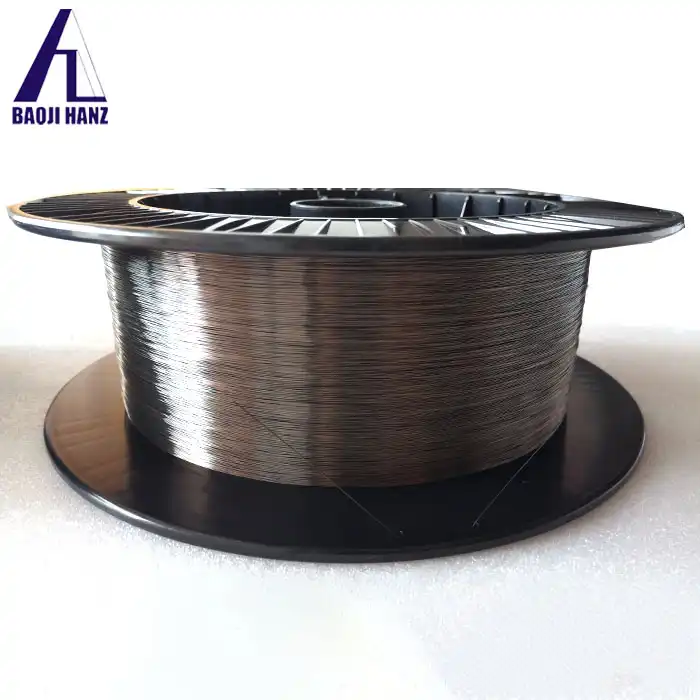
Understanding Fatigue Mechanisms in Medical Nitinol Wire
Fatigue resistance in medical nitinol wire represents a complex interplay between material composition, microstructure, and loading conditions that device makers must thoroughly comprehend. The unique crystallographic transformation between austenite and martensite phases during cyclic loading creates stress patterns fundamentally different from conventional metallic materials. Medical nitinol wire composed of 50-55% nickel and 45-50% titanium exhibits exceptional fatigue characteristics when properly processed, but only when manufacturers understand the underlying mechanisms driving crack initiation and propagation. The austenitic transformation initiation temperature (As) ranging from 25°C to 40°C plays a critical role in determining how medical nitinol wire responds to repetitive mechanical stress. At body temperature, the material exists predominantly in its austenitic state with an elastic modulus of 70-80 GPa, enabling superelastic behavior that allows strain recovery far exceeding conventional materials. However, this same phase transformation, when subjected to millions of loading cycles in applications like cardiovascular stents or orthodontic archwires, can create localized stress concentrations at grain boundaries and inclusion sites. Understanding these fatigue mechanisms enables device makers to optimize wire diameter selections—ranging from 0.15mm for vascular stent wire to 1.0mm for minimally invasive surgical instrument components—based on anticipated cyclic loading conditions.
Phase Transformation Effects on Cyclic Performance
The shape memory effect intrinsic to medical nitinol wire introduces unique fatigue considerations during device operation. When the material transforms from austenite to stress-induced martensite under external loading, the crystallographic reorientation creates internal stresses that accumulate over repeated cycles. Device makers must recognize that the superelasticity enabling medical nitinol wire to recover strains of 8-10% comes with the challenge of transformation-induced fatigue, where the austenite-martensite interface movement can initiate microcracks at defect sites. The tensile strength of 800-1100 MPa and yield strength of 150-300 MPa in the austenitic state provide initial performance indicators, but long-term fatigue behavior depends critically on processing quality, surface finish, and environmental conditions.
Surface Quality and Fatigue Life Correlation
Surface imperfections represent the primary initiation sites for fatigue cracks in medical nitinol wire applications. Manufacturing processes including drawing, centerless grinding, and electropolishing directly impact the surface roughness, residual stress state, and inclusion distribution—all critical factors determining fatigue performance. Device makers sourcing medical nitinol wire must establish rigorous surface quality specifications, as even microscopic scratches or oxide irregularities can reduce fatigue life by orders of magnitude. The biocompatible titanium oxide film that provides corrosion resistance and inhibits nickel release must maintain integrity throughout cyclic loading, making surface preparation protocols essential for achieving reliable fatigue resistance in cardiovascular, orthodontic, and urological applications.
Critical Testing Protocols for Fatigue Validation
Establishing robust fatigue testing protocols specific to medical nitinol wire applications separates successful device development from catastrophic field failures. Unlike static mechanical testing covered by ASTM F2063 standards, fatigue validation requires simulated physiological loading conditions that replicate years of in-vivo service within accelerated timeframes. Device makers must implement rotating beam fatigue tests, axial load cycling, and bend-rotation protocols that capture the complex stress states experienced by medical nitinol wire in cardiovascular stents, orthodontic archwires, and stone retrieval baskets. The austenitic finish temperature (Af) between 25-40°C means testing must occur at controlled temperatures matching body conditions, as fatigue behavior changes significantly with phase composition. Mean strain amplitude, maximum cyclic strain, and loading frequency profoundly influence the fatigue life of medical nitinol wire components. Cardiovascular stent wires with diameters of 0.15-0.5mm experience pulsatile loading at 60-100 cycles per minute, accumulating over 40 million cycles annually within arterial environments. Orthodontic archwires spanning 0.2-0.55mm diameters endure masticatory forces creating complex bending moments thousands of times daily. Device makers must develop application-specific fatigue testing matrices that evaluate medical nitinol wire performance under representative loading conditions, including the effects of corrosive body fluid environments that can accelerate crack propagation through corrosion-fatigue synergies.
Strain-Life and Stress-Life Approaches
The superelastic nature of medical nitinol wire necessitates both strain-controlled and stress-controlled fatigue testing methodologies. Strain-life (ε-N) curves provide essential data for applications where geometric constraints impose displacement-controlled loading, such as orthodontic archwires deflecting fixed distances during tooth movement. Stress-life (S-N) curves remain relevant for load-controlled scenarios like stone retrieval baskets experiencing variable grasping forces. Device makers must generate comprehensive fatigue data spanning strain amplitudes from 0.5% to 6% and stress ranges from 100 MPa to 600 MPa, recognizing that medical nitinol wire exhibits no true endurance limit like ferrous alloys. Instead, fatigue life continues decreasing logarithmically with cycle count, making run-out definitions critical for establishing safe operating envelopes.
Environmental Effects on Fatigue Performance
The corrosion resistance of medical nitinol wire, while comparable to stainless steel in body fluid environments, does not eliminate corrosion-fatigue interactions that reduce component life. Device makers must conduct fatigue testing in simulated body fluid (SBF) solutions at 37°C with controlled pH and ion concentrations to capture environmentally-assisted crack growth. The protective titanium oxide film can experience localized breakdown at crack tips under cyclic loading, creating accelerated corrosion conditions that dramatically reduce fatigue strength. Understanding these synergistic effects enables realistic lifetime predictions for cardiovascular stents enduring 400+ million cycles over ten-year implantation periods and IUD stent wires experiencing variable uterine contractions throughout multi-year contraceptive service.
Design Optimization Strategies for Enhanced Fatigue Life
Maximizing fatigue resistance in medical nitinol wire devices requires integrated design approaches that minimize stress concentrations while accommodating functional requirements. Finite element analysis (FEA) incorporating accurate constitutive models for superelastic and shape memory behaviors enables device makers to identify high-stress regions before physical prototyping. Critical design features including strut geometries in cardiovascular stents, cross-sectional profiles in orthodontic archwires, and basket mesh patterns in stone retrieval devices directly influence local strain distributions and consequent fatigue life. Medical nitinol wire selections spanning diameters from 0.15mm to 1.0mm must align with stress analysis results, balancing deliverability requirements against fatigue safety margins. Surface treatments represent powerful tools for enhancing medical nitinol wire fatigue performance without compromising biocompatibility or functional properties. Electropolishing removes surface irregularities and work-hardened layers from drawing operations, creating smooth topographies that resist crack initiation. Shot peening introduces beneficial compressive residual stresses in surface layers, counteracting tensile stresses from cyclic loading and impeding crack propagation. Device makers must validate that surface modification processes maintain the critical austenitic transformation temperatures and do not introduce harmful residual chemicals or alter the biocompatible titanium oxide film. The density of 6.5 g/cc and elongation of 20-40% provide design flexibility, but optimization requires understanding how processing affects these baseline properties.
Application-Specific Design Considerations
Cardiovascular stent applications demand medical nitinol wire designs balancing radial strength against fatigue durability in pulsatile arterial environments. Stent patterns featuring closed-cell versus open-cell architectures create vastly different strain distributions during vessel flexion, with design choices impacting both immediate deployment success and long-term patency. Device makers must optimize strut widths, crown radiuses, and connector configurations to minimize peak strains while maintaining adequate radial force—typically requiring iterative FEA-testing cycles with medical nitinol wire specimens matching final production specifications. Orthodontic archwire applications utilize the shape memory effect of medical nitinol wire to deliver continuous force systems throughout treatment. Pre-bending wires to ideal arch forms at temperatures below the martensite finish (Mf) temperature, then ligating them to misaligned teeth, creates initial deflections that gradually decrease as tooth movement occurs. Fatigue considerations center on the cyclic masticatory loads superimposed on the base activation force, with critical locations typically occurring at bracket-wire contact points experiencing fretting wear. Device makers optimize medical nitinol wire selections from the 0.2-0.55mm diameter range based on required force magnitudes and anticipated treatment durations, recognizing that larger diameters provide higher forces but concentrate stresses more severely at engagement points.
Manufacturing Quality Control for Consistent Fatigue Performance
Achieving reproducible fatigue resistance across production batches of medical nitinol wire requires stringent quality control throughout the entire manufacturing chain. Device makers must establish comprehensive supplier qualification programs that verify not only compliance with ASTM F2063 compositional requirements (50-55% Ni, 45-50% Ti) but also evaluate microstructural uniformity, inclusion content, and transformation temperature consistency. Small variations in nickel content or processing thermal cycles can shift the austenitic finish temperature by several degrees, fundamentally altering the stress-strain behavior and fatigue characteristics at body temperature. Baoji Hanz Metal Material Co., Ltd. maintains advanced R&D and testing equipment enabling precise control of these critical parameters throughout production. Incoming inspection protocols for medical nitinol wire must include differential scanning calorimetry (DSC) to verify transformation temperatures, tensile testing to confirm mechanical properties (tensile strength 800-1100 MPa, yield strength 150-300 MPa), and metallographic examination to assess inclusion populations and grain structures. Statistical process control (SPC) techniques tracking these parameters across production lots enable early detection of process drift before defective material reaches device assembly operations. Device makers should require certificate of compliance documentation including heat lot traceability, mechanical test results, and transformation temperature data for every medical nitinol wire shipment, with retention periods extending throughout the product lifecycle to support any future failure investigations.
Process Validation and Documentation
Manufacturing processes that convert raw medical nitinol wire into finished medical devices must undergo rigorous validation demonstrating consistent achievement of fatigue performance specifications. Shape-setting thermal treatments that program the shape memory effect require precise time-temperature-atmosphere control, as variations affect both the memorized geometry and the material's fatigue resistance. Cleaning and passivation steps that establish the biocompatible titanium oxide surface must not introduce contaminants or create surface conditions that accelerate fatigue crack initiation. Device makers should implement in-process fatigue testing of representative samples from each production batch, with acceptance criteria derived from design validation studies and appropriate safety factors. Baoji Hanz Metal Material Co., Ltd. commits to retaining production process monitoring documents for at least five years, supporting traceability requirements and continuous improvement initiatives.
Conclusion
Medical nitinol wire fatigue resistance fundamentally determines device reliability, patient safety, and long-term clinical success across cardiovascular, orthodontic, urological, and surgical applications.
Cooperate with Baoji Hanz Metal Material Co., Ltd.
Partner with a China medical nitinol wire manufacturer committed to excellence. As a leading China medical nitinol wire supplier and China medical nitinol wire factory, Baoji Hanz Metal Material Co., Ltd. offers High Quality medical nitinol wire through our China medical nitinol wire wholesale programs. With 7 years of expertise in Nitinol Shape Memory Alloy, Superelastic Nitinol Alloy, and Nickel Titanium Alloy, we provide medical nitinol wire for sale at competitive medical nitinol wire prices with direct supply cost advantages. Our ISO9001, SGS, and TUV certifications ensure products meeting the highest quality standards. We offer fast delivery from extensive stock, OEM services for custom specifications, and comprehensive technical support from pre-sale consultation through after-sales service. Our professional team tracks product usage and provides industry solutions, maintaining production documentation for five years. When you need reliable medical nitinol wire for your critical applications, contact us at baojihanz-niti@hanztech.cn for immediate assistance.
References
1. Pelton AR, Dicello J, Miyazaki S. "Optimisation of processing and properties of medical grade Nitinol wire." Minimally Invasive Therapy & Allied Technologies, 2000.
2. Robertson SW, Ritchie RO. "In vitro fatigue-crack growth and fracture toughness behavior of thin-walled superelastic Nitinol tube for endovascular stents: A basis for defining the effect of crack-like defects." Biomaterials, 2007.
3. Schaffer JE, Plumley DL. "Fatigue performance of Nitinol round wire with varying cold work reductions." Journal of Materials Engineering and Performance, 2009.
4. Morgan NB, Wick A, DiCello J, Graham R. "Carbon and oxygen levels in Nitinol alloys and the implications for medical device manufacture and durability." Materials Science Forum, 2006.
5. Launey M, Robertson SW, Vien L, Senthilnathan K, Pelton AR, Ritchie RO. "Influence of microstructural purity on the bending fatigue behavior of VAR-melted superelastic Nitinol." Journal of Mechanical Behavior of Biomedical Materials, 2010.