Nickel titanium memory alloy capillary tube: superelasticity and shape memory
2026-01-07 14:30:44
Are you struggling to find a material that can withstand repeated deformation cycles without permanent damage in your medical device or aerospace application? Traditional materials often fail under extreme stress, leading to device malfunction and costly replacements. Nickel titanium memory alloy capillary tube offers a revolutionary solution with its unique combination of superelasticity and shape memory properties, enabling devices to endure up to 30 times more elastic deformation than conventional metals while maintaining structural integrity and returning to their original form.
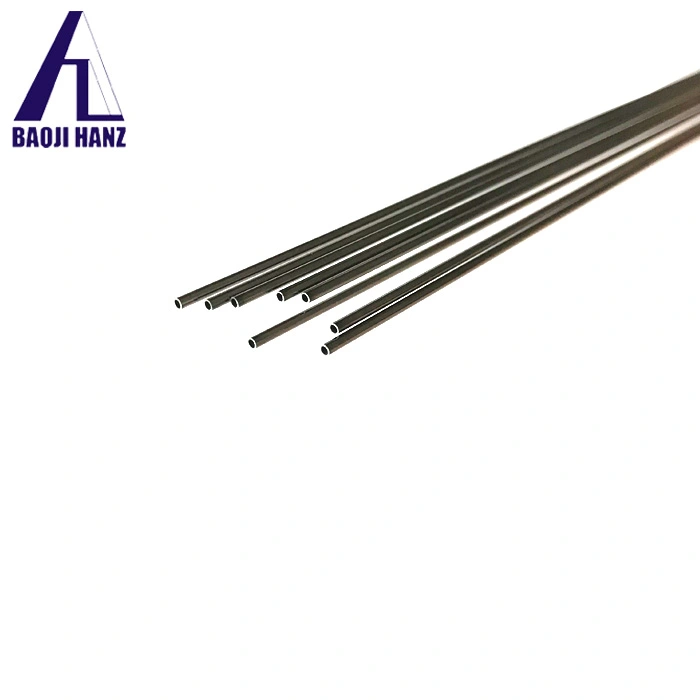
Understanding the Fundamentals of Nickel Titanium Memory Alloy Capillary Tube
The nickel titanium memory alloy capillary tube represents a breakthrough in advanced materials engineering, combining two extraordinary properties that make it indispensable across multiple industries. This remarkable alloy, composed of approximately 55-56% nickel and 44-45% titanium by weight, exhibits behaviors that seem almost impossible in traditional metallic materials. The precise atomic composition is critical because even minor variations in the nickel-to-titanium ratio can dramatically alter the transformation temperature and mechanical properties of the final product. What makes nickel titanium memory alloy capillary tube truly exceptional is its ability to exist in two distinct crystalline phases: austenite and martensite. The austenite phase, characterized by its cubic crystal structure, dominates at higher temperatures and provides the material with its superelastic characteristics. Meanwhile, the martensite phase, with its monoclinic structure, forms at lower temperatures and offers flexibility along with the capacity to maintain a deformed shape until thermal activation occurs. This phase transformation is reversible and can be triggered either by temperature changes or mechanical stress, giving engineers unprecedented control over material behavior in demanding applications. The manufacturing process for nickel titanium memory alloy capillary tubes requires extraordinary precision and advanced equipment. From the initial melting stage through final heat treatment, every step must be meticulously controlled to achieve the desired transformation temperatures and mechanical properties. Vacuum conditions during production prevent contamination from oxygen and carbon, which could form titanium oxides and carbides that act as weak points in the finished tubing. The result is a seamless capillary tube with exceptional dimensional accuracy, capable of inside diameters ranging from 0.1mm to 110mm, suitable for applications requiring ultra-thin walls and minimal material usage without compromising strength or performance.
The Science Behind Shape Memory Effect
The shape memory effect in nickel titanium memory alloy capillary tube is one of nature's most fascinating phenomena in materials science. This effect enables the tubing to undergo significant deformation at temperatures below its transformation point, maintain that deformed configuration even after the external force is removed, and then spontaneously recover its original programmed shape when heated above a specific threshold temperature. This temperature-dependent behavior stems from the reversible transformation between the martensitic and austenitic crystal structures within the nickel-titanium alloy matrix. When nickel titanium memory alloy capillary tube is deformed at low temperatures in its martensitic state, the material accommodates the strain through a process called twinning, where the crystal structure reorganizes without breaking atomic bonds. This allows the tube to hold its new shape indefinitely until thermal energy is applied. Upon heating above the austenite finish temperature, the crystal structure transforms back to its high-temperature cubic phase, generating substantial recovery forces that restore the original geometry programmed during the shape-setting process at approximately 500°C during manufacturing. The practical applications of this shape memory effect are profound. In medical stents, for example, nickel titanium memory alloy capillary tube can be compressed to a small diameter for catheter-based delivery through blood vessels, then expand to its predetermined larger diameter when exposed to body temperature, providing support to vessel walls without requiring external intervention. Similarly, in aerospace actuators, these tubes can perform mechanical work by recovering against a load, converting thermal energy into useful motion with remarkable efficiency and reliability over thousands of activation cycles.
Superelasticity: The Ultimate Flexibility Advantage
Superelasticity represents the second revolutionary property of nickel titanium memory alloy capillary tube, fundamentally different from traditional shape memory behavior yet equally valuable in practical applications. When the material is maintained at temperatures above its austenite finish point, it exhibits an elastic deformation range ten to thirty times larger than conventional spring materials. This extraordinary flexibility allows nickel titanium memory alloy capillary tubes to bend, compress, or stretch dramatically under applied loads, then immediately spring back to their original shape when the stress is removed, all without any heating requirement. The mechanism underlying superelasticity involves stress-induced martensitic transformation. When mechanical force is applied to nickel titanium memory alloy capillary tube in its austenitic state, the stress causes a temporary phase transformation to deformed martensite. This transformation accommodates the imposed strain at nearly constant stress levels, creating a characteristic plateau in the stress-strain curve. The moment the external load is released, the material spontaneously reverts to its austenitic phase, eliminating the deformation instantly. This behavior can be repeated millions of times without material degradation, making superelastic nickel titanium memory alloy capillary tube ideal for applications involving cyclic loading. In minimally invasive surgical instruments, superelastic nickel titanium memory alloy capillary tube provides surgeons with tools that can navigate through tortuous anatomical pathways without kinking or permanent deformation. Guidewires and catheter tubes made from this material maintain their shape and functionality despite extreme bending during procedures, ensuring patient safety and procedural success. The biocompatibility of the nickel-titanium alloy, combined with its corrosion resistance in bodily fluids, makes it the preferred choice for long-term implantable devices where reliability and tissue compatibility are paramount considerations for regulatory approval and clinical adoption.
Technical Specifications and Performance Parameters
Baoji Hanz Metal Material Co., Ltd. manufactures nickel titanium memory alloy capillary tube with stringent specifications designed to meet the exacting requirements of high-performance applications across industrial and medical sectors. The inside diameter range of 0.1mm to 110mm provides exceptional versatility, accommodating everything from ultra-fine medical catheters requiring precise fluid delivery to larger industrial actuator systems demanding robust structural integrity. This wide dimensional capability is complemented by seamless construction techniques that eliminate weak points associated with welded seams, ensuring uniform mechanical properties throughout the entire tube length. The shape memory feature represents a defining characteristic that sets these nickel titanium memory alloy capillary tubes apart from conventional materials. With transformation temperatures carefully controlled during manufacturing, tubes can be specified with austenite finish temperatures ranging from -20°C to 100°C, allowing engineers to select precisely the right material for their operating environment. The polished surface treatment not only enhances aesthetic appearance but also reduces friction coefficients, minimizes particulate generation, and improves corrosion resistance by eliminating surface irregularities where degradation processes could initiate over time. Processing services available for nickel titanium memory alloy capillary tube include bending to complex geometries, welding for assembly integration, decoiling for straightening applications, precise cutting to required lengths, and punching operations for creating specific hole patterns. These capabilities enable Baoji Hanz Metal Material Co., Ltd. to deliver customized solutions that integrate seamlessly into customer designs without requiring extensive secondary processing. The combination of advanced production equipment, skilled technical personnel, and comprehensive quality control systems ensures that every nickel titanium memory alloy capillary tube meets ISO 9001:2015 and ISO 13485:2016 certification standards, providing customers with confidence in product consistency and regulatory compliance.
Material Properties and Performance Characteristics
The mechanical performance of nickel titanium memory alloy capillary tube manufactured by Baoji Hanz Metal Material Co., Ltd. demonstrates exceptional superiority compared to traditional metallic tubing materials. Tensile strength values typically range from 600 to 1000 MPa, providing robust load-bearing capacity while maintaining flexibility characteristics impossible in high-strength steels or titanium alloys. The elastic modulus of 50-70 GPa occupies an optimal middle ground, offering sufficient stiffness for structural applications without the rigidity that would prevent the superelastic deformation essential to many device functions. Fatigue resistance represents a critical performance parameter for nickel titanium memory alloy capillary tube destined for cyclic loading applications. Laboratory testing confirms that properly manufactured tubes can withstand millions of deformation cycles without crack initiation or mechanical property degradation. This exceptional fatigue life stems from the reversible phase transformation mechanism that accommodates strain without introducing permanent dislocations or crystallographic defects that would accumulate over time in conventional materials. The result is unprecedented reliability in applications ranging from cardiovascular stents experiencing continuous pulsatile loading to aerospace deployable structures undergoing repeated activation cycles. Corrosion resistance and biocompatibility further enhance the value proposition of nickel titanium memory alloy capillary tube for medical and harsh environment applications. The passive oxide layer that forms naturally on nickel-titanium surfaces provides excellent protection against degradation in physiological fluids, saline solutions, and industrial chemicals. Surface treatments such as electropolishing can further reduce nickel ion release, addressing biocompatibility concerns for implantable devices. Testing conducted according to ASTM F2129 and ISO 10993 standards confirms that properly processed nickel titanium memory alloy capillary tube exhibits minimal cytotoxicity and excellent tissue compatibility, supporting its widespread adoption in cardiovascular, orthopedic, and minimally invasive surgical applications.
Applications Driving Industry Innovation
Medical device manufacturers represent the largest consumers of nickel titanium memory alloy capillary tube, leveraging its unique properties to create life-saving technologies that were impossible with previous materials. Cardiovascular stents fashioned from superelastic nickel titanium memory alloy capillary tube can be crimped to diameters small enough for catheter delivery, then self-expand to support diseased vessels upon deployment, all while conforming to complex anatomical geometries without losing structural integrity. The radial force provided by these stents maintains vessel patency while the flexibility allows natural vessel movement during cardiac cycles without causing injury or inflammatory responses. Orthopedic applications increasingly utilize nickel titanium memory alloy capillary tube in spinal implants, bone fixation devices, and surgical instruments where the combination of strength and flexibility provides clinical advantages. Shape memory staples and plates can be cooled for easy insertion, then warm to body temperature, generating compression forces that promote bone healing while adapting to anatomical variations. Surgical instruments incorporating superelastic nickel titanium memory alloy capillary tube offer surgeons enhanced dexterity in confined spaces, with the assurance that tools will maintain their intended shape despite the complex manipulations required during minimally invasive procedures. Beyond medical applications, aerospace and electronics industries are discovering innovative uses for nickel titanium memory alloy capillary tube in next-generation technologies. Deployable space structures utilize the shape memory effect to transform from compact launch configurations to operational geometries on command, eliminating complex mechanical deployment mechanisms. Microelectromechanical systems incorporate nickel titanium memory alloy capillary tube as actuators capable of precise motion control in environments too harsh for conventional electromagnetic or pneumatic systems. As industries continue exploring this remarkable material, Baoji Hanz Metal Material Co., Ltd. stands ready to support innovation with customized nickel titanium memory alloy capillary tube solutions engineered to exact specifications.
Industrial Applications and Emerging Technologies
Industrial applications of nickel titanium memory alloy capillary tube extend far beyond traditional medical and aerospace sectors, penetrating markets where conventional materials have reached their performance limitations. Robotics developers integrate superelastic tubes into flexible manipulator arms and artificial muscle systems that mimic biological movement patterns with unprecedented fidelity. The ability of nickel titanium memory alloy capillary tube to undergo large deflections without permanent deformation enables robotic systems to safely interact with unpredictable environments and delicate objects, expanding automation capabilities into domains previously requiring human dexterity and judgment. Automotive engineering increasingly incorporates nickel titanium memory alloy capillary tube in active suspension systems, variable valve timing mechanisms, and crash energy absorption structures. The superelastic properties provide passive adaptive damping that responds instantaneously to road conditions without electronic sensors or actuators, improving ride comfort and handling while reducing system complexity and maintenance requirements. Shape memory actuators fabricated from nickel titanium memory alloy capillary tube enable precise control of engine parameters, optimizing performance and emissions across varying operating conditions with reliability that exceeds electromagnetic solenoids in harsh underhood environments.
Emerging applications in smart textiles, structural health monitoring, and adaptive building systems demonstrate the versatility of nickel titanium memory alloy capillary tube in addressing contemporary technological challenges. Architects envision dynamic facades incorporating shape memory elements that respond to temperature changes, optimizing building energy efficiency without mechanical control systems. Civil engineers explore nickel titanium memory alloy capillary tube reinforcements in seismic-resistant structures that dissipate earthquake energy through superelastic deformation rather than permanent damage. As material costs decrease and manufacturing capabilities expand, Baoji Hanz Metal Material Co., Ltd. anticipates continued growth in nickel titanium memory alloy capillary tube adoption across industries seeking materials that can adapt, respond, and perform in ways impossible with conventional engineering alloys.
Quality Assurance and Manufacturing Excellence
Baoji Hanz Metal Material Co., Ltd. maintains rigorous quality control protocols throughout the nickel titanium memory alloy capillary tube manufacturing process, ensuring that every product meets or exceeds international standards for composition, dimensional accuracy, and functional performance. Advanced analytical equipment including differential scanning calorimeters, X-ray fluorescence spectrometers, and optical emission spectrometers verify alloy chemistry within tight tolerances essential for predictable transformation behavior. Dimensional inspection using laser micrometers and coordinate measuring machines confirms that inside diameters, wall thicknesses, and ovality remain within specified limits across entire production runs. Mechanical property testing validates that nickel titanium memory alloy capillary tube exhibits the expected superelasticity, shape recovery, and fatigue resistance required for demanding applications. Tensile testing machines equipped with environmental chambers characterize stress-strain behavior across the operational temperature range, confirming that transformation stresses and plateau characteristics align with customer specifications. Rotating beam fatigue testers subject samples to millions of loading cycles, generating data that supports device lifetime predictions and regulatory submissions for medical applications where product reliability directly impacts patient safety. The commitment to quality extends beyond manufacturing to encompass comprehensive customer service throughout the product lifecycle. Pre-sale technical consultations help engineers select optimal nickel titanium memory alloy capillary tube specifications for their specific applications, while order tracking systems provide transparency throughout production and delivery. Baoji Hanz Metal Material Co., Ltd. retains detailed process monitoring documentation for at least five years, enabling traceability and supporting quality investigations if questions arise. Post-delivery support includes application troubleshooting, performance optimization recommendations, and rapid response to technical inquiries, ensuring that customers achieve maximum value from their nickel titanium memory alloy capillary tube investments.
Conclusion
Nickel titanium memory alloy capillary tube delivers unmatched performance through superelasticity and shape memory properties essential for advanced medical, aerospace, and industrial applications requiring reliability under extreme conditions.
Cooperate with Baoji Hanz Metal Material Co., Ltd.
As a leading China Nickel titanium memory alloy capillary tube manufacturer, China Nickel titanium memory alloy capillary tube supplier, and China Nickel titanium memory alloy capillary tube factory, Baoji Hanz Metal Material Co., Ltd. brings seven years of expertise in Nitinol Shape Memory Alloy, Superelastic Nitinol Alloy, and Nickel Titanium Alloy to every project. Our direct supply model delivers significant cost advantages while maintaining the highest quality standards verified through ISO9001, SGS, and TUV certifications. Whether you need China Nickel titanium memory alloy capillary tube wholesale quantities or custom specifications, we offer fast delivery from extensive stock alongside OEM services tailored to your exact requirements. Contact us at baojihanz-niti@hanztech.cn to discuss High Quality Nickel titanium memory alloy capillary tube solutions and competitive Nickel titanium memory alloy capillary tube price for your next project. Discover why industry leaders choose Nickel titanium memory alloy capillary tube for sale from Baoji Hanz Metal Material Co., Ltd.
References
1. Duerig, T., Pelton, A., & Stöckel, D. "An Overview of Nitinol Medical Applications." Materials Science and Engineering: A, Volume 273-275, 1999.
2. Otsuka, K. & Wayman, C.M. "Shape Memory Materials." Cambridge University Press, 1998.
3. Morgan, N.B. "Medical Shape Memory Alloy Applications—The Market and Its Products." Materials Science and Engineering: A, Volume 378, Issues 1-2, 2004.
4. Mantovani, D. "Shape Memory Alloys: Properties and Biomedical Applications." Journal of the Minerals, Metals and Materials Society (JOM), Volume 52, 2000.
5. Miyazaki, S., Fu, Y.Q., & Huang, W.M. "Thin Film Shape Memory Alloys: Fundamentals and Device Applications." Cambridge University Press, 2009.