Nitinol Fishing Rod Technology: Superelastic Alloy Explained
2026-02-26 20:53:39
Have you ever experienced the frustration of a fishing rod snapping at the worst possible moment—right when you've hooked the catch of a lifetime? Or struggled with rods that corrode after just a few saltwater trips, forcing you to replace expensive equipment year after year? The nitinol fishing rod represents a revolutionary solution to these common angling challenges, combining unprecedented durability with flexibility that traditional carbon fiber and fiberglass simply cannot match. This advanced nickel-titanium alloy brings aerospace-grade material science to recreational and professional fishing, transforming how anglers approach both freshwater and saltwater environments.
Understanding Nitinol Alloy in Fishing Rod Applications
Nitinol, a portmanteau of Nickel Titanium Naval Ordnance Laboratory, represents one of the most remarkable material innovations of the twentieth century. When applied to fishing rod construction, this superelastic alloy fundamentally changes performance expectations. The nitinol fishing rod utilizes a precise composition of 54-57% nickel and 44-45% titanium, creating a shape-memory material with extraordinary mechanical properties. Unlike conventional rod materials that permanently deform under stress or fracture when pushed beyond their elastic limit, nitinol exhibits superelasticity—the ability to undergo deformations of up to 8-10% strain and return completely to its original shape without any permanent damage. This characteristic proves invaluable when fighting large fish or navigating the rod through dense vegetation and underwater obstacles where traditional rods would bend permanently or break. The crystallographic structure of nitinol undergoes a reversible phase transformation between austenite and martensite states under mechanical stress. When an angler casts or fights a fish, the applied force causes the material to shift into its martensite phase, allowing significant flexibility. Upon stress release, the material instantly reverts to austenite, restoring the rod's original configuration. This molecular-level behavior translates to practical fishing advantages that experienced anglers immediately recognize—a rod that absorbs shock loads without failure, maintains consistent action throughout its service life, and provides reliable performance in conditions that would destroy conventional equipment.
Superior Material Properties of Nickel-Titanium Alloy Rods
The tensile strength of nitinol reaches up to 1378 MPa, substantially exceeding the performance of standard fishing rod materials. This exceptional strength-to-weight ratio means a nitinol fishing rod can be constructed with smaller diameter blanks while maintaining or exceeding the load-bearing capacity of thicker conventional rods. For anglers, this translates to reduced weight, improved casting distance, and less fatigue during extended fishing sessions. The material's Young's modulus varies depending on its phase state, providing a unique combination of stiffness when needed for hooksets and flexibility when fighting fish, creating what many describe as an almost intelligent response to fishing conditions. Corrosion resistance represents another critical advantage of nitinol fishing rod technology. The alloy forms a stable titanium oxide layer on its surface, providing protection that surpasses even high-grade stainless steel. Saltwater anglers particularly benefit from this property, as the rod maintains its structural integrity and aesthetic appearance even after years of exposure to harsh marine environments. Unlike graphite rods that can delaminate or fiberglass that absorbs water and degrades, nitinol maintains consistent performance characteristics throughout its operational life, requiring minimal maintenance beyond basic cleaning.
Superelasticity and Shape Memory: Game-Changing Features
The superelastic behavior of nitinol fishing rod components creates performance characteristics impossible to achieve with traditional materials. When an angler sets the hook on a powerful fish, the rod flexes dramatically to absorb the initial shock, then immediately returns to fighting position without any permanent set. This behavior reduces the likelihood of pulled hooks or broken lines during the critical first moments of the fight. The material can bend through extreme angles—far beyond what carbon fiber or fiberglass can tolerate—without structural compromise, allowing anglers to apply maximum pressure when extracting fish from heavy cover or structure. Shape memory adds another dimension to nitinol fishing rod functionality. While superelasticity operates at normal fishing temperatures, the shape memory effect can be utilized during manufacturing to create complex rod geometries and specialized action profiles. Manufacturers can program specific bend curves and recovery patterns into the blank, optimizing performance for particular fishing techniques or target species. This level of customization, combined with the material's inherent consistency, ensures that each nitinol fishing rod performs exactly as designed, cast after cast, season after season.
Performance Advantages in Real-World Fishing Conditions
The theoretical benefits of nitinol translate into measurable advantages across diverse fishing scenarios. Freshwater bass anglers working heavy vegetation appreciate how the rod flexes around lily pad stems and submerged timber without hanging up, while the superelastic recovery provides instant hookset power when a strike occurs. Trout fishermen benefit from the enhanced sensitivity that nitinol's excellent vibration transmission provides—subtle takes that might go undetected with conventional rods register clearly through the blank, allowing for faster reaction times and improved hook-up ratios.
Freshwater Fishing Applications and Benefits
In freshwater environments, the nitinol fishing rod excels across multiple techniques and target species. When casting for bass in heavy cover, the rod's ability to flex around obstacles without breaking or permanently deforming gives anglers confidence to fish areas they might otherwise avoid. The material's high strength allows for aggressive hooksets even when using heavy line and large hooks, ensuring solid penetration on hard-mouthed species. Walleye anglers trolling structure benefit from the rod's sensitivity, detecting bottom composition changes and subtle strikes while maintaining the backbone needed to control fish in current. The reduced weight of nitinol construction compared to equivalent-strength conventional rods significantly impacts fishing comfort and effectiveness. During extended casting sessions targeting crappie, trout, or panfish, the lighter rod reduces arm fatigue, allowing anglers to maintain proper technique and make more casts throughout the day. This advantage proves especially valuable for finesse techniques requiring hundreds of casts—the cumulative weight savings translates to less physical stress and better focus on presentation and strike detection.
Saltwater Performance and Corrosion Resistance
Saltwater fishing places extreme demands on equipment, with corrosion, shock loads, and environmental exposure testing materials to their limits. The nitinol fishing rod addresses these challenges through its exceptional corrosion resistance and mechanical durability. Redfish anglers working shallow flats appreciate how the rod maintains its finish and performance despite constant saltwater immersion and exposure to sun and spray. The material's resistance to pitting and surface degradation means the rod retains its smooth finish, allowing line to flow freely during casts and reducing friction-related wear on fishing line. Offshore applications reveal nitinol's true capabilities. When fighting powerful game fish like tuna, wahoo, or sailfish, the rod's superelastic properties allow it to absorb powerful runs and headshakes without failure. The material flexes deeply into its elastic range, storing and releasing energy in a way that keeps constant pressure on the fish while protecting the line from sudden shock loads that cause breakoffs. Charter captains and serious offshore anglers recognize the value of equipment that performs reliably under extreme conditions—the nitinol fishing rod delivers this reliability while requiring minimal maintenance between trips.
Technical Specifications and Product Details
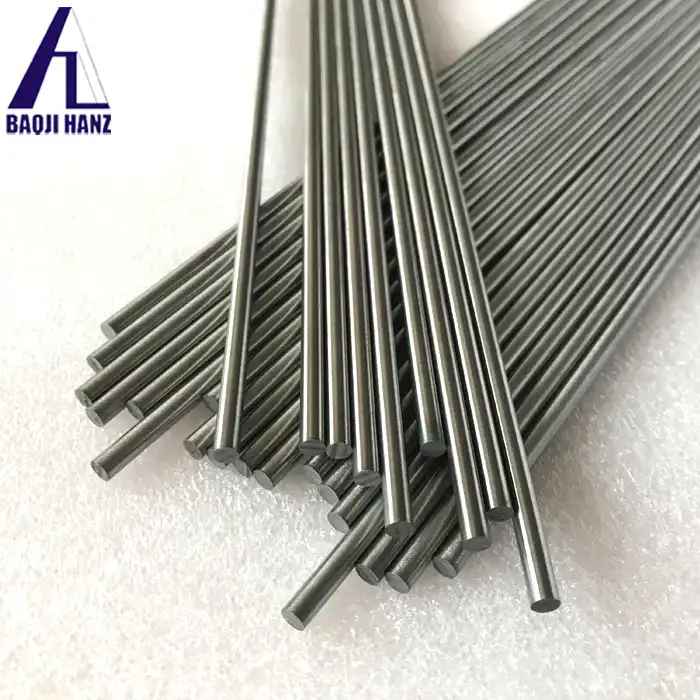
Understanding the specific characteristics of nitinol fishing rod construction helps anglers make informed decisions about equipment selection. The standard configuration features a 4mm diameter blank with 1000mm length, providing a versatile foundation for various fishing applications. This medium to heavy power rating suits a wide range of techniques, from casting medium-weight lures for bass to handling larger saltwater species. The nickel-titanium alloy composition, precisely balanced at Ni 55/Ti 45, ensures optimal superelastic performance and shape memory characteristics across the temperature ranges encountered in typical fishing conditions. The manufacturing process for quality nitinol fishing rods involves sophisticated metallurgical controls to achieve consistent material properties. The alloy must be processed at precise temperatures to establish the proper phase transformation temperatures and ensure uniform superelastic behavior throughout the blank. Quality manufacturers maintain strict compositional tolerances and employ advanced testing protocols to verify that each rod meets performance specifications. This attention to manufacturing detail separates professional-grade nitinol fishing rods from inferior products that may use the material name but fail to deliver true superelastic performance.
Material Composition and Manufacturing Standards
Professional nitinol fishing rod production requires advanced R&D capabilities and sophisticated testing equipment to verify material properties and finished product performance. The superelastic alloy nitinol used in premium rods undergoes rigorous quality control, with manufacturers testing samples for tensile strength, elastic modulus, transformation temperatures, and corrosion resistance. This commitment to quality ensures that anglers receive products meeting the highest industry standards, certified to ISO9001, SGS, and TUV guidelines that govern advanced material applications. The minimum order quantity of 50 pieces reflects the specialized nature of nitinol fishing rod production, making these premium rods particularly suitable for fishing guides, tournament anglers, and serious enthusiasts who recognize the value of superior equipment. Direct purchasing from established manufacturers provides cost advantages compared to retail channels, allowing anglers to access aerospace-grade fishing technology at competitive prices. Payment flexibility through multiple methods including PayPal, bank transfer, and Western Union facilitates international transactions, supporting the global angling community.
Cooperate with Baoji Hanz Metal Material Co., Ltd.
As a leading China nitinol fishing rod manufacturer and China nitinol fishing rod supplier, Baoji Hanz Metal Material Co., Ltd. brings seven years of specialized expertise in nitinol shape memory alloy, superelastic nitinol alloy, and nickel titanium alloy applications. Our position as a trusted China nitinol fishing rod factory allows us to offer direct supply with significant cost advantages, while maintaining extensive inventory of standard sizes for fast delivery. When you're ready to experience High Quality nitinol fishing rod performance, our team provides comprehensive pre-sale consultation on nickel-titanium super-elastic and memory alloys, ensuring you select the optimal configuration for your fishing needs.
We're not just a China nitinol fishing rod wholesale provider—we're your partner in fishing success. Our nitinol fishing rod for sale comes backed by ISO9001, SGS, and TUV certifications, guaranteeing material quality and performance consistency. Competitive nitinol fishing rod price points, combined with OEM services for custom sizes and specifications, make advanced fishing technology accessible to individual anglers and commercial operations alike. For current pricing, technical specifications, or to discuss your specific requirements, contact our professional team at baojihanz-niti@hanztech.cn. Bookmark this page and return whenever questions arise—we're committed to supporting your fishing success with responsive after-sales service and comprehensive industry solutions.
Conclusion
Nitinol fishing rod technology represents a genuine advancement in angling equipment, delivering superelastic performance, corrosion resistance, and durability that transforms fishing experiences across freshwater and saltwater environments through proven material science.
References
1. "Shape Memory Alloys: Properties and Applications in Medical Devices" - Duerig, T.W., Pelton, A.R., and Stöckel, D., Materials Science Forum
2. "Superelasticity and Shape Memory in NiTi Alloys: Fundamentals and Applications" - Otsuka, K. and Wayman, C.M., Cambridge University Press
3. "Corrosion Resistance of Nickel-Titanium Alloys in Marine Environments" - Shabalovskaya, S.A., Bio-Medical Materials and Engineering
4. "Mechanical Properties and Phase Transformations in Nitinol" - Miyazaki, S. and Otsuka, K., ISIJ International Journal
5. "Advanced Materials for Sporting Equipment: Nitinol Applications" - Robertson, S.W., Pelton, A.R., and Ritchie, R.O., Journal of Materials Science