Nitinol Memory Spring OEM Guide: Specifications & MOQ
2025-12-12 13:57:51
Sourcing the right Nitinol Memory Spring for your medical device, robotics project, or aerospace application can be challenging when you're unsure about specifications, minimum order quantities, and customization options. This comprehensive OEM guide addresses the critical pain points engineers and procurement managers face when selecting shape memory alloy springs, providing detailed specifications, MOQ requirements, and practical insights to streamline your sourcing process and ensure optimal component performance for temperature-sensitive and superelastic applications.
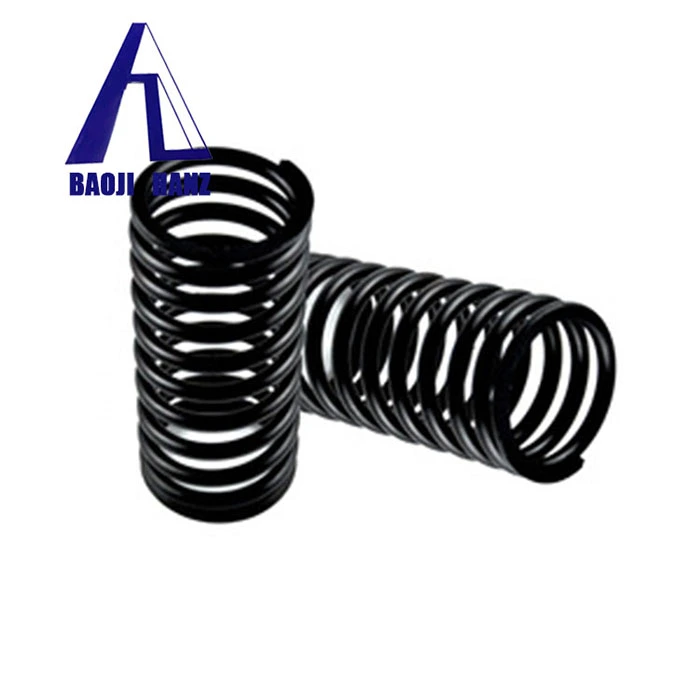
Understanding Nitinol Memory Spring Technology and Applications
Nitinol Memory Spring represents a revolutionary advancement in smart material technology, combining the unique properties of nickel-titanium alloys to create intelligent components capable of responding to environmental changes. These springs are manufactured from a precisely balanced composition of 55% nickel and 45% titanium, resulting in a material with a density of 6.45 g/cm³ and exceptional mechanical properties. The fundamental characteristic that distinguishes Nitinol Memory Spring from conventional spring materials is its ability to exhibit both shape memory effect and superelasticity, enabling applications that were previously impossible with traditional spring steel or stainless steel alternatives. The shape memory effect occurs when the Nitinol Memory Spring is deformed at lower temperatures and subsequently returns to its predetermined shape upon heating above its transformation temperature. This behavior is governed by a reversible solid-state phase transformation between the martensite and austenite crystal structures within the nickel-titanium alloy. Engineers leverage this phenomenon in temperature-triggered mechanisms, where the spring can function as both an actuator and a sensor simultaneously. Applications range from automotive thermostatic valves to aerospace deployment mechanisms, where the Nitinol Memory Spring activates structural changes without requiring external power sources or complex control systems.
Medical Industry Applications and Requirements
The medical sector represents the largest market for Nitinol Memory Spring components, driven by the material's exceptional biocompatibility and unique functional properties. Orthodontic applications utilize shape memory nitinol springs in dental arch wires, where the constant gentle force provided by superelastic properties enables more comfortable and efficient tooth movement compared to traditional stainless steel wires. The Nitinol Memory Spring maintains consistent force levels throughout the treatment process, reducing the frequency of adjustment appointments and improving patient outcomes. Medical device manufacturers specify wire diameters ranging from 0.2 mm to 12 mm depending on the specific orthodontic application and required force levels. Minimally invasive surgical instruments represent another critical application area where Nitinol Memory Spring technology provides substantial advantages. Catheter-based devices incorporate superelastic niti springs that can navigate through tortuous blood vessels while maintaining their functional integrity. The springs compress during insertion through delivery sheaths and expand to their predetermined configurations once deployed at the target site. Artificial heart valve assemblies utilize Nitinol Memory Spring components for stent frames that self-expand to the correct diameter after deployment, providing stable anchoring within the cardiovascular anatomy. These medical applications demand stringent quality control, with manufacturers like Baoji Hanz maintaining ISO 9001:2008 certification and implementing comprehensive testing protocols to ensure consistent performance and patient safety.
Industrial and Consumer Electronics Applications
Beyond medical applications, Nitinol Memory Spring technology enables innovative solutions in consumer electronics and industrial automation. The rapid growth of foldable smartphone technology has created demand for specialized hinge mechanisms incorporating shape memory nitinol springs that provide smooth opening and closing action while withstanding hundreds of thousands of folding cycles. These springs operate within the temperature range of -20°C to +100°C, maintaining consistent performance across various environmental conditions. The superelastic properties ensure the hinge mechanism provides appropriate resistance during folding while preventing permanent deformation that would compromise the device's functionality. Smart wearable devices increasingly incorporate Nitinol Memory Spring actuators for haptic feedback systems and adjustable fitting mechanisms. The springs' ability to generate significant force output relative to their compact size makes them ideal for applications where space constraints limit the use of conventional electromagnetic actuators. Industrial automation and robotics applications leverage the fatigue resistance of Nitinol Memory Spring components, which can withstand more than ten times the number of cycles compared to ordinary steel springs. Bionic joint drives and flexible mechanical hand grasping components utilize the controllable stiffness characteristics of superelastic niti springs to replicate the compliant behavior of biological systems, enabling safer human-robot interaction in collaborative manufacturing environments.
Detailed Specifications for OEM Nitinol Memory Spring Orders
Understanding the technical specifications of Nitinol Memory Spring components is essential for successful OEM procurement and integration into your product designs. The material composition consists of a nickel-titanium alloy with a minimum titanium content of 45%, carefully controlled during the manufacturing process to achieve the desired transformation temperatures and mechanical properties. Baoji Hanz Metal Material Co., Ltd. produces springs with wire diameters ranging from 0.2 mm to 12 mm, accommodating applications from delicate medical instruments to robust industrial actuators. The spring convolution diameter maintains a minimum of 1.5 mm, ensuring adequate structural integrity while providing the necessary flexibility for shape memory and superelastic behavior. The tensile strength of 1050 MPa provides the Nitinol Memory Spring with exceptional load-bearing capacity while maintaining its ability to undergo large elastic deformations. This strength level significantly exceeds that of conventional spring materials of equivalent dimensions, enabling designers to reduce component sizes and overall system weight without sacrificing performance. The operating temperature range extends from -200°C to +100°C depending on the specific alloy composition and heat treatment parameters, though standard applications typically function within the -20°C to +100°C range. This broad temperature tolerance makes Nitinol Memory Spring suitable for both cryogenic medical procedures and elevated-temperature industrial processes.
Processing Services and Surface Treatment Options
Comprehensive processing capabilities enable Baoji Hanz to customize Nitinol Memory Spring components to precise specifications. Available services include bending to create complex three-dimensional spring geometries, welding for joining springs to other components, decoiling from bulk wire stock, precision cutting to specified lengths, and punching for creating mounting holes or attachment features. These processing capabilities allow engineers to integrate the springs directly into assemblies without requiring additional manufacturing operations, reducing lead times and overall production costs. Surface treatment options significantly impact both the functional performance and aesthetic appearance of Nitinol Memory Spring components. Black oxide treatment provides corrosion resistance while maintaining a non-reflective finish suitable for optical applications or situations where visual discretion is required. Pickling removes surface oxides and contaminants formed during heat treatment, creating a clean metallic surface that optimizes biocompatibility for medical applications. Polished finishes reduce surface roughness to minimize friction in dynamic applications and provide an attractive appearance for consumer products. The selection of appropriate surface treatment depends on the specific application requirements, with medical devices typically requiring electropolished or passivated finishes to meet regulatory standards for biocompatibility and cleanability.
Critical Performance Parameters and Testing Standards
Quality assurance for Nitinol Memory Spring products involves comprehensive testing to verify that components meet specified performance parameters. Transformation temperature testing confirms that the austenite finish temperature falls within the required range for the intended application, ensuring the spring will activate or exhibit superelastic behavior at the correct temperature. Mechanical testing evaluates the load-deflection characteristics, maximum recoverable strain, and fatigue life under cyclic loading conditions. Springs destined for medical applications undergo additional biocompatibility testing following ISO 10993 standards to verify the absence of cytotoxic, allergenic, or inflammatory responses. Dimensional inspection verifies that wire diameter, spring outer diameter, free length, and coil pitch meet drawing specifications within specified tolerances. Advanced manufacturing facilities like Baoji Hanz employ coordinate measuring machines and optical inspection systems to ensure dimensional accuracy, particularly for small-diameter springs where conventional measurement techniques become challenging. Non-destructive testing methods including X-ray fluorescence spectroscopy confirm the elemental composition of the nickel-titanium alloy, while differential scanning calorimetry characterizes the transformation temperatures with precision better than ±2°C. These rigorous testing protocols ensure that every Nitinol Memory Spring meets the demanding requirements of critical applications where component failure could result in significant consequences.
Minimum Order Quantity Requirements and Pricing Considerations
When sourcing Nitinol Memory Spring components for OEM applications, understanding minimum order quantity requirements is crucial for project planning and budgeting. Baoji Hanz Metal Material Co., Ltd. establishes a standard MOQ of 500 pieces for custom Nitinol Memory Spring orders, balancing the need for economical production runs with accessibility for smaller projects and prototyping activities. This MOQ applies to springs manufactured to customer-specific dimensions, transformation temperatures, and performance characteristics. For projects requiring rapid prototyping or initial validation testing, the company can accommodate smaller quantities at adjusted pricing to support product development activities before committing to full production volumes. The MOQ of 500 pieces reflects the setup costs associated with custom spring manufacturing, including wire drawing to specified diameters, heat treatment programming for desired transformation temperatures, and coiling tooling configured for particular spring geometries. Larger order quantities benefit from economies of scale, with per-unit costs decreasing as volume increases due to the amortization of setup expenses across more parts. For ongoing production requirements, establishing blanket purchase orders with scheduled releases enables customers to secure favorable pricing while maintaining inventory flexibility. Baoji Hanz retains production process monitoring documents for a minimum of five years, facilitating traceability and supporting quality investigations if questions arise regarding component performance in the field.
Factors Influencing Nitinol Memory Spring Pricing
Several technical and commercial factors influence the pricing of Nitinol Memory Spring components beyond the basic MOQ considerations. Wire diameter significantly affects cost, with smaller diameters requiring more sophisticated drawing equipment and tighter process controls, resulting in higher per-kilogram material costs. Springs manufactured from wire diameters below 0.5 mm command premium pricing due to the technical challenges associated with handling and coiling very fine wire without inducing defects. Conversely, springs produced from larger diameter wire (above 3 mm) may also incur higher costs due to increased material consumption and the substantial forces required during coiling operations. Transformation temperature specifications impact pricing because achieving precise temperature ranges requires careful alloy composition control and sophisticated heat treatment protocols. Standard transformation temperatures that fall within commonly produced ranges offer better pricing than exotic temperatures requiring specialized processing. The complexity of spring geometry influences manufacturing costs, with simple helical compression or extension springs being more economical than complex shapes involving variable pitch, conical configurations, or integrated attachment features. Surface treatment requirements add to the overall cost structure, with basic black oxide treatment being less expensive than electropolishing or specialized biocompatible finishes required for medical applications.
Order frequency and supply chain partnership arrangements also affect Nitinol Memory Spring pricing. Customers willing to commit to regular periodic orders or annual volume agreements typically receive preferential pricing reflecting the reduced sales and administrative overhead associated with established relationships. Direct engagement with manufacturers like Baoji Hanz eliminates distributor markups, providing cost advantages particularly beneficial for high-volume production applications. The company's location in China offers competitive labor and operational costs while maintaining quality standards equivalent to Western manufacturers, creating attractive value propositions for cost-conscious buyers who refuse to compromise on performance or reliability.
Custom Design Support and Engineering Collaboration
Successful integration of Nitinol Memory Spring components into complex product designs often requires close collaboration between the customer's engineering team and the manufacturer's technical specialists. Baoji Hanz Metal Material Co., Ltd. provides comprehensive design support services to optimize spring specifications for specific application requirements. Initial consultations address the functional requirements, operating environment, space constraints, and performance expectations for the spring component. Technical staff with extensive experience in shape memory alloy behavior can recommend appropriate wire diameters, spring geometries, transformation temperatures, and force characteristics to meet the design objectives while ensuring manufacturability and cost-effectiveness. Computer-aided engineering tools enable virtual prototyping of Nitinol Memory Spring designs before committing to physical production. Finite element analysis simulations predict the mechanical behavior of springs under various loading conditions, identifying potential issues such as excessive stress concentrations or inadequate recovery forces. Thermal analysis evaluates the temperature distribution during shape memory activation, ensuring uniform transformation and predictable actuation timing. These engineering services help customers avoid costly design iterations and accelerate time-to-market for products incorporating superelastic niti spring technology.
Prototyping and Validation Testing Services
Before proceeding to full production volumes, most OEM customers require prototype Nitinol Memory Spring samples for design validation and functional testing. Baoji Hanz accommodates prototype orders with flexible MOQ arrangements, producing small quantities for initial evaluation while documenting the manufacturing parameters for subsequent production scaling. Prototype springs undergo the same quality control testing as production parts, ensuring that performance data accurately reflects what full-scale manufacturing will deliver. Customers receive detailed test reports documenting transformation temperatures, load-deflection curves, dimensional measurements, and any specialized testing relevant to the application. Validation testing support extends beyond basic spring characterization to include application-specific evaluations. For medical device applications, the company can assist with biocompatibility testing coordination, connecting customers with qualified testing laboratories and providing material certifications required for regulatory submissions. Industrial applications may require fatigue testing under representative operating conditions, with test fixtures designed to replicate the actual installation environment and loading patterns. Consumer electronics applications often demand environmental testing including temperature cycling, humidity exposure, and drop testing to verify that the Nitinol Memory Spring maintains its performance throughout the product's intended service life. These comprehensive testing services provide confidence that the spring design will succeed in its intended application before significant production investment occurs.
Conclusion
Sourcing Nitinol Memory Spring components for OEM applications requires careful consideration of specifications, MOQ requirements, and manufacturing capabilities to ensure successful project outcomes. With wire diameters from 0.2 mm to 12 mm, operating temperatures spanning -200°C to +100°C, and a standard MOQ of 500 pieces, Baoji Hanz provides flexible options for diverse applications ranging from medical devices to industrial automation systems.
Cooperate with Baoji Hanz Metal Material Co., Ltd.
Partner with China's leading Nitinol Memory Spring manufacturer to access superior quality and competitive pricing. As a trusted China Nitinol Memory Spring factory, China Nitinol Memory Spring supplier, and China Nitinol Memory Spring wholesale provider, Baoji Hanz offers High Quality Nitinol Memory Spring for sale at competitive Nitinol Memory Spring prices. With seven years of expertise in shape memory alloys, we deliver cost advantages through direct supply and maintain large stocks for fast delivery. Our ISO 9001, SGS, and TUV certifications guarantee the highest quality standards. From pre-sale technical consultation to comprehensive after-sales support, our professional team stands ready to address your requirements. Contact us at baojihanz-niti@hanztech.cn to discuss your custom Nitinol Memory Spring needs and receive a detailed quotation today.
References
1. "Shape Memory Alloys: Fundamentals and Applications" - Otsuka, K. and Wayman, C.M., Cambridge University Press
2. "Nitinol Technical Properties and Characteristics" - ASTM International Standards Committee F04 on Medical and Surgical Materials and Devices
3. "Biomedical Applications of Shape Memory Alloys" - Duerig, T.W., Pelton, A.R., and Stöckel, D., Materials Science and Engineering Journal
4. "Superelastic Behavior and Mechanical Properties of Nickel-Titanium Alloys" - Miyazaki, S. and Otsuka, K., Institute of Materials Research
5. "Manufacturing and Processing of Nitinol Components for Medical Applications" - Morgan, N.B., Journal of Materials Engineering and Performance