OEM Guide: Sourcing High-Quality Nitinol Square Wire
2025-12-18 14:00:16
Sourcing the right nitinol square wire for your OEM manufacturing can be overwhelming when product failures, inconsistent quality, and unreliable suppliers threaten your project timelines and reputation. Whether you're designing medical devices, eyeglass frames, or industrial actuators, choosing a trusted China nitinol square wire manufacturer who understands the precise specifications required for nitinol square wire applications is critical to your success. This comprehensive guide provides actionable insights into evaluating suppliers, understanding material properties, and ensuring quality compliance to help you make confident sourcing decisions that protect your investment.
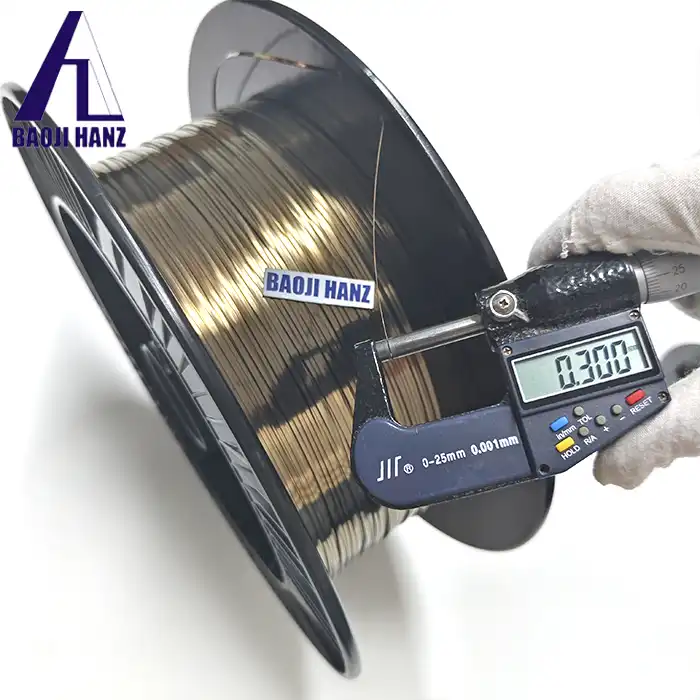
Understanding Nitinol Square Wire Properties and Applications
Nitinol square wire represents a specialized form of nickel-titanium alloy that offers distinct advantages over traditional round wire configurations in numerous industrial and medical applications. This unique material combines approximately 55% nickel and 45% titanium in its composition, creating an alloy with extraordinary mechanical and thermal properties that make it indispensable for modern engineering solutions. The square cross-sectional geometry of nitinol square wire provides enhanced resistance to bending and torsional forces compared to round wire alternatives, making it particularly valuable in applications requiring structural stability and predictable mechanical behavior.
The fundamental properties that distinguish nitinol square wire include its remarkable shape memory effect and superelastic behavior. Shape memory allows the material to return to a predetermined configuration when heated above its transformation temperature, typically ranging from room temperature to 120°C depending on the specific alloy composition and heat treatment. Superelasticity enables nitinol square wire to undergo significant deformations of up to eight percent strain and recover completely without permanent deformation when the load is removed. These properties are controlled by the material's crystalline structure, which transforms between austenite and martensite phases based on temperature and stress conditions. Understanding these phase transformations is essential for OEM manufacturers who need to predict material behavior in their specific application environments.
Critical Specifications for OEM Applications
When sourcing nitinol square wire for OEM manufacturing, understanding the critical specifications that impact performance is essential for achieving optimal results in your applications. Material composition represents the foundation of wire performance, with nickel content typically maintained above 50.4% and titanium content at a minimum of 44% to ensure proper shape memory and superelastic properties. The ASTM F2063 standard governs medical-grade nitinol square wire specifications, while GB 24627 provides additional guidance for industrial applications. These standards establish requirements for chemical composition, mechanical properties, transformation temperatures, and surface finish characteristics that directly influence the wire's performance in end-use applications.
Dimensional accuracy and surface quality are equally important considerations when evaluating nitinol square wire suppliers. Square wire dimensions must be maintained within tight tolerances to ensure proper fit and function in precision assemblies, particularly for medical device applications where dimensional variations can impact device performance and patient safety. Surface finish options range from as-drawn black oxide surfaces to polished, etched, or mechanically cleaned finishes depending on application requirements. Polished surfaces provide low-friction characteristics essential for medical guidewires and catheter components, while etched surfaces offer improved adhesion for bonding operations. The cold-rolled manufacturing technique used to produce nitinol square wire achieves material density of 6.5g/cm³ and tensile strength values around 850 MPa, providing the mechanical performance required for demanding applications in medical devices, eyeglass frames, and industrial equipment.
Primary Application Sectors
The medical field represents the largest and most demanding application sector for nitinol square wire, where biocompatibility and reliability are paramount considerations. Cardiovascular stents, orthodontic archwires, surgical instruments, and minimally invasive device components rely on the unique properties of nitinol square wire to deliver superior clinical outcomes. The material's excellent biocompatibility with human tissue, combined with its superelastic behavior at body temperature, enables medical devices to navigate tortuous anatomical pathways and deploy with minimal trauma to surrounding tissues. Medical-grade nitinol square wire must comply with rigorous quality standards including chemical composition verification, transformation temperature testing, tensile property validation, and biocompatibility certification to ensure patient safety and regulatory compliance.
Beyond medical applications, nitinol square wire serves critical functions in consumer products and industrial systems. Eyeglass frame manufacturers increasingly specify nitinol square wire for temple components and bridge elements, where the material's flexibility, durability, and shape memory properties provide enhanced comfort and resilience compared to traditional frame materials. The low density and high toughness of nitinol square wire enable eyeglass frames to withstand daily wear while maintaining their shape over extended service periods. Industrial applications include actuators, connectors, vibration dampers, and thermal control devices that exploit the material's transformation behavior. High-performance fishing wire represents another growing application where nitinol square wire's combination of high strength, excellent memory characteristics, and superelasticity deliver superior performance in challenging environments.
Evaluating Nitinol Square Wire Manufacturers
Selecting the right China nitinol square wire supplier requires a systematic evaluation of manufacturing capabilities, quality systems, and technical expertise that directly impact the consistency and reliability of the material you receive. Manufacturing infrastructure represents the foundation of a supplier's ability to deliver high-quality nitinol square wire that meets your specifications. Advanced production facilities should include sophisticated melting equipment for preparing high-purity nickel-titanium ingots, precision rolling mills capable of achieving tight dimensional tolerances, and specialized heat treatment furnaces for controlling transformation temperatures and mechanical properties. The manufacturing process for nitinol square wire begins with careful selection and melting of raw materials, followed by hot working, cold rolling, and heat treatment operations that determine the final properties of the finished product.
Quality control systems separate exceptional nitinol square wire manufacturers from mediocre suppliers who cannot consistently meet demanding specifications. Look for suppliers who maintain comprehensive quality management systems certified to ISO9001 standards, with additional certifications from SGS and TUV demonstrating commitment to quality excellence. Reputable China nitinol square wire factory operations implement statistical process control throughout production, maintaining detailed documentation of chemical composition analysis, transformation temperature measurements, mechanical property testing, and dimensional verification for every production lot. This documentation provides traceability and accountability that protects your interests when sourcing critical materials for OEM applications. The best suppliers retain production monitoring documents for at least five years, enabling retrospective analysis if quality issues emerge in the field.
Technical Support and Customization Capabilities
Technical expertise distinguishes superior nitinol square wire suppliers who can provide valuable guidance throughout your product development cycle. Professional customer service staff and experienced metallurgical engineers should be available to answer technical questions about material selection, transformation temperature optimization, mechanical property requirements, and processing recommendations for your specific applications. Pre-sale technical consultation helps you identify the optimal nitinol square wire specifications before committing to large production orders, reducing the risk of costly mistakes and project delays. Suppliers with deep expertise in nickel-titanium superelastic and shape memory alloys can recommend alloy compositions, heat treatment protocols, and surface finish options that optimize performance for your intended application.
Customization flexibility represents a critical capability for OEM manufacturers who require nitinol square wire with specifications tailored to their unique requirements. Leading suppliers offer comprehensive OEM services including custom dimensions, specific alloy compositions, specialized surface treatments, and branded packaging solutions. The ability to provide customized products starting from minimum order quantities of 500 meters enables prototyping and small-scale production runs before scaling to full production volumes. Custom size capabilities accommodate application-specific requirements for wire cross-section dimensions, length, and packaging configurations. Specialized coating options, transformation temperature adjustments, and mechanical property modifications allow OEM manufacturers to optimize nitinol square wire performance for their specific operating environments and performance requirements.
Quality Assurance and Compliance Standards
Understanding quality standards and compliance requirements is essential when sourcing nitinol square wire for OEM manufacturing, particularly for regulated industries such as medical devices where material performance directly impacts patient safety. ASTM F2063 represents the primary standard governing nitinol materials for medical applications, establishing rigorous requirements for chemical composition, mechanical properties, transformation temperatures, and biocompatibility. This standard specifies acceptable ranges for nickel and titanium content, maximum allowable levels of trace elements, minimum tensile strength and elongation values, and acceptable transformation temperature ranges for different material grades. Medical device manufacturers must ensure their nitinol square wire suppliers provide materials conforming to ASTM F2063 requirements along with comprehensive certificates of analysis documenting compliance.
Material testing and certification procedures provide objective evidence that nitinol square wire meets specified requirements. Reputable suppliers conduct thorough testing of every production lot, including chemical composition analysis using spectroscopic techniques, transformation temperature measurement through differential scanning calorimetry, tensile property evaluation, and dimensional verification. Certificates documenting these test results should accompany every material shipment, providing traceability to specific production lots and enabling quality audits if performance issues emerge. For medical applications, biocompatibility testing according to ISO 10993 standards may be required to demonstrate the material's safety for contact with human tissue. Suppliers who proactively provide comprehensive testing documentation demonstrate commitment to quality and customer satisfaction.
Supply Chain Reliability
Supply chain stability represents a critical but often overlooked consideration when evaluating China nitinol square wire wholesale suppliers. Production lead times, inventory availability, and logistics capabilities directly impact your ability to maintain production schedules and meet customer commitments. Superior suppliers maintain substantial inventory of standard nitinol square wire sizes, enabling rapid fulfillment of routine orders without extended waiting periods. The ability to ship standard configurations within days rather than weeks provides flexibility for managing inventory costs while ensuring material availability when production demands increase. For custom specifications, realistic lead time expectations and clear communication about production schedules help you plan procurement activities and avoid costly production disruptions.
Long-term partnership stability depends on supplier financial health, business continuity planning, and commitment to continuous improvement. Established manufacturers with years of experience in nitinol square wire production typically demonstrate greater stability and reliability than newer entrants lacking proven track records. Order tracking systems that provide visibility into production status and shipment progress enable proactive management of material receipts and reduce uncertainty in supply chain planning. After-sales support including technical troubleshooting, application assistance, and responsive problem resolution distinguishes suppliers who view customer relationships as partnerships rather than transactions. The best China nitinol square wire manufacturer partners track product performance in customer applications, provide comprehensive industry solutions, and maintain open communication channels for addressing questions and concerns throughout the product lifecycle.
Cost Considerations and Value Analysis
Understanding the true cost of nitinol square wire requires looking beyond simple price per kilogram to evaluate total cost of ownership including quality consistency, technical support, delivery reliability, and long-term supplier stability. Nitinol square wire price varies significantly based on specifications including alloy composition, dimensional requirements, surface finish, transformation temperature, and order quantity. Medical-grade materials conforming to ASTM F2063 standards typically command premium pricing compared to industrial-grade alternatives due to more stringent composition control, comprehensive testing requirements, and quality system overhead. However, the higher initial cost of premium materials often proves economical when considering reduced scrap rates, improved manufacturing yields, and lower warranty costs associated with superior material consistency.
Direct supply relationships with established China nitinol square wire manufacturers offer substantial cost advantages compared to purchasing through intermediary distributors. Eliminating distributor markups can reduce material costs while improving communication and technical support. However, direct sourcing requires greater effort in supplier evaluation, quality oversight, and relationship management. Companies producing large volumes of nitinol square wire components typically benefit most from direct manufacturing relationships, while smaller operations may find distributor relationships more practical despite higher unit costs. Minimum order quantities represent another important cost consideration, with suppliers typically offering more attractive pricing for larger orders while requiring minimum purchases of 500 meters or more. Balancing inventory carrying costs against volume pricing requires careful analysis of usage rates and storage capabilities.
Conclusion
Sourcing high-quality nitinol square wire demands careful evaluation of supplier capabilities, material specifications, and quality systems to ensure successful OEM manufacturing outcomes. By understanding critical properties, compliance standards, and application requirements, you can identify China nitinol square wire suppliers who deliver consistent quality and reliable support for your production needs.
Cooperate with Baoji Hanz Metal Material Co., Ltd.
Baoji Hanz Metal Material Co., Ltd. stands as your trusted partner with 7 years of specialized expertise in Nitinol Shape Memory Alloy, Superelastic Nitinol Alloy, and Nickel Titanium Alloy manufacturing. As a leading China nitinol square wire factory and China nitinol square wire supplier, we deliver exceptional value through direct supply relationships that eliminate intermediary costs while maintaining uncompromising quality standards. Our extensive inventory ensures fast delivery of standard sizes, while our comprehensive OEM services accommodate custom specifications for dimensions, alloy compositions, and packaging requirements. Every high quality nitinol square wire product we manufacture meets rigorous ISO9001, SGS, and TUV standards, backed by complete testing documentation and five-year production record retention. Whether you need medical-grade ASTM F2063 materials or industrial applications, our experienced technical team provides expert consultation from initial specification through after-sales support. Discover competitive nitinol square wire for sale pricing from our China nitinol square wire manufacturer, with nitinol square wire price transparency and China nitinol square wire wholesale opportunities for volume purchasers. Contact us at baojihanz-niti@hanztech.cn to discuss your requirements and experience the Baoji Hanz difference in quality, service, and technical expertise.
References
1. Duerig, T., Pelton, A., & Stöckel, D. "An Overview of Nitinol Medical Applications." Materials Science and Engineering: A, Elsevier Ltd.
2. Morgan, N.B. "Medical Shape Memory Alloy Applications—The Market and Its Products." Materials Science and Engineering: A, Volume 378, Issues 1-2.
3. Otsuka, K., & Ren, X. "Physical Metallurgy of Ti-Ni-Based Shape Memory Alloys." Progress in Materials Science, Pergamon Press.
4. ASTM International. "ASTM F2063-18: Standard Specification for Wrought Nickel-Titanium Shape Memory Alloys for Medical Devices and Surgical Implants." ASTM International Standards Organization.
5. Miyazaki, S., & Otsuka, K. "Development of Shape Memory Alloys." ISIJ International, The Iron and Steel Institute of Japan.