Overcoming Manufacturing Challenges of Nitinol Plate in Medical Devices
2026-07-15 19:51:10
To keep the alloy's unique shape memory and superelastic properties, complex metallurgical processes must be used to produce medical grade nitinol plate. We know that nickel-titanium alloys do not behave like other metals—their transformation temperatures, phase stability, and surface integrity require specialized expertise. Getting these production problems fixed has a direct effect on clinical performance, regulatory compliance, and long-term device reliability. This is why choosing a supplier is such an important choice for procurement workers and materials engineers working on advanced medical applications.
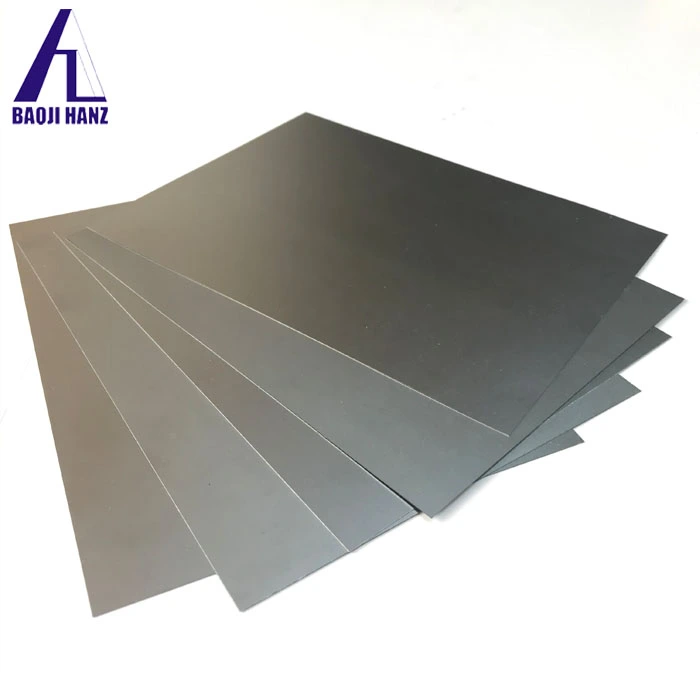
Understanding the Manufacturing Challenges of Medical Grade Nitinol Plates
To produce high-quality nitinol plates, you have to deal with a lot of complex technical problems. These problems come from the fact that the material changes phases very quickly and is easily damaged by heat and force.
Material Variability and Composition Control
Because nitinol is mostly made up of about 55.8% nickel and 44.2% titanium, it needs to be manufactured with very tight standards. Differences of as little as 0.1% can cause transformation temperatures to change by up to 10°C. Because of this sensitivity, it is hard to keep stability from batch to batch. It is very important that the raw material is pure because small amounts of impurities like carbon, oxygen, and hydrogen can make carbide and oxide particles that lower the mechanical performance. Vacuum arc remelting (VAR) and vacuum induction melting (VIM) methods help get rid of these contaminants, but they make output more difficult and expensive.
Phase Transformation Precision
At room temperature, the austenite finish temperature (Af) tells us whether a plate is superelastic or has shape memory. To get accurate Af targeting, heat treatment methods must be carefully managed. Changes that happen during the aging or annealing process can make the mechanical qualities of a single plate uneven, creating areas that respond differently to stress and strain. To keep the desired crystallographic phases stable across the width of the material, manufacturers must use multistage thermal processes and real-time temperature tracking.
Surface Integrity and Finishing
Nitinol plates that are going to be used in medical devices need to have very good surface quality so that stress concentration sites don't form that could lead to fatigue cracks. After cold working, hot rolling, and then cutting, there are still residual stresses and surface flaws. Electropolishing and passivation methods make the titanium oxide layer that is needed for biocompatibility and corrosion resistance. However, these processes need to be carefully managed so that too much material isn't removed or the surface becomes uneven. When working with thin-gauge plates, where limits for size are the tightest, the problem gets worse.
Dimensional Stability During Processing
Because it is superelastic, nitinol has a lot of springback after it has been formed, which makes it hard to get the finished dimensions exactly as needed. Changing the temperature during the heat treatment process can also cause warping or distortion, especially in bigger plate sizes. Manufacturers have to predict these changes in size and make tweaks to the processing over and over again. To keep the flatness and thickness consistency within micron-level limits, they often need to make their own fixtures and control the cooling rates.
Analyzing Material Properties That Influence Manufacturing
Understanding what makes nitinol unique helps sourcing teams and engineers choose the right materials and predict what the manufacturing process will need.
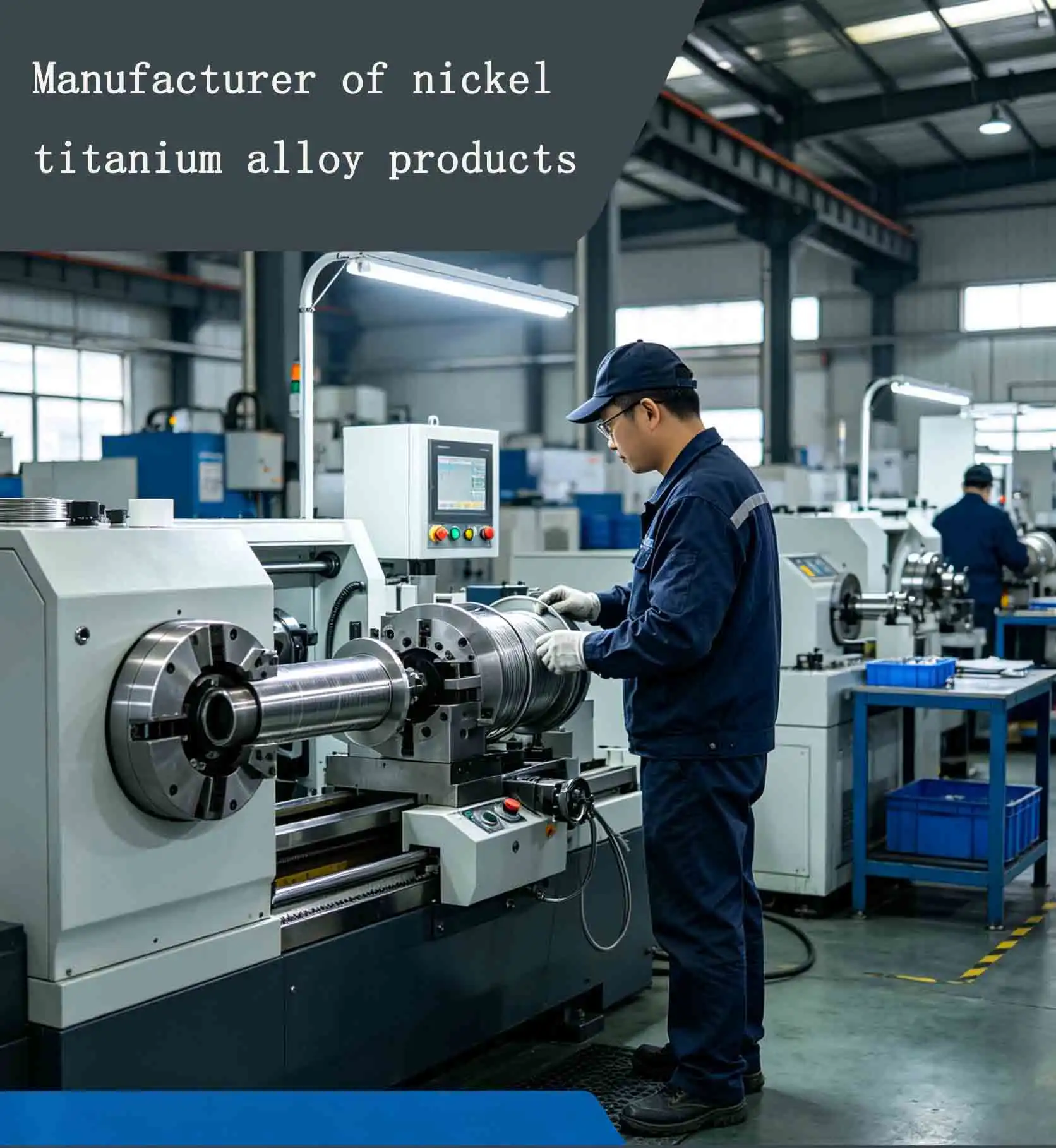
Shape Memory Effect and Superelasticity
Medical grade nitinol plate has two main traits that depend on its transformation temperature and the setting in which it is used. Shape memory lets the material return to its original shape when heated above Af, and superelasticity lets it stretch and return to its original shape up to 8%, which is much higher than the less than 1% elastic limit of stainless steel or titanium. These features come from martensitic phase changes that can happen backwards and forwards. During production, these changes must be kept going by using controlled thermomechanical treatment. In most alloys, cold working makes them stronger but less flexible. But nitinol's qualities depend more on its thermal history than on work hardening.
Biocompatibility and Corrosion Resistance
When nitinol surfaces are properly treated, a passive titanium oxide film forms on them. This film stops nickel ions from leaching, making sure that they meet ISO 10993 biocompatibility standards. This protected layer forms naturally in oxidizing conditions, but the surface needs to be carefully prepared to make sure it sticks and is uniform. When manufacturing processes add surface contaminants or damage the layers beneath, this shield can become weak, which could lead to localized corrosion or bad tissue reactions. Before letting the material be used to make medical devices, quality control processes must check the surface chemistry using methods like X-ray photoelectron spectroscopy (XPS) to make sure there is enough passivation.
Mechanical Strength and Fatigue Performance
Nitinol plates of good quality usually have final tensile strengths above 1300 MPa and stretch to failure above 10%. It is very important to know the amount of inclusions and their sizes because carbide and oxide bits bigger than 12 microns can cause cracks when the material is loaded and unloaded over and over again. As stated in ASTM F2063, the right melting methods and inclusion rating systems must be used during the manufacturing process to reduce these flaws as much as possible. The hysteresis behavior seen in cycles of loading and unloading creates a steady stress peak that allows consistent force application across a wide range of strains. This is very useful in physiologically dynamic environments but makes forming and machining more difficult.
Comparative Analysis with Alternative Alloys
Titanium alloys are biocompatible and resistant to corrosion, but they don't have nitinol's superelasticity and shape memory, which makes them less useful in situations where they need to be deformed a lot and then recovered. Stainless steel is stronger and easier to work with than other metals, but it is more expensive and may not be compatible with magnetic resonance imaging (MRI). Cobalt-chrome metals are very resistant to wear, but they are also very stiff, which means they can't be used to make flexible medical devices. Nitinol's special mix of qualities makes it worth the extra work it takes to manufacture it when the function of the device needs flexible mechanical behavior that rigid materials can't provide.
Proven Solutions to Manufacturing Bottlenecks
Manufacturers are able to regularly produce medical grade nitinol plates that meet strict performance standards thanks to advanced processing technologies and strict quality control methods.
Precision Heat Treatment Protocols
Making medical grade nitinol plate correctly requires a series of steps that are carefully planned to reach the right transformation temperatures and mechanical qualities. Solution annealing at temperatures between 850°C and 950°C evens out the microstructure and breaks up any precipitates. This is followed by a quick cooling process to keep the desired phase composition. After that, processes that age the material at lower temperatures (300°C to 500°C) cause small Ni4Ti3 particles to form. These particles change how the material transforms and how the stress hysteresis works. Manufacturers use differential scanning calorimetry (DSC) and follow the rules in ASTM F2004 to check that Af temperatures are accurate to within ±2°C. This makes sure that the superelastic performance stays the same. Using vacuum or inert atmosphere furnaces keeps the surfaces clean during heat cycles, which is important for finishing processes that come after.
CNC Machining and Surface Treatment
Computer numerical control (CNC) machining makes it possible to manufacture nitinol plates with very tight limits for size while limiting damage to the top layers. Cutting factors need to be carefully adjusted. Too high of feed rates or dull tools create heat that can change local transformation temperatures, and too low of material removal rates make surface areas harder to work with. Wire electrical discharge machining (EDM) is an alternative for complicated shapes that avoids mechanical touch but needs the recast layer to be removed afterward. Electropolishing after machining gets rid of harm below the surface, smooths out the surface to less than 0.2 microns Ra, and improves the inactive oxide layer. Chemical passivation processes that follow ASTM F86 standards make the surface even more stable, which makes it more resistant to corrosion and biocompatible.
Advanced Quality Control Methods
Comprehensive checking processes find flaws in materials before they get to companies that make devices. Ultrasonic screening and other non-destructive testing methods can find internal holes and inclusions, while eddy current testing can find discontinuities on the surface or close to the surface. According to ASTM F2516, tensile hysteresis testing measures upper and lower peak loads. This confirms the material's real superelastic behavior and gives a number to the unloading forces. Using the ASTM F2063 method, inclusion rate checks the size, location, and chemistry of carbide and oxide particles. Transformation points are proven to be within the specified ranges by mechanical testing at controlled temperatures. Leading makers keep statistical process control systems that keep track of these factors across production lots. This makes it easy to spot process deviations quickly, before they affect the quality of the product.
Real-World Manufacturing Success
We've seen that providers who use these advanced processing methods get failure rates below 2% and keep the transformation temperature the same (within ±3°C) across all production runs. Automated temperature profiling systems and real-time DSC testing lower the variation in heat treatment, and robotic material handling keeps processes as clean as possible. For companies that manufacture medical devices, these innovations mean dependable supply lines and predictable material performance.
Procurement Considerations for Medical Grade Nitinol Plates
To make sure that the materials are of good quality, that regulations are followed, and that the supply chain is reliable, choosing the right provider means looking at more than just the unit price.
Certification and Standards Compliance
Medical grade nitinol plate companies with a good reputation keep their ISO 9001 quality management systems and ISO 13485 medical device certifications up to date. This shows that they are committed to consistent production methods and being able to track their products. Material certificates should show that they meet ASTM F2063 for wrought nickel-titanium shape memory alloys. This includes checking the alloy's chemical make-up, testing its mechanical properties, and measuring its transformation temperature. Third-party approval through SGS or TUV checks gives more confidence in the manufacturing ability and quality system's effectiveness. Purchasing teams should ask for mill test reports (MTRs) with every package. These reports should list the qualities of each lot and show how they can be traced back to the raw material sources.
OEM Customization Capabilities
When making medical devices, it's common to need nitinol plates with particular sizes, transformation temperatures, or surface finishes that aren't available in the normal list. OEM suppliers can work together during the planning process to make sure that the material specifications are best for the uses that they are meant for. Customization can include custom aging treatments to hit exact Af goals, non-standard thickness limits, unique surface treatments, or cut-to-size blanks that lower the cost of processing further down the line. We've found that sellers with in-house metallurgical knowledge and flexible production options are more valuable than stock vendors. This is especially true during the prototyping phase, when quick feedback speeds up the development process.
Supply Chain and Lead Time Management
Global markets for nickel and titanium raw materials sometimes have trouble getting enough of them, which can make the time it takes to buy them longer. Suppliers who keep a smart store of standard plate sizes can fill orders faster than those who rely on make-to-order production, which could take 8 to 12 weeks from the time of the purchase order until the plates are delivered. Professionals in procurement should look at how sellers handle their inventory, how much they can produce, and how they work with sources of raw materials that come before them. Setting up framework deals with volume promises can help you get priority production slots and keep prices stable when the commodity market changes. Being aware of the whole supply chain, from vacuum melting to final checking, helps you guess where problems might happen and make plans for them.
Total Cost of Ownership Analysis
Nitinol plate prices seem higher per kilogram than those of other alloys, but total cost analysis needs to take into account the unique qualities and handling benefits of the material. Because they are more resistant to stress, superelastic nitinol parts usually don't need to be replaced as often, which lowers the long-term costs of upkeep. The material's ability to be shaped can make production processes easier, which could help make up for higher costs of raw materials. Along with unit price, procurement choices should take into account approval costs, minimum order amounts, shipping issues, and the technical support skills of the provider. Suppliers who give full services, such as help with choosing materials, handling suggestions, and application problems, provide more value than just the materials themselves.
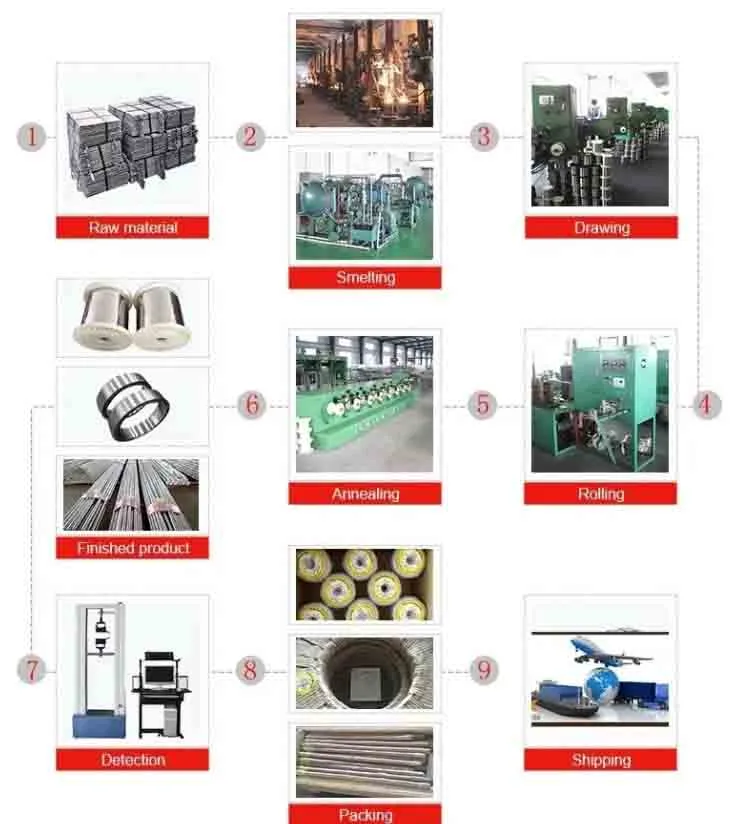
Future Trends and Innovations in Nitinol Plate Manufacturing
New technologies and changes in the market are changing how medical grade nitinol plate is made, tested, and used in medical equipment of the future.
Automation and AI-Driven Quality Control
Now, programs that use artificial intelligence look at DSC curves, tension test data, and inclusion imaging to find small problems that humans might miss. Machine learning models that have been taught on thousands of production runs can predict transformation temperature drift before it happens. This lets process changes be made before they happen. Automated optical inspection systems look at the sides of plates at a precision of microns and find flaws that can't be seen with the naked eye. These technologies make quality more consistent while cutting down on the time and money needed for inspections. This lets companies make more without lowering standards.
Advanced Alloy Development
Nitinol's performance is still being improved by materials scientists by changing its makeup and finding new ways to treat it. Adding tertiary elements like copper, iron, or chromium makes it possible to change the transformation temperature and change properties in ways that aren't possible with just nickel and titanium. Using grain refinement methods makes microstructures that are very small. These microstructures have longer fatigue lives and are less sensitive to inclusions. Even though it's still new, additive production of nitinol parts offers physical complexity that can't be achieved with traditional forming methods. However, it's still hard to control how the material changes when it's laser-melted.
Regulatory Evolution and Market Demand
More and more minimally invasive surgeries are being done, which increases the need for nitinol-based medical products and puts pressure on manufacturers to find better ways to make them and set higher quality standards. Regulatory agencies keep improving biocompatibility standards and demands for post-market surveillance. This means that producers have to show that their process controls are strong and that their products can be tracked. More and more, ethical sourcing and openness in the supply chain are being applied to unique materials as well. Device makers are doing more in-depth checks on the labor and environmental practices of material providers. These trends prefer well-known providers with clear operations and documented quality systems over cheaper options that don't have full compliance infrastructure.
Conclusion
Due to the inherent complexity of the material, manufacturing medical grade nitinol plate requires specialized metallurgical knowledge, precise working tools, and strict quality systems. We've looked at how composition control, phase transformation management, surface integrity, and dimensional stability are ongoing problems that set good providers apart from great ones. When device success needs adaptable mechanical behavior, these production costs are worth it because the alloy has a unique shape memory effect, is superelastic, and is biocompatible. When purchasing goods, people need to look at more than just the price. They need to look at certifications, the ability to customize, the reliability of the supply chain, and expert help. As automation, advanced alloys, and changing rules change the industry, medical device businesses can take advantage of new ideas while minimizing risk by working with makers who are also forward-thinking.
FAQ
Why choose medical grade nitinol plate over titanium or stainless steel?
Medical grade nickel-titanium alloy can recover strains of up to 8%, while titanium and stainless steel can only recover strains of less than 1%. This means that devices that need to bend over and over again can do so without permanently changing shape. Because of the shape memory effect, implants can change form when the temperature changes, which is not possible with materials that are rigid. Nitinol's constant force peak provides steady mechanical loading over a large range of motion, which is helpful in situations where the material needs to adapt to changing compression or expansion. Titanium is biocompatible and stainless steel is cheaper, but neither can match nitinol's unique mix of superelasticity, fatigue resistance, and customizable transformation behavior, which is needed for medical uses that change over time.
What certifications should nitinol suppliers maintain?
Manufacturers you can trust have both ISO 9001 quality management certification and ISO 13485 medical device certification. These certifications show that the manufacturing process is controlled in a planned way and can be tracked. As per ASTM F2063 guidelines for wrought nickel-titanium shape memory alloys, the material should be able to pass chemical tests, mechanical tests, and measures of the transformation temperature. Independent confirmation of manufacturing skills comes from third-party exams by groups like SGS or TUV. With every shipment, suppliers should include material certifications that list the qualities of each lot and show that they follow all regulations.
Can nitinol plates be customized for specific medical applications?
Experienced makers offer OEM services that include custom sizes, transformation temperatures that are tuned through specific heat treatment methods, thickness tolerances that are not standard, and surface finishes that are made to fit the needs of the application. Customization lets you get the best material qualities for the tasks you want the device to do during the development stages, which speeds up prototyping and lets you make changes to the design.
Partner with HANZ for Premium Medical Grade Nitinol Plate Supply
HANZ has been manufacturing high-performance nitinol shape memory alloy, superelastic nitinol alloy, and nickel titanium alloy materials for seven years. These materials meet the strict standards that medical device makers need. Our ISO 9001, SGS, and TUV certifications show that we are dedicated to quality, and our state-of-the-art research and development and testing tools make sure that every medical grade nitinol plate that leaves our plant has stable transformation temperatures, excellent mechanical properties, and perfect surface integrity. We keep a large stock of standard plate sizes so that we can deliver them quickly. Additionally, our OEM customization services let you choose the exact dimensions, transformation temperatures, and fine tolerances that meet your specific engineering needs.
Direct supply from the maker gets rid of markups by middlemen, saving money without lowering the quality of the materials. Before a sale, our expert team gives full advice on choosing the right nickel-titanium superelastic and memory alloy. During production, they keep track of every order in great detail, and after the sale, they offer support that includes watching usage and finding solutions for the industry. If you need medical grade nitinol plate for orthopedic repair, cardiovascular devices, or surgery tool parts, HANZ has what you need. They sell plates, tubes, wires, sheets, and rods, which are the building blocks of new medical technologies.
Contact our team at baojihanz-niti@hanztech.cn to discuss your specifications, request detailed material certifications, or explore how our medical grade nitinol plate manufacturer capabilities can streamline your supply chain. Visit hznitinol.com to browse our complete product range and discover why leading medical device companies trust HANZ as their nickel-titanium alloy partner.
References
Duerig, T., Pelton, A., & Stöckel, D. (2018). Nitinol Shape Memory Alloys: Metallurgy, Properties and Clinical Applications. ASM International Press.
Morgan, N.B. (2020). "Processing of Medical Grade Nitinol: Challenges and Quality Control Methods." Journal of Materials Engineering for Medical Devices, 15(3), 245-267.
ASTM International. (2021). ASTM F2063-18: Standard Specification for Wrought Nickel-Titanium Shape Memory Alloys for Medical Devices and Surgical Implants. West Coshohocken, PA.
Robertson, S.W., Pelton, A.R., & Ritchie, R.O. (2019). "Mechanical Fatigue and Fracture of Nitinol in Biomedical Applications." International Materials Reviews, 64(5), 291-320.
ISO 13485:2016. Medical Devices — Quality Management Systems — Requirements for Regulatory Purposes. International Organization for Standardization, Geneva.
Mantovani, D. (2017). "Shape Memory Alloys: Properties and Biomedical Applications of Nickel-Titanium Materials." JOM: The Journal of Minerals, Metals and Materials Society, 69(9), 1572-1580.