Seamless Nitinol Tube: The Smart Material for Next-Gen Medical Devices
2026-07-16 21:09:19
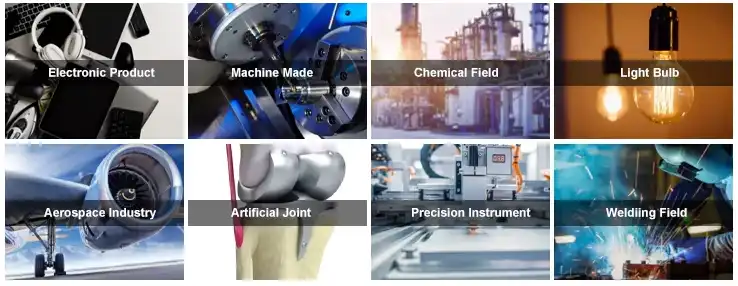
Creating seamless nitinol tubes is a big step forward in the progress of creating new metals with useful properties. They are made from almost equal parts nickel and titanium, which is what makes them so special: they can remember their shape and are very flexible. Seamless construction is better than bonded construction because there are no weak spots at the joints. This makes the structure more regular, which is important for making medical gadgets with a lot of accuracy. These tubes solve basic engineering problems because they don't kink when they're wound, they can handle strains of up to 8% without forever deforming, and they can rebound from being crushed under dynamic loading. This makes them necessary for self-expanding stents, steerable catheter shafts, and minimally invasive surgery tools, all of which have a direct effect on how well patients do.
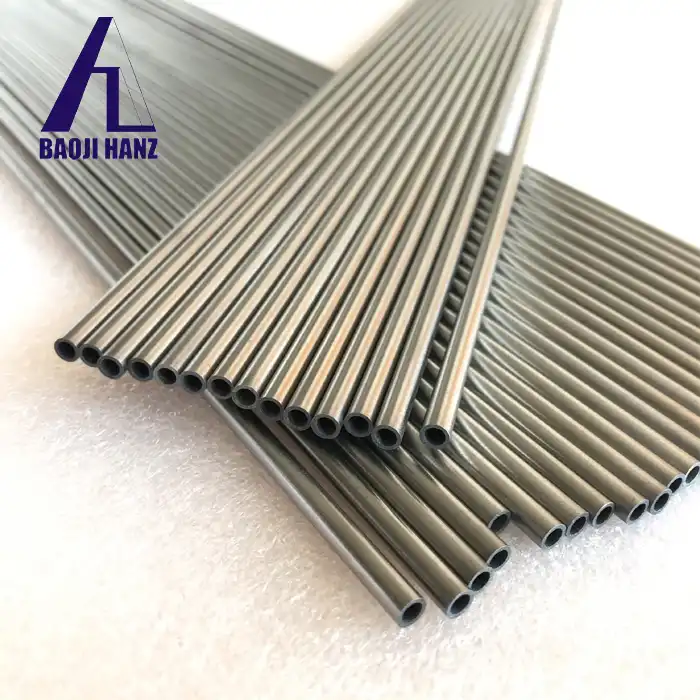
Understanding Seamless Nitinol Tubes: Properties and Manufacturing Process
What Defines Seamless Nitinol Tube Material Properties?
An intermetallic combination of nickel and titanium is used to make the seamless nitinol tube. This material usually has between 55 and 56% nickel by weight. This exact atomic ratio creates a solid structure that can change phases between austenite (a cubic phase at high temperatures) and martensite (a monoclinic phase at low temperatures). This change can be undone. When the tube is at body temperature, the transformation temperature (Af) tells us whether it can remember its shape or has a superelastic response. Biocompatibility is the same as surgical-grade titanium, and ions can't get out of living things because of the inactive oxide layers. When body fluids are high in salt, 316L stainless steel is less likely to rust than 316L stainless steel. It depends on how the metal is heated and pressed that the tensile strength can hit 900 to 1,500 MPa. With the seamless design, the wall width can be as little as ±0.0005". This means that there are no stress groups like there are with longitudinal welds.
Raw Material Selection and Alloy Composition Control
We begin by vacuum induction melting high-purity nickel and titanium feedstock. The oxygen level must stay below 500 ppm to avoid brittle titanium carbide precipitates. Next, we control carbon, hydrogen, and nitrogen impurities through triple vacuum arc remelting, which creates uniform ingots with inclusion counts below ASTM E45 Method A standards. The nickel-to-titanium ratio can be changed within ±0.1 atomic percent to fine-tune transformation temperatures—an increase of 0.1% nickel raises Af by about 10°C. Post-melting spectrometric analysis checks the composition before extrusion. This level of rigor is important for medical device manufacturers who need less than 2°C of change from batch to batch transformation temperatures for FDA validation protocols.
Tube Forming and Precision Drawing Operations
To make seamless tubes, the first step is to use rotary piercing or gun drilling to make thick-walled preforms from extruded billet stock. The next step is to cold-draw the preforms through progressively smaller tungsten carbide dies, which reduces the outer diameter and wall thickness while work-hardening the martensitic structure. Drawing speeds are kept below 15 meters/minute to avoid surface tearing, and stress-relief anneals at 400–500°C are done after every 15-20% area reduction. Multi-pass sequences achieve wall thicknesses from 0.002" to 0.120" and outer diameters from 0.010" to 2.000". This helps us keep concentricity within 0.0002" TIR, which is important for catheter applications where luminal uniformity affects how fluid moves through the tube. Networks of dislocations are made by the cold work, which are then used by shape-setting processes to design the shapes that are wanted.
Heat Treatment and Surface Finishing Protocols
Temperatures between 450 and 550°C are used to clean seamless nitinol tube burners that are used for shape-setting. The final superelastic peak loads and the width of the transformation hysteresis depend on how long the material is held and how fast it cools. It keeps small austenitic grain structures below ASTM E112 Grain Size 7, which makes the wear life longer. When the temperature changes, restriction clamps keep the size limits. We use chemical etching (HF-HNO₃ mixes) or electropolishing to get rid of the oxide scale and microcracks that were caused by the heat during the drawing process. This makes the surface smoother, going from Ra 32 μin to Ra 4–8 μin. For very smooth bores for the guidewire to pass through, slurry flow honing is used on the inside diameter surfaces. The TiO₂ layer stays steady in nitric acid passivation, which is important for implant biocompatibility and long-term corrosion defense in living things.
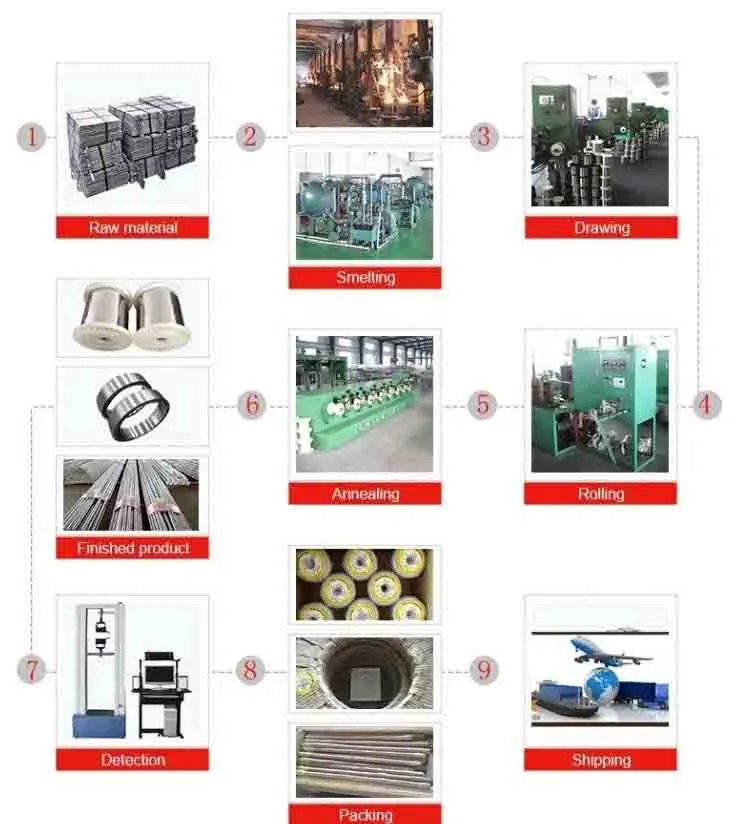
Quality Assurance and Standards Compliance
To make sure that Af is within ±3°C of what is needed, differential scanning calorimetry (DSC) is used to check the transformation temperature of each output lot. Tests that are based on ASTM F2516 prove the maximum stress, the amount of elongation that remains, and the end tensile strength for samples that are statistically representative. There are flaws below the surface that are more than 0.001" deep, and we use optical profilometry to map changes in wall thickness. Our cleanroom packaging meets ISO Class 7 particulate standards, and we are certified by both ISO 9001 and ISO 13485. Each tube batch has documentation that links it to the chemistry of the raw ingot, the processing parameters, and the inspection results. This is important for medical device manufacturers that need FDA 510(k) clearances and MDR technical files.
Advantages of Seamless Nitinol Tubes for Medical Applications
So, when engineers make medical devices with seamless nitinol tubes, they get real performance benefits that make the devices more reliable and keep patients safer. Because there are no longitudinal welds, the main way that welded tubing fails is when the seams separate under repeated loading. This is especially important for cardiovascular stents, which go through 40 million cardiac cycles every year.
Enhanced Structural Integrity and Fatigue Resistance
When a tube is seamless, stresses are distributed more uniformly around its circumference, reducing localized strain concentrations that can initiate fatigue cracks at weld heat-affected zones. In Nitinol applications, ASTM F2063 Nitinol tube rotary bending fatigue testing has reported that seamless tubes can reach up to 10⁷ cycles under specific strain amplitudes, compared to significantly lower fatigue life in resistance-welded counterparts. This orders-of-magnitude improvement is particularly important in applications such as self-expanding stents, where continuous cyclic loading is generated by pulsatile arterial motion. The more uniform microstructure and absence of weld-related discontinuities help maintain stable transformation behavior and mechanical properties along the full tube length. Manufacturers leveraging this reliability benefit from reduced warranty risks and fewer regulatory concerns associated with premature fatigue failure.
Superior Corrosion Resistance and Biocompatibility
The nickel-titanium alloy has a passive titanium dioxide surface layer that forms back together if it gets scratched. This makes it better at resisting corrosion than 316L stainless steel in body fluids that contain chloride. Electrochemical impedance spectroscopy shows that nickel ion release rates are well below the ISO 10993-15 cytotoxicity thresholds, so the material can be implanted for a long time without causing adverse tissue reactions or systemic nickel hypersensitivity. Compared to cobalt-chromium alloys, Nitinol has lower thrombogenicity, so it doesn't need to be anticoagulated after implantation. The material's intrinsic radiopacity (slightly lower than stainless steel) balances fluoroscopic visibility with artifact reduction in MRI imaging, meeting the needs of clinical workflow across diagnostic modalities.
Exceptional Flexibility and Kink Resistance
This is not possible with stainless steel using seamless nitinol tube because it kinks and blocks at 10-diameter radii. This property changes how minimally invasive devices are made and lets catheters navigate the complicated anatomy of neurovascular and coronary vasculature. When compressed radially, seamless tubes return to their original cross-section when the load is removed, keeping the lumen open for fluid or guidewire passage. The plateau stress region in the stress-strain curve provides constant resistive force across large deflections, giving surgeons consistent tactile feedback as they move the device forward. This mechanical behavior directly improves the success rates of complex surgical interventions.
Procurement Insights: How to Buy Seamless Nitinol Tubes for Medical Use?
Evaluating Supplier Capabilities and Certifications
In order to find good seamless nitinol tube suppliers, you should make sure they have ISO 13485 medical device quality management systems and are registered with the FDA as contract manufacturers. You should also ask for certificates of analysis that show batch-level composition verification, transformation temperature testing, and mechanical property validation per ASTM F2516. Suppliers should also be able to show material traceability from raw ingot to finished tube, including heat treatment records and non-destructive testing reports. Also, see if they have their own facilities for DSC analysis, tensile testing, and metallographic examination—relying on third-party labs can cause delays and make it hard to hold them accountable. If your devices need to be shown in a sterile way, make sure they have cleanroom manufacturing and packaging infrastructure.
Minimum Order Quantities and Lead Time Considerations
To make standard seamless tube production runs, you need at least 50–100 meters. For custom specifications like non-standard diameters, wall thicknesses, or transformation temperatures, you may need at least 200–500 meters to make it worth investing in tooling. Lead times are 8–12 weeks for stock sizes and 12–16 weeks for custom specifications. Getting the raw materials takes 4-6 weeks of that time. To protect against supply chain disruptions, strategic buyers keep safety stock equal to 1.5 times the lead time consumption. We at Baoji Hanz Metal Material Co., Ltd. stock popular sizes (0.035"–0.250" OD to 0.005"–0.030" wall) and can deliver within 2–3 weeks, which speeds up prototype development and small-batch production.
Cost Management and Bulk Purchasing Strategies
Nickel tube prices are tier-based: less than 100 meters costs $150–250/meter, 100–500 meters costs $100–180/meter, and more than 1,000 meters costs $80-140/meter, depending on the specifications. For extra 15–30%, you have to pay for custom transformation temperatures, walls that are less than 0.003 inches thick, or tight tolerances. To keep prices down, make sure all of your items are the same size. You will be able to buy more things. Make sure that the price includes all of the costs of ingredients, processing, and testing. This will help you figure out where you can save money. Spread out payments and lock in prices with blanket purchase orders that are released every three months. This makes it easier to manage cash flow. You could look into sale stocking programs. These let sellers store their goods at your building, and when they're used, they give them back to you. You will always have what you need and your moving costs will go down.
Supplier Reputation and Long-Term Partnership Assessment
You can find out about a supplier's history by calling past clients in the same area as your application. One example is that companies that make stents need to know different things than businesses that make tools for surgery. If the seller works with clients that are controlled by the FDA, look at the audit results and write down how well the seller fixed the problem. Find out how much professional help they offer. To give you an example, can their metallurgists tell you what the best temperatures are for your application? Do they tell you more about the subject than just what you need to know to get the certificate? Strong supply chains are important. Having factories in more than one place and many places to get raw materials lowers the risk of natural or global disasters. That way, if there are problems in the field, we can look into them from the past seven years. As part of a strong connection, providers may help with joint development, which means making prototypes of new needs without asking you for the tools up front. It takes less time to come up with new ideas now.
Technical Applications and Future Prospects of Seamless Nitinol Tubes
Cardiovascular and Endovascular Device Applications
Seamless nitinol tubes form the structural backbone of self-expanding stents. Struts that were cut with a laser can stretch into 5-7 French tubes and then return to their 8-30 mm released sizes. With designs made of stainless steel that can be stretched like a balloon, artery restenosis can happen, but the steady outward push keeps it from happening without hurting the tissue. Because they are made of Nitinol tubes, steerable catheter shafts can send push forces over 100 cm or more lengths and bend inside at 180 degrees. Because the design is smooth, there are no weak spots in the fluid delivery tubes. This means that the pressure stays steady while the contrast agent is delivered. It is now possible to use Nitinol tubes to support blood vessels temporarily until the polymer takes them. These tubes are called bioresorbable stent carriers. After that, the tubes can be taken out with little surgery.
Minimally Invasive Surgical Instruments
The tools used in robotic and laparoscopic surgery have wrist joints that can move and smooth tubes that hold the tools. The superelastic bending lets the tips of the instruments spin about 90 degrees inside working tubes that are 5 mm in diameter. They can now reach objects that are off-axis and hard to reach with rigid tools. The kink resistance of Nitinol keeps the flow going even when tools are being used to twist tissue. The alloy's electrical conductivity is close to stainless steel, and electrosurgical tools use it for high-vibration ultrasonic cutting. They also use its wear strength. Our electropolished inner tube sizes (Ra <4 μin) make it easier to put fiber optics or wires inside. This makes it possible to make tools that can do more than one thing better.
Precision Heat Treatment for Application-Specific Performance
Modern ways of treating metal with heat change how it acts based on what the tool needs. When age is stopped at 450–500°C while under tension force, the shape recovers in a specific way. This is helpful for devices that can find their own way. The hysteresis width is lowered by stress-induced martensite (SIM) stability methods. This means that motors need less energy. With gradient heat treatment, tubes are made with different levels of hardness along their length. The softer tips at the ends are used to gently touch flesh, while the harder parts closer to the end are used to push. We change what's inside the oven (argon, nitrogen, vacuum) and how fast it cools to change the grains' sizes and the way precipitates form. With the same base composition, this lets us get higher plateau pressures from 300 MPa (ultra-flexible) to 600 MPa (high-rigidity).
Surface Finishing Impact on Device Performance
A process called electropolishing removes 10–50 μm of the surface. This gets rid of the tiny cracks that form when cold drawing something, which make it wear down. It lasts three to five times longer this way. The process breaks down nickel-rich stages more easily than others, leaving behind an inactive layer that is high in titanium. This layer makes the material more biocompatible and immune to rusting. When we keep the size limits in mind, we find the best current density and electrolyte makeup to remove material evenly from complicated forms. We use sputter-coated platinum-iridium marker bands for tasks that need better radiopacity. When you put them on after cleaning, they stop the interface holes that make the bond weak. The roughness that comes from putting in a tube is cut by 70% when hydrophilic coats are added after passivation. In clinical tests, this directly leads to less damage to the blood vessels.
Emerging Innovations and Industry Trends
We are working on ternary Nitinol alloys (NiTi-X, where X can be copper, iron, or chromium) for seamless nitinol tube to change the mechanical properties and make the temperature ranges for transformation bigger. The change temperatures go down when copper is added, which lets the device work at room temperature. The radiopacity goes up when hafnium is added, which makes it easier to see with a light lens. Adding (laser powder bed fusion) to Nitinol tubes is still in its early stages, but it could lead to forms that are unique to each patient and can't be made with subtractive methods. When Nitinol tubes and shape memory polymer layers are used together in hybrid designs, they make it easier to seal and smooth. Miniaturization is still going strong. For example, tubes with 0.008" outer diameters and 0.001" walls are now being used in neurology and infant preclinical testing, which is very accurate for the business world.
Conclusion
The most precise structure, superelastic performance, and biocompatibility can be found in seamless nitinol tubes. This makes them the best building blocks for medical devices of the future. They solve important technical problems in minimally invasive medicine by being able to withstand high-cycle wear, rebound from extreme deformation, and keep the integrity of the lumen in bodies that are curved. To pick the right material, you need to think about what the job calls for and compare the different types of tensile strength, transformation temperatures, and physical limits. For buying to go well, you need to work with suppliers who can show they follow ISO 13485, know a lot about metals, and have good quality systems that can support FDA legal routes. As the speed of progress in making medical equipment faster and smaller and more flexible, seamless nitinol tubes will be used more and more in heart surgery, tests, and heart conditions.
FAQ
How does sterilization affect seamless nitinol tube properties?
If you use ethylene oxide (EtO) or gamma irradiation to sterilize seamless nitinol tubes, the transformation temperatures or mechanical properties usually don't change. However, autoclave sterilization at 121–134°C needs to be checked because repeated high-temperature exposure can raise Af temperatures by 2–5°C due to precipitation aging effects. To make sure the device always works, we recommend testing it for biocompatibility and mechanical properties after sterilization.
Can seamless nitinol tubes be welded to stainless steel components?
You can join materials in a number of common ways, such as by laser welding with tantalum or niobium interlayers, mechanical crimping, or adhesive bonding with biocompatible epoxies. We give technical advice on joint design to make sure that loads are transferred efficiently while taking into account how the materials differ in how they expand and contract.
What tolerances are achievable for seamless nitinol tube dimensions?
Tolerances for standard production are ±0.001" for the outer diameter and ±10% for the wall thickness of tubes with walls above 0.020" wall. For tubes with walls above 0.010" wall, ultra-precision grinding gets ±0.0005" OD tolerances and TIR stays within 0.0002". Tighter standards need more work, like centerless grinding or honing, which adds 15 to 25 percent to costs and wait times.
How do you select between superelastic and shape memory nitinol tubes?
The transition finish temperature (Af) determines how it acts. It doesn't matter that the Af of superelastic tubes is below body temperature (5–20°C) at 37°C; they stay austenitic and spring-like. If you heat form memory tubes above 37°C (usually 45–70°C), they stay soft and martensitic until you heat them above Af. At that point, they return to their previous shape. Types of steel that need to be always flexible are called superelastic, and types that can be shaped by heat are called shape memory.
Partner with HANZ for Custom Seamless Nitinol Tube Solutions
Baoji Hanz Metal Material Co., Ltd. has been making Nitinol alloys for seven years and offers seamless nitinol tubes with outer diameters from 0.010" to 2.000", wall thicknesses down to 0.002", and customized transformation temperatures. Our ISO 9001 and SGS-certified production facility uses advanced vacuum melting, precision drawing, and controlled heat treatment to deliver consistent superelastic and shape memory properties. We offer direct supply advantages, large stock availability, and OEM services for medical device manufacturers needing ASTM F2516-compliant materials. Email our technical team at baojihanz-niti@hanztech.cn to talk about your project needs with a seamless nitinol tube supplier that is committed to quality, reliability, and quick engineering support.
References
Duerig, T., Pelton, A., & Stöckel, D. (2018). Nitinol Shape Memory Alloys: Fundamentals of Thermomechanical Behavior and Medical Applications. ASM International Press.
Morgan, N. B. (2020). "Medical Applications of Nickel-Titanium Alloys: Material Properties and Manufacturing Considerations." Journal of Biomedical Materials Research Part B: Applied Biomaterials, 108(4), 1521-1538.
ASTM International. (2021). ASTM F2516-21: Standard Test Method for Tension Testing of Nickel-Titanium Superelastic Materials. West Conshohocken, PA: ASTM International.
Robertson, S. W., & Ritchie, R. O. (2019). "Fatigue Performance of Medical Grade Nitinol: State of Understanding and Structural Optimization Strategies." International Materials Reviews, 64(3), 159-186.
ISO 13485:2016. Medical Devices — Quality Management Systems — Requirements for Regulatory Purposes. Geneva: International Organization for Standardization.
Pelton, A. R., Schroeder, V., & Mitchell, M. R. (2017). "Fatigue and Durability of Nitinol Stents: Microstructural and Mechanical Factors." Journal of the Mechanical Behavior of Biomedical Materials, 68, 95-108.