Superelastic Titanium Nickel Rope for Medical Devices: Key Uses
2026-02-13 10:09:52
When medical device manufacturers face challenges in developing instruments that must navigate through complex anatomical pathways while maintaining structural integrity, superelastic titanium nickel rope emerges as the solution. This advanced nitinol-based material combines extraordinary flexibility with exceptional recovery properties, enabling the creation of minimally invasive surgical tools, cardiovascular devices, and precision instruments that dramatically improve patient outcomes while reducing procedural trauma and recovery times. Understanding the key applications and advantages of superelastic titanium nickel rope helps engineers and medical professionals select the right materials for next-generation healthcare innovations.
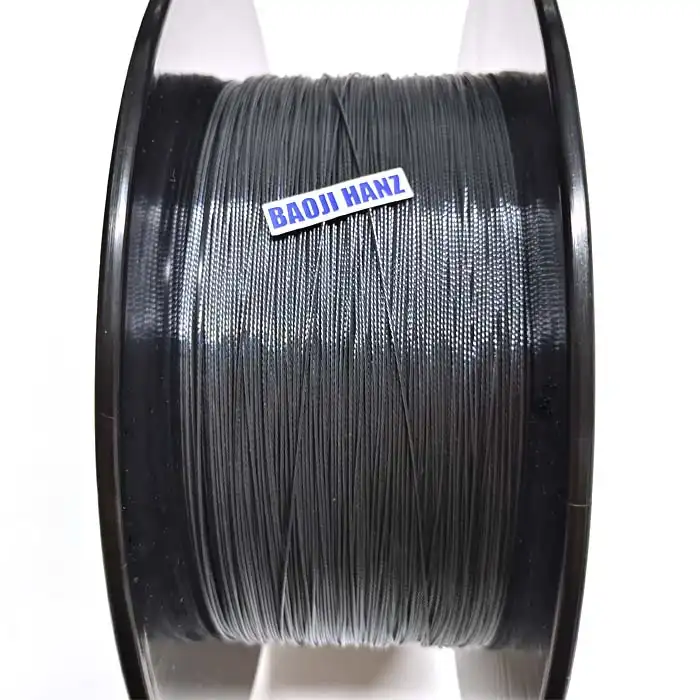
Understanding Superelastic Titanium Nickel Rope Properties
Superelastic titanium nickel rope represents a breakthrough in material science for medical applications, distinguished by its unique molecular structure that enables remarkable mechanical performance. This nickel-titanium alloy, commonly known as nitinol, contains approximately 50-51% nickel by atomic composition with the balance being titanium, creating a material that exhibits both superelasticity and shape memory characteristics. The superelastic behavior allows the rope to undergo significant deformation of up to 10-15% strain and still return completely to its original shape upon stress removal, a property approximately ten to thirty times greater than conventional metals. This extraordinary elasticity stems from a reversible phase transformation between austenite and martensite crystal structures that occurs under mechanical stress rather than temperature change. When stress is applied, the material transforms from its rigid austenitic phase to a more flexible martensitic phase, allowing substantial deformation without permanent damage. Upon stress release, the material instantly reverts to austenite and recovers its predetermined shape. For medical device applications, superelastic titanium nickel rope manufactured by Baoji Hanz Metal Material Co., Ltd. maintains consistent performance across physiological temperature ranges from negative 40 degrees Celsius to 100 degrees Celsius, ensuring reliable function within the human body. The rope's tensile strength exceeds 1500 megapascals while maintaining excellent fatigue resistance, capable of enduring millions of loading cycles without degradation. These combined properties make superelastic titanium nickel rope indispensable for devices requiring both flexibility during deployment and structural stability during operation, particularly in cardiovascular, endoscopic, and orthopedic applications where conventional materials would fail.
Biocompatibility and Safety in Medical Environments
The biocompatibility of superelastic titanium nickel rope is fundamental to its widespread adoption in medical device manufacturing. Despite containing nickel, which has raised historical concerns about allergic reactions, properly processed nitinol develops a stable titanium oxide surface layer that effectively prevents nickel ion release into surrounding tissues. Research has demonstrated that this passive oxide layer provides excellent corrosion resistance in physiological environments, maintaining its protective properties even when exposed to bodily fluids containing chlorides, proteins, and other potentially reactive substances. Superelastic titanium nickel rope from Baoji Hanz Metal Material Co., Ltd. undergoes rigorous surface treatment processes to enhance this natural passivation layer, ensuring minimal nickel leaching that remains well below cytotoxic thresholds. Clinical studies have confirmed that properly manufactured nitinol devices exhibit biocompatibility comparable to pure titanium, with minimal inflammatory response or tissue rejection during long-term implantation. The material demonstrates excellent hemocompatibility, meaning it does not trigger blood clotting or platelet activation when used in cardiovascular applications such as guidewires, stents, or catheter components. Furthermore, superelastic titanium nickel rope resists bacterial colonization better than many traditional surgical materials, reducing infection risks in implantable devices. The rope meets stringent international standards including ISO 13485 for medical device quality management and ISO 9001 for overall quality assurance, certifications that Baoji Hanz Metal Material Co., Ltd. proudly maintains. For permanent implants, the material's stability ensures that its mechanical properties and chemical composition remain consistent over decades of service life, providing patients and physicians with confidence in long-term device performance and safety.
Critical Applications of Superelastic Titanium Nickel Rope in Cardiovascular Devices
Cardiovascular medicine represents the largest and most transformative application area for superelastic titanium nickel rope, where its unique properties address challenges that conventional materials simply cannot overcome. In guidewire manufacturing, the rope's superelasticity enables navigation through tortuous vascular pathways while providing physicians with precise tactile feedback during catheter-based procedures. The material's kink resistance prevents permanent deformation when the guidewire encounters sharp vessel curves or stenotic regions, maintaining a clear pathway for subsequent device delivery. Superelastic titanium nickel rope serves as the core structural element in self-expanding stents, where it provides the radial force necessary to hold diseased vessels open while accommodating the natural flexion and pulsation of blood vessels without fatigue failure. These stents can be compressed to minimal diameters for delivery through small catheters, then expand to their predetermined size upon deployment, conforming perfectly to vessel geometry. The rope's consistent stress characteristics ensure uniform vessel scaffolding without the excessive radial force that might damage delicate arterial walls or cause restenosis. In retrieval basket devices used for thrombectomy and stone extraction, superelastic titanium nickel rope forms the collapsible structure that can be collapsed for insertion, deployed to capture target materials, and collapsed again for removal, all while maintaining its functional geometry. Cardiac rhythm management devices utilize the rope in active fixation leads, where its flexibility allows the lead to move with cardiac motion while its shape memory properties maintain secure anchoring in myocardial tissue. For heart valve applications, superelastic titanium nickel rope provides the expandable framework that allows transcatheter valve implantation, a minimally invasive alternative to open-heart surgery that has revolutionized treatment for elderly patients with severe aortic stenosis. Baoji Hanz Metal Material Co., Ltd. produces superelastic titanium nickel rope with specifications precisely tailored to these cardiovascular applications, offering minimum diameters of 0.2 millimeters and customizable transformation temperatures to match specific device requirements. The company's manufacturing processes ensure consistent mechanical properties throughout the rope length, critical for devices where material variability could compromise patient safety or procedural success.
Advanced Catheter and Endoscopic Instrument Development
Superelastic titanium nickel rope has revolutionized catheter and endoscopic instrument design by enabling unprecedented miniaturization and functionality in minimally invasive surgical tools. In steerable catheter construction, the rope provides the structural backbone that allows precise directional control while maintaining a low profile for navigation through narrow anatomical passages. The material's superelastic behavior ensures that catheters can negotiate extreme angles without kinking or losing their lumen patency, maintaining continuous access for fluid delivery, device deployment, or diagnostic imaging. Endoscopic surgical instruments benefit dramatically from the rope's ability to pass through straight working channels in their collapsed configuration, then elastically deploy into complex geometries once they emerge at the surgical site. This capability enables the development of sophisticated tools including articulated graspers, scissor mechanisms, and retractors that operate at right angles to the endoscope axis, expanding the range of procedures feasible through natural body orifices. Superelastic titanium nickel rope eliminates the need for complex hinge mechanisms and cables that traditionally limited endoscopic instrument reliability and sterilizability, instead relying on elastic deflection for articulation. The rope's high fatigue resistance ensures these instruments maintain consistent performance through hundreds of use cycles, providing hospitals with cost-effective solutions that withstand repeated sterilization and clinical deployment. In bronchoscopy and gastrointestinal endoscopy, superelastic titanium nickel rope enables biopsy forceps and polypectomy snares that provide surgeons with precise tactile feedback while preventing tissue trauma from excessive force application. The material's constant stress characteristics during deformation translate to predictable instrument behavior that experienced physicians can rely upon during delicate procedures. Baoji Hanz Metal Material Co., Ltd. collaborates with medical device manufacturers to develop customized superelastic titanium nickel rope specifications that address specific instrument requirements, including custom diameter profiles, transformation temperature tuning, and surface finish optimization. The company's technical expertise in nitinol processing ensures that each rope batch delivers consistent superelastic properties, meeting the stringent reproducibility requirements of medical device manufacturing where material variation can affect regulatory compliance and clinical outcomes.
Orthopedic and Dental Applications of Superelastic Titanium Nickel Rope
The orthopedic and dental fields have embraced superelastic titanium nickel rope for applications where its unique combination of flexibility, strength, and biocompatibility provides distinct clinical advantages. In orthodontic archwires, the rope's superelastic properties deliver constant, gentle forces to teeth throughout the alignment process, unlike stainless steel wires that require frequent adjustments as tooth positions change. This consistent force application results from the material's stress plateau during phase transformation, which maintains approximately constant stress levels across a wide strain range. Patients experience reduced discomfort and faster treatment times while orthodontists benefit from fewer adjustment appointments. The rope's shape memory characteristics allow orthodontists to preset complex arch forms that guide teeth toward ideal positions, simplifying treatment planning for challenging malocclusions. In endodontic applications, superelastic titanium nickel rope forms the core of rotary files used for root canal preparation, where its flexibility enables these instruments to follow curved canal anatomies without the transportation or ledging common with rigid stainless steel files. The material's fatigue resistance extends instrument lifespan despite the cyclic stresses encountered during clinical use, though proper technique remains essential to prevent cyclic fatigue failure. For bone fixation devices, superelastic titanium nickel rope provides dynamic compression in fracture healing, where its superelastic behavior accommodates the micromotion necessary for optimal bone remodeling while maintaining fracture stability. Porous nitinol constructs incorporating superelastic titanium nickel rope have shown promise in promoting bone ingrowth through their mechanically compliant structure that more closely mimics natural bone stiffness compared to traditional titanium or stainless steel implants. This mechanical compatibility reduces stress shielding effects that can lead to bone resorption around conventional rigid implants. Spinal instrumentation increasingly incorporates superelastic titanium nickel rope in dynamic stabilization systems that permit controlled segmental motion while providing sufficient stability to protect healing tissues and prevent instability-related pain. Baoji Hanz Metal Material Co., Ltd. provides superelastic titanium nickel rope with the precise mechanical properties required for these demanding orthopedic applications, including customizable transformation temperatures that ensure superelastic behavior at body temperature and specific tensile strength ranges matched to intended loading conditions. The company's quality control processes include rigorous mechanical testing and transformation temperature verification for every production lot, ensuring the material consistency essential for medical device manufacturing where component variation directly impacts clinical performance and regulatory compliance.
Robotic Surgery and Surgical Instrumentation Innovation
Superelastic titanium nickel rope enables groundbreaking innovations in robotic surgery and advanced surgical instrumentation by providing the mechanical intelligence necessary for autonomous instrument behavior and enhanced surgical precision. In robotic actuator design, the rope's superelastic properties create artificial muscle systems that generate motion through controlled phase transformation, offering power-to-weight ratios superior to conventional pneumatic or electric actuators. These actuator systems provide surgeons with intuitive force feedback and precise motion control during minimally invasive procedures where direct visualization is limited. The material's predictable stress-strain behavior enables accurate force modulation, preventing tissue damage from excessive instrument forces while maintaining sufficient strength for tissue manipulation and dissection. Superelastic titanium nickel rope serves as the structural foundation for flexible surgical robots designed to navigate through natural body orifices or small laparoscopic ports, where its combination of axial stiffness and lateral flexibility allows instruments to reach surgical targets along non-linear pathways. The rope's resistance to permanent deformation ensures these instruments maintain their intended trajectories despite contact forces from surrounding anatomical structures, improving surgical accuracy and reducing unintended tissue trauma. In needle-based interventions, superelastic titanium nickel rope forms steerable needle systems capable of following curved trajectories through tissue, enabling precise targeting of deep anatomical structures for biopsy, ablation, or drug delivery while avoiding critical structures that would lie along straight-line paths. The material's superelastic recovery provides these needles with self-correcting behavior, automatically compensating for tissue interaction forces that would deflect conventional rigid needles from their intended paths. Surgical scissors and graspers incorporating superelastic titanium nickel rope eliminate traditional pivot mechanisms, instead using elastic deflection for jaw actuation. This design simplification improves instrument reliability, facilitates thorough sterilization by eliminating crevices where biological material might accumulate, and reduces manufacturing costs by minimizing component counts. The rope's high cycle fatigue life ensures these instruments withstand thousands of actuations without performance degradation, meeting the demands of busy surgical practices. Baoji Hanz Metal Material Co., Ltd. works directly with surgical robotics companies and instrument manufacturers to develop specialized superelastic titanium nickel rope grades optimized for specific robotic applications, including ultra-fine diameters below 0.2 millimeters for micro-robotic systems and customized surface treatments that enhance sliding characteristics in articulated instrument designs. The company's expertise in nitinol metallurgy and processing enables rapid prototyping of custom rope specifications, accelerating medical device development cycles and helping innovators bring transformative surgical technologies to market faster.
Manufacturing Considerations and Quality Control for Medical-Grade Superelastic Titanium Nickel Rope
Producing medical-grade superelastic titanium nickel rope demands extraordinary precision in composition control, processing parameters, and quality verification to ensure consistent performance in life-critical applications. The manufacturing process begins with high-purity nickel and titanium raw materials that meet stringent specifications for trace element content, as even minor impurities like oxygen, carbon, or hydrogen can dramatically affect the material's transformation temperatures and mechanical properties. Baoji Hanz Metal Material Co., Ltd. utilizes vacuum induction melting in carefully controlled atmospheres to prevent contamination during alloy formation, achieving impurity contents below 0.001 percent as required for medical applications. The melting process must achieve complete homogenization of nickel and titanium to prevent composition gradients that would create property variations along the rope length. Following casting, the material undergoes extensive hot and cold working operations to develop the fine-grained microstructure necessary for optimal superelastic behavior, with each deformation step carefully controlled to prevent overworking that might introduce defects or residual stresses. Wire drawing operations progressively reduce the rope diameter through precision dies, achieving the minimum 0.2 millimeter diameters required for fine medical instruments while maintaining surface integrity free from scratches or inclusions that could serve as crack initiation sites during cyclic loading. Heat treatment represents the most critical manufacturing step, where precise temperature and time profiles establish the rope's transformation temperatures and final mechanical properties. Baoji Hanz Metal Material Co., Ltd. employs sophisticated thermal processing equipment with temperature uniformity better than plus or minus 5 degrees Celsius, ensuring consistent properties throughout each production batch. Shape-setting operations for pre-formed rope configurations require additional thermal cycles with the material constrained in precision fixtures, programming the rope's memory shape for specific device geometries. Surface finishing processes including electropolishing and passivation enhance corrosion resistance and biocompatibility by maximizing the protective titanium oxide layer while removing surface irregularities that could compromise fatigue performance or tissue compatibility. Quality control protocols verify every critical property for medical-grade superelastic titanium nickel rope, including transformation temperature testing using differential scanning calorimetry, tensile testing to confirm strength and elongation characteristics, fatigue testing under simulated use conditions, and corrosion testing in physiological solutions. Baoji Hanz Metal Material Co., Ltd. maintains comprehensive quality documentation for every production lot, retaining manufacturing process records for at least five years to support medical device manufacturers' regulatory requirements and enable full traceability from raw material sources through final product delivery. The company's ISO 9001 and ISO 13485 certifications demonstrate its commitment to quality management systems appropriate for medical device component manufacturing, providing customers with confidence that superelastic titanium nickel rope will consistently meet specifications critical for device safety and efficacy.
Conclusion
Superelastic titanium nickel rope has fundamentally transformed medical device development by enabling minimally invasive procedures that reduce patient trauma while expanding treatment possibilities across cardiovascular, surgical, orthopedic, and dental specialties through its unique combination of superelasticity, biocompatibility, and fatigue resistance.
Cooperate with Baoji Hanz Metal Material Co., Ltd.
Baoji Hanz Metal Material Co., Ltd. stands as your trusted China superelastic titanium nickel rope manufacturer, offering seven years of specialized expertise in nitinol shape memory alloy, superelastic nitinol alloy, and nickel titanium alloy development. As a leading China superelastic titanium nickel rope supplier and China superelastic titanium nickel rope factory, we provide direct supply advantages that reduce your costs while maintaining the highest quality standards certified through ISO9001, ISO13485, SGS, and TUV guidelines. Our comprehensive inventory ensures fast delivery of standard sizes, while our advanced OEM services customize specifications including dimensions, transformation temperatures, and surface treatments to meet your exact requirements. Whether you need high quality superelastic titanium nickel rope for cardiovascular devices, surgical instruments, or orthopedic applications, our professional technical team provides pre-sale consultation, order tracking with retained process documentation, and thorough after-sales support tracking product performance in your applications. Discover competitive superelastic titanium nickel rope prices and reliable China superelastic titanium nickel rope wholesale options, with superelastic titanium nickel rope for sale starting from a minimum order quantity of just 10 meters. Contact our team today at baojihanz-niti@hanztech.cn to discuss your project requirements and experience the quality and service that make Baoji Hanz Metal Material Co., Ltd. the preferred partner for medical device innovators worldwide.
References
1. Duerig T, Pelton A, Stöckel D. "An Overview of Nitinol Medical Applications." Materials Science and Engineering: A, 1999.
2. Morgan NB. "Medical Shape Memory Alloy Applications: The Market and Its Products." Materials Science and Engineering: A, 2004.
3. Shabalovskaya SA, Anderegg JW, Van Humbeeck J. "Critical Overview of Nitinol Surfaces and Their Modifications for Medical Applications." Acta Biomaterialia, 2008.
4. Ryhänen J, Niemi E, Serlo W, et al. "Biocompatibility of Nickel-Titanium Shape Memory Metal and Its Corrosion Behavior in Human Cell Cultures." Journal of Biomedical Materials Research, 1997.
5. Pelton AR, Schroeder V, Mitchell MR, et al. "Fatigue and Durability of Nitinol Stents." Journal of the Mechanical Behavior of Biomedical Materials, 2008.