Top Benefits of shape memory nitinol square wire in stents
2026-02-25 21:29:02
When cardiovascular interventions fail due to stent complications like fracture, migration, or poor vessel conformability, patients face repeated procedures, increased risks, and mounting healthcare costs. Shape memory nitinol square wire addresses these critical challenges by offering superior mechanical properties that transform how stents perform in the demanding environment of human vasculature, providing physicians with reliable solutions that improve patient outcomes while reducing the need for reintervention.
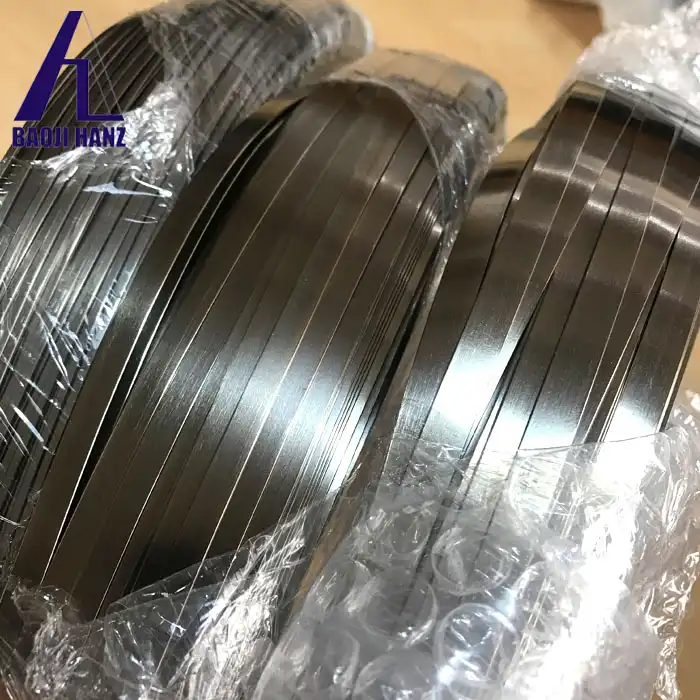
Superior Shape Memory Performance Enhances Stent Deployment
The exceptional shape memory characteristics of shape memory nitinol square wire make it an ideal material for self-expanding stent applications in cardiovascular interventions. This nickel-titanium alloy demonstrates the remarkable ability to recover its predetermined shape after being compressed within a catheter delivery system, enabling minimally invasive deployment procedures that reduce patient trauma and recovery time. The material undergoes a reversible phase transformation between austenite and martensite crystalline structures, which allows stents manufactured from shape memory nitinol square wire to be compressed to a fraction of their expanded diameter during insertion and then autonomously expand to their programmed configuration once positioned at the treatment site.
The transformation temperature of shape memory nitinol square wire can be precisely controlled through careful thermal processing, typically set below body temperature to ensure the stent remains in its superelastic austenitic phase during deployment. When manufactured from material with austenite finish temperatures ranging from minus twenty-five to plus one hundred degrees Celsius, these stents demonstrate consistent expansion behavior across diverse patient physiological conditions. The square cross-sectional geometry provides enhanced structural integrity compared to round wire configurations, distributing forces more uniformly across the stent struts and reducing stress concentrations that could lead to premature failure. This geometric advantage becomes particularly important in complex anatomical locations where vessels experience significant mechanical deformation during normal physiological motion.
Optimized Mechanical Properties for Vascular Applications
Shape memory nitinol square wire exhibits a unique combination of strength and flexibility that addresses the specific biomechanical challenges encountered in vascular stenting. With tensile strength values reaching approximately nine hundred fifty megapascals, these alloys provide sufficient radial force to maintain vessel patency against elastic recoil and external compression while remaining flexible enough to conform to tortuous anatomy. The low elastic modulus characteristic of nickel-titanium alloys, significantly lower than stainless steel alternatives, allows stents fabricated from shape memory nitinol square wire to better match the compliance of native arterial tissue, reducing mechanical mismatch at the implant-tissue interface that can trigger adverse biological responses.
The superelastic behavior of properly processed shape memory nitinol square wire enables these materials to undergo large recoverable strains, typically eight to ten percent or more, without permanent deformation. This exceptional strain tolerance proves critical in anatomical locations subject to repeated cyclic loading, such as the superficial femoral artery, where vessels experience complex multi-axial deformations during limb movement. Stents constructed from shape memory nitinol square wire demonstrate superior fatigue resistance compared to conventional metallic materials, withstanding millions of loading cycles without structural degradation. The square wire geometry enhances this fatigue performance by eliminating stress concentration points that occur at sharp corners in laser-cut tubular stents, distributing mechanical loads more evenly throughout the structure.
Enhanced Biocompatibility Reduces Adverse Reactions
The biocompatibility profile of shape memory nitinol square wire represents a significant advantage for long-term implantation in the cardiovascular system. Despite containing approximately fifty-five to fifty-six percent nickel by weight, properly processed nitinol forms a stable titanium oxide surface layer that effectively isolates the underlying nickel from direct tissue contact, minimizing concerns about nickel ion release and associated allergic responses. This protective oxide film develops naturally during the thermal processing required for shape setting and can be further enhanced through electropolishing treatments that create smoother, more uniform surface finishes. Clinical studies have demonstrated that nitinol implants exhibit tissue compatibility equivalent to or better than other commonly used biomaterials, with minimal inflammatory response and excellent endothelialization characteristics.
The corrosion resistance of shape memory nitinol square wire ensures stable long-term performance in the challenging physiological environment, where implanted devices encounter complex biological fluids, varying pH conditions, and mechanical stress. The material meets stringent international standards including ASTM F2063 and GB 24627, which specify composition, mechanical properties, and surface characteristics for surgical implant applications. The square cross-section of these wires facilitates more thorough cleaning and surface treatment during manufacturing, ensuring consistent quality and eliminating potential contamination sites that could compromise biocompatibility. When properly processed with austenite transformation temperatures appropriate for body temperature operation, these materials maintain their superelastic properties indefinitely within the physiological temperature range, providing consistent mechanical performance throughout the implant lifetime.
Reduced Thrombogenicity Improves Clinical Outcomes
Shape memory nitinol square wire stents demonstrate favorable interactions with the coagulation system, an essential consideration for preventing acute thrombotic complications following implantation. The smooth, oxide-passivated surface that characterizes properly finished nitinol components presents minimal activation sites for platelet adhesion and aggregation compared to rougher metallic surfaces. The ability of stents fabricated from shape memory nitinol square wire to self-expand gradually rather than requiring high-pressure balloon inflation reduces acute vessel trauma and endothelial disruption, preserving the natural anticoagulant properties of the vessel wall. This gentler deployment mechanism contributes to lower rates of acute stent thrombosis and may reduce the duration or intensity of post-procedural antiplatelet therapy required to maintain device patency.
The square geometry of these wires creates stent designs with optimized flow dynamics, minimizing flow disturbances that could promote thrombus formation in areas of stagnation. Computer simulations and in vitro flow studies indicate that properly designed strut patterns fabricated from shape memory nitinol square wire generate less turbulence and lower shear stress variations compared to alternative configurations. The chronic outward force exerted by self-expanding nitinol stents remains relatively constant over time, avoiding the excessive radial force that can contribute to vessel injury and subsequent neointimal hyperplasia. By maintaining optimal apposition to the vessel wall without excessive compression, stents manufactured from shape memory nitinol square wire support rapid endothelialization, the natural process by which a protective cellular lining covers the implant surface and isolates it from direct blood contact.
Exceptional Fatigue Resistance Ensures Long-Term Durability
The outstanding fatigue performance of shape memory nitinol square wire addresses one of the most critical failure modes in peripheral vascular stents, particularly those deployed in locations subject to repeated mechanical deformation. Unlike conventional metallic materials that experience rapid fatigue crack initiation and propagation under cyclic loading, properly processed nitinol exhibits extraordinary resistance to fatigue damage through mechanisms related to its reversible phase transformation behavior. When stents fabricated from shape memory nitinol square wire undergo cyclic deformation, the material accommodates strain through reversible martensite-austenite transformations rather than accumulating plastic deformation damage that leads to crack formation. This unique deformation mechanism enables these devices to withstand millions of loading cycles without the structural degradation that plagues alternative stent materials.
Clinical evidence from long-term follow-up studies demonstrates significantly lower fracture rates for nitinol stents compared to balloon-expandable stainless steel alternatives in demanding anatomical locations. The square cross-sectional geometry of these wires contributes additional fatigue resistance by eliminating the stress concentration effects associated with laser-cut strut junctions, where multiple cutting operations create micro-crack initiation sites. Manufacturing stents from wire forms rather than cut tubing allows for more controlled surface conditions and eliminates the heat-affected zones that can compromise fatigue properties in laser-processed materials. Baoji Hanz Metal Material Company employs specialized processing sequences including strain annealing and shape setting procedures optimized to maximize the fatigue performance of their shape memory nitinol square wire products.
Design Flexibility Enables Complex Geometries
The wire form construction enabled by shape memory nitinol square wire provides designers with exceptional geometric flexibility to create stent architectures optimized for specific anatomical challenges. Unlike laser-cut tubular stents limited by the constraints of planar cutting patterns, wire-based designs can incorporate three-dimensional geometries including helical structures, braided configurations, and complex interwoven patterns that enhance flexibility while maintaining radial support. The square cross-section facilitates precise wire positioning and stable mechanical interlocking in woven designs, preventing wire slippage and maintaining dimensional stability throughout the device lifetime. This design freedom allows engineers to tailor stent properties including radial stiffness, longitudinal flexibility, crush resistance, and foreshortening characteristics to match the specific requirements of different vascular territories.
Advanced manufacturing techniques including precision wire forming, controlled welding, and sophisticated shape setting fixtures enable the production of intricate stent geometries from shape memory nitinol square wire that would be impossible to achieve through conventional fabrication methods. The consistent mechanical properties and predictable transformation behavior of high-quality nitinol wire allow designers to accurately model device performance and optimize geometries through computational simulation before committing to expensive prototyping cycles. Stents constructed from shape memory nitinol square wire can incorporate variable cell sizes along their length, providing higher radial force in regions requiring greater support while maintaining flexibility in areas subject to significant bending. This level of design customization proves particularly valuable for treating complex lesions involving vessel bifurcations, tapered anatomy, or regions with variable calcification patterns.
Cost-Effectiveness Through Reduced Reintervention Rates
The superior clinical performance of stents manufactured from shape memory nitinol square wire translates into meaningful economic benefits for healthcare systems through reduced rates of target lesion revascularization and repeated interventional procedures. The exceptional fatigue resistance and fracture-free performance of these devices minimize the incidence of stent failure requiring additional treatment, avoiding the substantial costs associated with secondary interventions including physician time, facility fees, device expenses, and patient recovery. Long-term patency studies demonstrate that properly designed nitinol stents maintain vessel patency for extended periods, reducing the cumulative healthcare expenditures associated with managing peripheral arterial disease and other vascular conditions over patient lifetimes.
The self-expanding deployment mechanism characteristic of shape memory nitinol square wire stents eliminates the need for high-pressure balloon catheters during implantation, simplifying procedures and reducing equipment costs. Physicians can deploy these devices with greater precision and control compared to balloon-expandable alternatives, potentially reducing procedure times and fluoroscopy exposure for both patients and medical staff. The ability to size stents slightly oversized relative to the target vessel ensures reliable fixation and apposition without requiring aggressive post-dilation, further streamlining deployment techniques. Baoji Hanz Metal Material Company offers customized sizes and specifications of shape memory nitinol square wire starting from minimum order quantities of five hundred meters, providing medical device manufacturers with flexible sourcing options and competitive pricing for both prototype development and volume production applications.
Manufacturing Advantages and Quality Control
The production of medical-grade shape memory nitinol square wire requires sophisticated metallurgical expertise and precise process control to ensure consistent transformation temperatures, mechanical properties, and surface quality. Baoji Hanz Metal Material Company employs advanced vacuum melting and specialized thermomechanical processing sequences to produce nickel-titanium alloys with tightly controlled compositions meeting the stringent requirements of ASTM F2063 and equivalent international standards. The square cross-sectional geometry demands specialized drawing techniques and carefully managed heat treatments to achieve uniform properties throughout the wire cross-section while maintaining precise dimensional tolerances. Quality assurance protocols include comprehensive testing of transformation temperatures using differential scanning calorimetry, mechanical property verification through tensile testing, and detailed surface characterization to ensure products meet medical device application requirements.
The company maintains comprehensive documentation of production processes including traceability systems that track material from raw material input through final product delivery, supporting the regulatory compliance requirements of medical device manufacturers. Surface finishing options including electropolishing provide customers with shape memory nitinol square wire featuring optimized surface characteristics for biomedical applications, with controlled oxide layer thickness and minimal surface roughness that enhance biocompatibility and fatigue performance. Processing services including bending, welding, decoiling, cutting, punching, and shaping enable customers to receive components prepared for direct integration into their manufacturing workflows, reducing development time and ensuring consistent quality. The density of six point five grams per cubic centimeter and polished surface finishes characteristic of high-quality shape memory nitinol square wire contribute to excellent radiopacity, facilitating accurate positioning during fluoroscopic guidance of stent deployment procedures.
Conclusion
Shape memory nitinol square wire delivers transformative benefits for cardiovascular stent applications through its unique combination of shape memory effect, superelasticity, biocompatibility, and exceptional fatigue resistance. These properties enable the development of self-expanding stents that address critical clinical challenges including deployment precision, long-term durability, and reduced complication rates.
Cooperate with Baoji Hanz Metal Material Co., Ltd.
As a China shape memory nitinol square wire manufacturer, China shape memory nitinol square wire supplier, and China shape memory nitinol square wire factory with seven years of expertise in Nitinol Shape Memory Alloy, Superelastic Nitinol Alloy, and Nickel Titanium Alloy, Baoji Hanz Metal Material Company delivers High Quality shape memory nitinol square wire at competitive shape memory nitinol square wire price with shape memory nitinol square wire for sale globally. Our China shape memory nitinol square wire wholesale options, ISO9001, SGS, and TUV certifications, comprehensive pre-sale technical consultation, order tracking, and after-sales support ensure your project success. Contact us today at baojihanz-niti@hanztech.cn to discuss your requirements and experience the advantages of partnering with industry-leading experts.
References
1. Stoeckel D, Pelton A, Duerig T. Self-expanding nitinol stents: material and design considerations. European Radiology 2004.
2. Duerig TW, Pelton AR, Stockel D. An overview of nitinol medical applications. Materials Science and Engineering: A 1999.
3. Pelton AR, Schroeder V, Mitchell MR, Gong XY, Barney M, Robertson SW. Fatigue and durability of Nitinol stents. Journal of the Mechanical Behavior of Biomedical Materials 2008.
4. Barras CDJ, Myers KA. Nitinol—Its Use in Vascular Surgery and Other Applications. European Journal of Vascular and Endovascular Surgery 2000.
5. Whitcher F. Simulation of In Vivo Loading Conditions of Nitinol Vascular Stent Structures. Computers & Structures 2000.