What Are the Material Properties of Superelastic Titanium Nickel Rope?
2025-12-31 20:41:49
Are you struggling with finding materials that can withstand repeated bending without permanent deformation in your critical medical or industrial applications? Superelastic titanium nickel rope offers a revolutionary solution with its unique ability to recover from up to eight percent strain while maintaining structural integrity. This advanced nitinol-based material combines exceptional mechanical strength with remarkable flexibility, making it indispensable for applications ranging from minimally invasive surgical instruments to aerospace engineering components where traditional materials simply fail to deliver the required performance under demanding conditions.
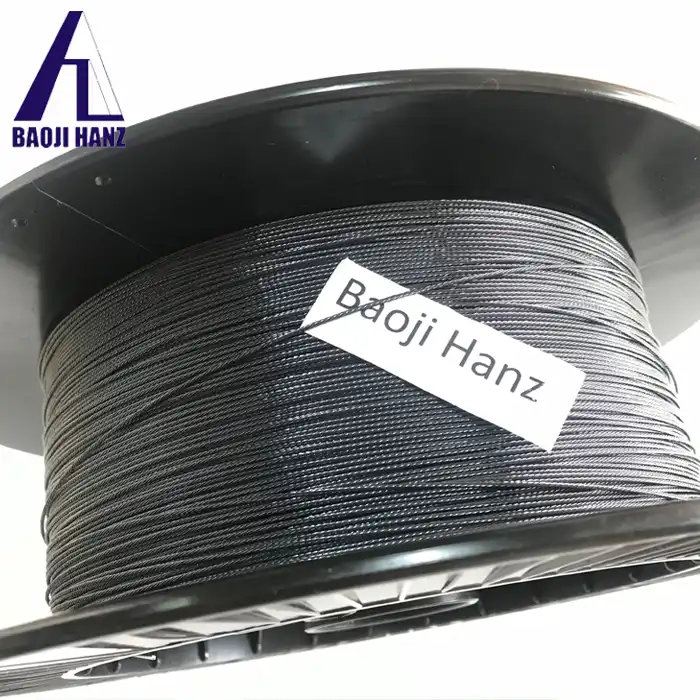
Understanding the Fundamental Material Composition of Superelastic Titanium Nickel Rope
Superelastic titanium nickel rope represents a sophisticated engineering material composed primarily of nickel and titanium in nearly equiatomic proportions, typically containing approximately fifty to fifty-six percent nickel by weight with the remainder being titanium. This precise compositional balance is critical because even minor variations of one percent can dramatically alter the transformation temperatures and mechanical properties of the final product. The material is manufactured through carefully controlled vacuum melting processes that maintain extremely low impurity levels, typically below zero point zero zero one percent, ensuring optimal performance characteristics. The rope structure consists of multiple nitinol strands strategically wound together to create a flexible yet robust assembly capable of transmitting forces while accommodating complex geometries. This architectural design enables the superelastic titanium nickel rope to exhibit both longitudinal strength and lateral flexibility, properties that are mutually exclusive in conventional metallic cables. The manufacturing process involves precise thermomechanical treatment where the material undergoes specific cold-working and heat-treatment cycles at temperatures around four hundred eighty-two degrees Celsius to establish the desired microstructural characteristics. These processing parameters determine the phase transformation behavior that gives superelastic titanium nickel rope its distinctive properties. The resulting material exhibits a lustrous titanium color with a bluish oxide surface layer that provides natural corrosion protection without requiring additional coatings or treatments that could compromise biocompatibility in medical applications.
Phase Transformation Behavior and Crystal Structure
The extraordinary properties of superelastic titanium nickel rope originate from its ability to undergo reversible solid-state phase transformations between two distinct crystalline structures. At temperatures above the transformation range, the material exists in a high-temperature austenitic phase characterized by a body-centered cubic crystal structure that provides mechanical stability and load-bearing capability. When mechanical stress is applied to the austenitic phase superelastic titanium nickel rope, the material undergoes a stress-induced martensitic transformation to a monoclinic crystal structure that accommodates large deformations through coordinated atomic movements rather than permanent plastic flow. This transformation occurs at relatively constant stress levels, creating the characteristic plateau region in stress-strain curves that distinguishes superelastic behavior from conventional elastic deformation. Upon removal of the applied stress, the martensitic phase spontaneously reverts to the austenitic configuration, restoring the original dimensions with remarkable precision typically within zero point one percent. This reversible transformation can occur millions of times without degradation, giving superelastic titanium nickel rope exceptional fatigue resistance that exceeds ten million cycles at two percent strain levels. The transformation temperatures are precisely controlled during manufacturing through careful adjustment of the nickel-to-titanium ratio and specific heat treatment protocols. For most applications, the austenite finish temperature is set below ambient conditions to ensure the material remains in the superelastic austenitic state during normal operation. However, specialized grades of superelastic titanium nickel rope can be engineered with transformation temperatures ranging from negative twenty degrees Celsius for arctic applications to over one hundred degrees Celsius for high-temperature environments, demonstrating the remarkable versatility of this material system.
Mechanical Performance Characteristics
Superelastic titanium nickel rope exhibits mechanical properties that surpass conventional metallic materials across multiple performance metrics critical to demanding applications. The tensile strength of high-quality superelastic titanium nickel rope typically reaches fifteen hundred megapascals minimum, with premium grades achieving values up to eighteen hundred megapascals, providing load-bearing capacity comparable to high-strength steel while weighing significantly less. This exceptional strength-to-weight ratio stems from the material's density of approximately six point four five grams per cubic centimeter, roughly forty percent less than stainless steel alternatives commonly used in similar applications. The superelastic strain recovery capability allows the rope to accommodate deformations up to eight percent of its original length and immediately return to its preset configuration once the load is removed, a performance level unattainable with any other metallic material. This remarkable elastic range is approximately ten times greater than conventional spring materials, enabling designs that would be impossible with traditional components. The material demonstrates elongation at break values ranging from ten to fifteen percent, indicating substantial ductility that prevents catastrophic brittle failure even under overload conditions. Young's modulus for superelastic titanium nickel rope varies significantly depending on the stress level and phase state, ranging from approximately twenty-eight gigapascals in the austenitic phase to as low as fifteen gigapascals during stress-induced transformation, providing a unique variable-stiffness characteristic useful for adaptive structures. The rope configuration enhances these inherent material properties by distributing loads across multiple strands, reducing stress concentrations that could initiate failure in monolithic wires. This structural advantage allows superelastic titanium nickel rope to maintain consistent performance even if individual strands experience minor damage, providing built-in redundancy that enhances reliability in critical applications.
Critical Physical and Chemical Properties of Superelastic Titanium Nickel Rope
Corrosion Resistance and Environmental Stability
Superelastic titanium nickel rope demonstrates exceptional resistance to corrosion across a remarkably broad range of chemical environments that would rapidly degrade conventional metallic materials. This outstanding corrosion resistance originates from the spontaneous formation of a stable titanium oxide passivation layer on the material surface that effectively isolates the underlying metal from aggressive species in the surrounding environment. The protective oxide layer reforms immediately if damaged through mechanical abrasion or chemical attack, giving superelastic titanium nickel rope self-healing properties that maintain long-term performance even in harsh service conditions. In chloride-rich environments such as seawater or physiological fluids, superelastic titanium nickel rope exhibits corrosion rates orders of magnitude lower than stainless steel alternatives, eliminating concerns about pitting corrosion or stress corrosion cracking that limit the service life of conventional materials. This exceptional chloride resistance makes the material ideal for marine applications and medical implants where extended exposure to saline solutions is unavoidable. The rope demonstrates excellent stability in both acidic and alkaline solutions across a pH range from two to twelve, maintaining structural integrity and functional properties where other materials would dissolve or suffer severe degradation. Even in oxidizing environments containing hydrogen peroxide or hypochlorite solutions commonly used for sterilization, superelastic titanium nickel rope maintains its mechanical properties and surface finish without the discoloration or embrittlement observed in alternative materials. The material's high-temperature oxidation resistance extends its usability to applications involving thermal cycling or elevated operating temperatures up to two hundred degrees Celsius in atmospheric conditions. For applications requiring even greater environmental protection, specialized surface treatments can be applied to superelastic titanium nickel rope without compromising its unique mechanical properties, providing additional barriers against particularly aggressive chemical species or biological environments.
Biocompatibility and Medical Performance
The biocompatibility of superelastic titanium nickel rope represents one of its most valuable attributes for medical device applications where direct contact with human tissues and fluids occurs throughout the product lifecycle. Extensive in vitro and in vivo testing has demonstrated that properly processed superelastic titanium nickel rope elicits minimal inflammatory response when implanted, with tissue reactions comparable to or better than established biocompatible materials like titanium and stainless steel. The stable surface oxide layer prevents release of ionic species that could trigger adverse biological responses, maintaining excellent hemocompatibility even during prolonged exposure to blood in cardiovascular applications. This characteristic makes superelastic titanium nickel rope particularly suitable for self-expanding stents, guidewires, and other intravascular devices where thrombogenicity must be minimized to prevent complications. The material has been extensively evaluated according to ISO ten nine nine three biological evaluation standards, demonstrating acceptable performance across cytotoxicity, sensitization, irritation, and systemic toxicity endpoints required for permanent implant materials. Clinical data spanning over three decades of use in millions of patients confirms the long-term safety profile of devices incorporating superelastic titanium nickel rope, with adverse event rates attributable to material biocompatibility remaining extremely low. The rope can be sterilized using standard medical device processing methods including ethylene oxide gas, gamma irradiation, and autoclave cycles without degradation of mechanical or biological properties, facilitating integration into existing manufacturing workflows. For applications requiring enhanced biological integration, the surface of superelastic titanium nickel rope can be modified through various coating technologies to promote endothelialization in vascular applications or osseointegration in orthopedic implementations. These surface modifications maintain the underlying superelastic behavior that provides the functional advantages while optimizing the biological interface between the device and surrounding tissues.
Thermal Characteristics and Temperature Response
The thermal behavior of superelastic titanium nickel rope directly influences its functional performance across different operating environments and represents a critical design consideration for application engineers. The transformation temperatures that define the material's phase change behavior can be precisely tailored during manufacturing through careful control of alloy composition and heat treatment parameters to match specific application requirements. For medical applications operating at body temperature of thirty-seven degrees Celsius, superelastic titanium nickel rope is typically processed to have an austenite finish temperature approximately ten to fifteen degrees below body temperature, ensuring the material remains fully austenitic and exhibits maximum superelasticity throughout normal use. The transformation temperature hysteresis, representing the difference between heating and cooling transformation temperatures, typically spans twenty to forty degrees Celsius, providing thermal stability that prevents unintended phase changes due to minor temperature fluctuations. The specific heat capacity of superelastic titanium nickel rope measures approximately four hundred fifty joules per kilogram per degree Celsius, moderately higher than stainless steel, influencing thermal response times during heating or cooling cycles. Thermal conductivity values around eight to ten watts per meter per degree Celsius indicate relatively poor heat transfer compared to pure metals, a characteristic that can be advantageous in applications where thermal isolation is desired or disadvantageous where rapid thermal equilibration is required. The coefficient of thermal expansion for the austenitic phase measures approximately eleven parts per million per degree Celsius, comparable to titanium alloys and significantly lower than stainless steel, minimizing thermally induced stresses in assemblies with mixed material components. During the martensitic transformation, superelastic titanium nickel rope exhibits unusual thermal effects including temperature increases during stress-induced transformation and temperature decreases during reverse transformation, phenomena that can be exploited for thermal management in specialized applications. The material maintains stable mechanical properties across its operating temperature range from negative forty degrees Celsius to one hundred degrees Celsius, though performance characteristics shift as the material approaches its transformation temperatures where the driving force for phase change decreases.
Advanced Applications and Performance Advantages of Superelastic Titanium Nickel Rope
Medical Device Innovation and Clinical Impact
Superelastic titanium nickel rope has revolutionized minimally invasive medical procedures by enabling device designs that were previously impossible with conventional materials. In interventional cardiology, superelastic titanium nickel rope forms the structural backbone of self-expanding cardiovascular stents that can be compressed to diameters small enough for catheter-based delivery through peripheral vessels, then autonomously expand to support diseased arteries once positioned at the treatment site. The superelastic properties ensure these devices apply consistent radial force against vessel walls without excessive pressure that could cause injury, while accommodating the continuous pulsatile deformation imposed by the cardiac cycle without fatigue failure. Guidewires incorporating superelastic titanium nickel rope provide interventional physicians with unprecedented ability to navigate tortuous vascular anatomy, with the material's kink resistance and shape recovery preventing the permanent deformation that plagues conventional stainless steel alternatives. The rope's ability to transmit torque through circuitous paths while simultaneously providing adequate column strength for advancement enables access to previously unreachable anatomical locations for both diagnostic and therapeutic procedures. In endoscopic applications, superelastic titanium nickel rope allows development of flexible yet controllable instruments that can traverse the complex curves of the gastrointestinal tract while maintaining precise tip positioning for tissue sampling or therapeutic interventions. The material's biocompatibility eliminates concerns about adverse reactions even during extended procedures or in patients with metal sensitivities. Orthopedic surgeons benefit from superelastic titanium nickel rope in fracture fixation devices and spinal instrumentation where the material's unique combination of flexibility and strength better approximates natural bone mechanics compared to rigid implants. The superelastic behavior allows controlled load sharing between the implant and healing bone, potentially reducing stress shielding effects that can impair bone remodeling and integration.
Aerospace and Industrial Engineering Applications
The aerospace industry has embraced superelastic titanium nickel rope for applications where its unique properties provide performance advantages unattainable with traditional materials. In aircraft structures, the rope serves in vibration damping systems where its high internal friction during the martensitic transformation dissipates mechanical energy more effectively than conventional damping materials, reducing fatigue damage to critical components subjected to continuous vibrational loading. The material's wide operating temperature range from cryogenic to elevated temperatures allows reliable function throughout the thermal extremes encountered during flight operations from ground level to high altitudes. Actuation systems in aerospace vehicles utilize the shape memory effect of superelastic titanium nickel rope to create self-actuating mechanisms that respond to temperature changes without requiring external power sources, reducing system complexity and weight in space-constrained applications. The rope's exceptional fatigue resistance proves critical for components experiencing millions of load cycles over the aircraft service life, with properly designed assemblies demonstrating virtually unlimited fatigue life under controlled stress amplitudes. In satellite deployment mechanisms, superelastic titanium nickel rope provides reliable spring force for antenna or solar panel extension while withstanding the launch vibration environment and extreme temperature cycling experienced in orbit. Robotic systems across industrial sectors employ superelastic titanium nickel rope in artificial muscle actuators that mimic biological muscle contraction through thermally or electrically induced shape changes, providing smooth motion with inherent compliance that improves safety in human-robot collaboration scenarios. Manufacturing equipment incorporates the material in gripping and positioning systems where its superelasticity accommodates dimensional variations in workpieces without requiring active control, simplifying automation while improving reliability. The marine industry utilizes superelastic titanium nickel rope in underwater vehicles and oceanographic instruments where corrosion resistance and high strength-to-weight ratio prove essential for deep-sea operations where equipment recovery for maintenance is impractical or impossible.
Specialty Applications and Emerging Technologies
Beyond established applications in medical and aerospace sectors, superelastic titanium nickel rope continues finding adoption in innovative technologies that exploit its unique property combinations. In the consumer eyewear industry, the material enables ultra-lightweight frames that resist permanent deformation from repeated bending, returning to their original shape even after severe abuse that would destroy conventional frame materials. The biocompatibility ensures skin contact safety while the corrosion resistance maintains appearance despite exposure to perspiration, cosmetics, and environmental conditions. Outdoor sports equipment manufacturers incorporate superelastic titanium nickel rope in high-performance products ranging from fishing leaders that resist kinking to tent pole assemblies that survive repeated setup cycles in harsh weather conditions. The material's resilience and reliability prove particularly valuable in remote locations where equipment failure could have serious consequences and replacement is difficult. Electronic devices benefit from superelastic titanium nickel rope in flexible interconnects and hinges for foldable devices, with the material accommodating thousands of bending cycles while maintaining electrical conductivity and structural integrity. The telecommunications industry employs the rope in antenna systems requiring dynamic shape adjustment to optimize signal characteristics, exploiting both the superelastic and shape memory properties to create adaptive structures responsive to changing operational requirements. Automotive applications include active suspension components utilizing the shape memory effect for temperature-dependent stiffness adjustment and crash energy absorption systems where the material's high energy absorption capacity during transformation provides superior impact protection compared to conventional deformation elements. Research laboratories worldwide continue exploring novel applications of superelastic titanium nickel rope in fields ranging from soft robotics to smart textiles, with the material's unique properties enabling designs that challenge traditional engineering paradigms and open new possibilities for product innovation.
Manufacturing Quality and Performance Optimization of Superelastic Titanium Nickel Rope
Production Control and Quality Assurance
The manufacturing of superelastic titanium nickel rope demands exceptional process control to ensure consistent material properties and reliable performance across production batches. Starting with vacuum induction melting or vacuum arc remelting techniques, manufacturers must maintain precise control over alloy composition with nickel content typically held within zero point zero five percent of target values to achieve the desired transformation temperatures. Oxygen and carbon impurities must be minimized during melting since these elements form hard titanium oxide and carbide inclusions that act as stress concentrators and potential crack initiation sites, degrading both fatigue life and ultimate strength. The solidified ingots undergo extensive homogenization heat treatments to eliminate compositional segregation that could cause property variations within individual wire strands. Hot working operations reduce the ingot to intermediate sizes while maintaining temperatures that prevent formation of undesirable phases or excessive grain growth that would compromise mechanical properties. Subsequent cold working through multiple drawing passes progressively reduces the wire diameter while introducing controlled amounts of work hardening that will be leveraged during final heat treatment to establish the desired microstructure. The rope assembly process requires precision machinery to wind multiple wire strands with consistent tension and lay angle, ensuring uniform load distribution during service and preventing preferential failure of individual strands. Final heat treatment represents the most critical manufacturing step, with precisely controlled time-temperature profiles establishing the transformation temperatures and mechanical properties of the finished superelastic titanium nickel rope. This thermomechanical processing must be conducted in controlled atmosphere furnaces to prevent surface oxidation or contamination that could degrade properties. Throughout production, rigorous quality control testing verifies critical parameters including dimensional accuracy, tensile strength, transformation temperatures measured through differential scanning calorimetry, and superelastic behavior characterized through mechanical testing. Documentation systems maintain complete traceability from raw material chemistry through final inspection results, supporting quality management systems compliant with ISO nine zero zero one and ISO thirteen four eight five standards required for medical device applications.
Customization Capabilities and Engineering Support
Leading manufacturers of superelastic titanium nickel rope offer extensive customization capabilities to meet the specific requirements of diverse applications across different industries. Diameter specifications can be tailored from as small as zero point two millimeters for micro-surgical instruments up to several millimeters for industrial applications requiring greater load capacity. The number of strands and their winding configuration can be adjusted to optimize the balance between flexibility and tensile strength for particular use cases. Transformation temperature specifications represent another critical customization parameter, with manufacturers able to produce materials with austenite finish temperatures ranging from well below zero degrees Celsius for cold environment applications to over eighty degrees Celsius for elevated temperature operations. Surface finish options include bright annealed surfaces for maximum corrosion resistance and cleanability in medical applications, pickled surfaces for enhanced coating adhesion, or specialized electropolished finishes that minimize surface roughness to prevent bacterial adhesion in implantable devices. Length specifications accommodate requirements from short sections for laboratory testing to continuous lengths measured in kilometers for high-volume manufacturing operations. Advanced manufacturers provide comprehensive technical support throughout the product development cycle, offering assistance with material selection to match application requirements, finite element modeling to predict component behavior under complex loading conditions, and prototype fabrication to validate designs before committing to production tooling. Differential scanning calorimetry analysis services characterize transformation behavior of production materials, ensuring consistency with design specifications. Mechanical testing capabilities verify tensile properties, fatigue performance, and superelastic characteristics using standardized test methods aligned with international standards. Some manufacturers offer complete device development services including regulatory consulting to navigate the complex approval processes required for medical applications, accelerating time-to-market for innovative products incorporating superelastic titanium nickel rope technology.
Conclusion
Superelastic titanium nickel rope represents an advanced engineering material offering unique combinations of high tensile strength, exceptional flexibility, superior corrosion resistance, and biocompatibility that enable revolutionary applications across medical, aerospace, and industrial sectors where conventional materials cannot meet demanding performance requirements.
Cooperate with Baoji Hanz Metal Material Co., Ltd.
As a China Superelastic titanium nickel rope manufacturer with seven years of specialized expertise in Nitinol Shape Memory Alloy, Superelastic Nitinol Alloy, and Nickel Titanium Alloy, Baoji Hanz Metal Material Co., Ltd. stands ready to support your next innovation. Our China Superelastic titanium nickel rope factory delivers cost advantages through direct supply, while maintaining large inventory stocks of standard sizes for fast delivery. As a trusted China Superelastic titanium nickel rope supplier certified under ISO9001, SGS, and TUV standards, we provide High Quality Superelastic titanium nickel rope at competitive Superelastic titanium nickel rope price points. Whether you need China Superelastic titanium nickel rope wholesale quantities or Superelastic titanium nickel rope for sale in custom specifications, our professional technical team provides comprehensive pre-sale consultation, meticulous order tracking with five-year documentation retention, and dedicated after-sales support throughout your product lifecycle. Contact us at baojihanz-niti@hanztech.cn today to discuss how our OEM services can deliver tailored solutions that seamlessly integrate into your applications and drive your business success forward.
References
1. Bartzela, Theodosia N., Christiane Senn, and Andrea Wichelhaus. "Load-Deflection Characteristics of Superelastic Nickel-Titanium Wires." The Angle Orthodontist, November 2007.
2. Duerig, Thomas W., Alan R. Pelton, and Dieter Stöckel. "An Overview of Nitinol Medical Applications." Materials Science and Engineering: A, Elsevier Science, 1999.
3. Mohd Jani, Jaronie, Martin Leary, Aleksandar Subic, and Mark A. Gibson. "A Review of Shape Memory Alloy Research, Applications and Opportunities." Materials & Design, Elsevier, 2014.
4. Otsuka, Kazuhiro, and Clarence M. Wayman. "Shape Memory Materials." Cambridge University Press, Cambridge, 1998.
5. Morgan, Neil B. "Medical Shape Memory Alloy Applications—The Market and Its Products." Materials Science and Engineering: A, Elsevier Science, 2004.