What Makes 0.1mm nitinol memory sheet Superelastic?
2026-01-15 11:16:51
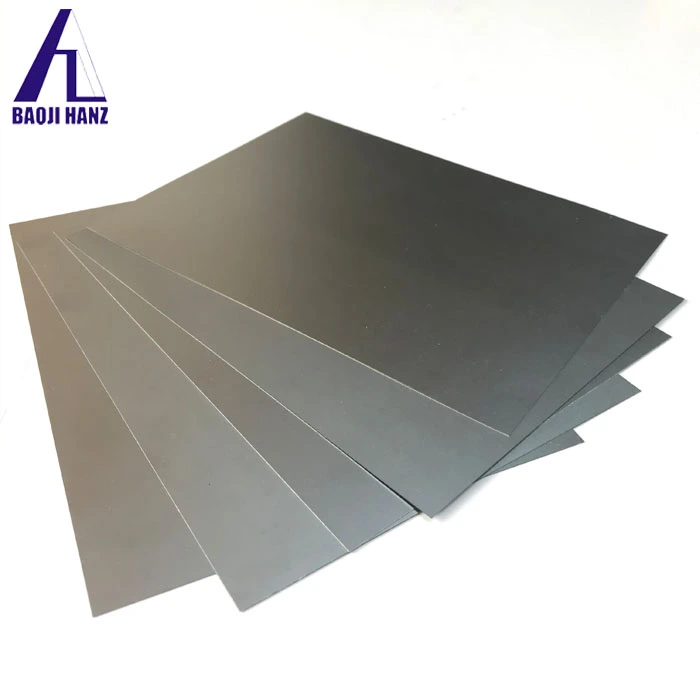
Imagine designing a medical stent that must compress through a catheter, then spring back to its original shape inside a blood vessel—all while maintaining structural integrity through thousands of cardiac cycles. This is where the 0.1mm nitinol memory sheet becomes indispensable. The superelasticity of this remarkable material stems from a reversible crystal structure transformation at the atomic level, allowing it to recover from strains up to 8-10% without permanent deformation. Engineers and product developers across medical, aerospace, and consumer electronics industries struggle with materials that either lack flexibility or suffer permanent deformation under stress. Understanding what makes 0.1mm nitinol memory sheet superelastic is critical for anyone designing next-generation devices that demand both flexibility and reliability.
The Fundamental Mechanism Behind Superelasticity in Nitinol Alloys
The superelastic behavior of 0.1mm nitinol memory sheet originates from a stress-induced martensitic transformation, a phenomenon unique to nickel-titanium alloys with precisely controlled compositions. At temperatures above the austenite finish temperature, nitinol exists in its austenite phase—a highly ordered cubic crystal structure. When mechanical stress is applied to the 0.1mm nitinol memory sheet, the material undergoes a reversible phase transformation to martensite, a lower-symmetry crystal structure that accommodates the applied strain. This transformation occurs at relatively constant stress levels, creating the characteristic plateau observed in stress-strain curves. What distinguishes this material from conventional metals is that upon stress removal, the martensite phase spontaneously transforms back to austenite, completely recovering the induced strain without any residual deformation. The atomic-level mechanism involves the coordinated movement of atoms through a diffusionless shear transformation. Unlike plastic deformation in ordinary metals where dislocations move irreversibly through the crystal lattice, the phase transformation in nitinol sheet material is fully reversible. The 0.1mm thickness allows for rapid heat dissipation during the transformation process, which is slightly exothermic during loading and endothermic during unloading. This thermal effect becomes particularly important in high-frequency cycling applications where temperature management affects performance. The nickel content of approximately 55% plays a crucial role in determining transformation temperatures, with even 0.1% variations in composition shifting the austenite finish temperature by several degrees Celsius.
Composition and Processing Parameters That Enable Superelasticity
Achieving optimal superelasticity in 0.1mm nitinol memory sheet requires precise control over both alloy composition and thermomechanical processing. The base composition typically contains 54-56% nickel by weight, with the balance being titanium. This narrow composition window is critical because the transformation temperatures are extremely sensitive to nickel content. For superelastic applications at room temperature, the austenite finish temperature must be below the operating temperature range, typically between -5°C and 15°C for medical-grade materials. The 0.1mm nitinol memory sheet produced by specialized manufacturers undergoes careful annealing treatments to establish the desired transformation temperatures while maintaining the material's mechanical properties. The manufacturing process for ultra-thin nitinol sheets involves multiple stages of cold working and intermediate annealing. Starting from cast ingots, the material undergoes hot rolling, followed by progressive cold reduction to achieve the final 0.1mm thickness. Each cold-working step introduces crystallographic texture and residual stress, which must be carefully managed through subsequent heat treatments. The surface treatment—whether mechanical polishing or chemical etching—affects not only the aesthetic appearance but also the fatigue resistance of the 0.1mm nitinol memory sheet. Surface imperfections can act as crack initiation sites, compromising the cyclic performance that makes this material valuable for demanding applications. The density of 6.45 g/cm³ remains consistent regardless of processing history, providing a reliable quality control parameter for manufacturers.
Critical Temperature Ranges and Their Impact on Superelastic Performance
The relationship between temperature and superelastic behavior in 0.1mm nitinol memory sheet cannot be overstated. The material exhibits different mechanical responses depending on whether it operates above or below its characteristic transformation temperatures. Four critical temperatures define nitinol's behavior: martensite start (Ms), martensite finish (Mf), austenite start (As), and austenite finish (Af). For superelastic applications, the operating temperature must exceed the Af temperature, ensuring the material remains fully austenitic in the unloaded state. Commercial 0.1mm nitinol memory sheet designed for room-temperature superelasticity typically features an Af temperature range of 0°C to 15°C, though custom compositions can shift this window to meet specific application requirements. When the 0.1mm nitinol memory sheet operates at temperatures significantly above Af, the stress required to induce the martensitic transformation increases according to the Clausius-Clapeyron relationship, approximately 6-8 MPa per degree Celsius. This temperature dependence allows engineers to tune the material's force response by controlling operating temperature. However, operating too far above Af reduces the maximum recoverable strain and may induce conventional slip deformation mechanisms. Conversely, operating near the Af temperature maximizes the superelastic strain window but increases sensitivity to ambient temperature fluctuations. The thermal stability of transformation temperatures over the product lifetime depends on maintaining compositional homogeneity and avoiding precipitation of secondary phases during service, particularly in elevated-temperature applications.
Mechanical Properties That Define Superelastic Capabilities
The mechanical performance envelope of 0.1mm nitinol memory sheet extends far beyond simple elasticity. Under superelastic conditions, the material can accommodate tensile strains of 8-10% while recovering completely upon unloading—approximately fifty times greater than conventional spring steels. The stress-strain response exhibits a characteristic hysteresis loop, with the loading plateau occurring at higher stress than the unloading plateau. This hysteresis represents energy dissipation during the transformation cycle and provides excellent damping characteristics for vibration control applications. The plateau stress for high-quality 0.1mm nitinol memory sheet typically ranges from 400 to 600 MPa, depending on composition and processing history. Fatigue resistance represents a critical performance parameter for cyclic applications of nitinol sheets. Properly processed 0.1mm nitinol memory sheet can endure millions of transformation cycles without mechanical failure, far exceeding the capabilities of conventional elastic materials subjected to equivalent strains. The fatigue life depends on several factors including maximum applied strain, mean strain, surface condition, and environmental factors. Strain amplitudes below 4% generally provide excellent fatigue performance, while higher strains progressively reduce cycle life. The biocompatibility and corrosion resistance of nitinol alloy ensure that mechanical properties remain stable even in aggressive biological environments, making it ideal for implantable medical devices. The lightweight nature combined with high fatigue strength allows designers to minimize device profiles while maintaining functional reliability.
Applications Driving Demand for Ultra-Thin Superelastic Nitinol
The unique properties of 0.1mm nitinol memory sheet have catalyzed innovation across multiple industries. In medical applications, this material has revolutionized minimally invasive procedures through devices such as self-expanding stents, guidewires, and orthodontic archwires. The thin profile of 0.1mm sheets enables catheter-based delivery while the superelasticity ensures proper deployment and sustained force application. Cardiovascular stents made from superelastic nitinol can compress to minimal diameters for insertion, then expand to vessel diameter upon deployment, maintaining constant radial force despite vessel pulsation. Dental aligners incorporate thin nitinol wires that apply gentle, continuous orthodontic forces, reducing treatment time and patient discomfort compared to conventional stainless steel wires. Beyond medical applications, the electronics industry leverages 0.1mm nitinol memory sheet for temperature-responsive actuators and precision positioning systems. Micro-actuators in smartphones and wearable devices utilize the material's ability to generate controlled motion in response to electrical heating. The combination of superelasticity and shape memory allows engineers to create compact, reliable mechanisms without conventional motors or solenoids. Consumer products including eyeglass frames exploit nitinol's damage tolerance—frames bent during handling spontaneously return to their designed shape without permanent deformation. The aerospace sector incorporates nitinol components in morphing wing structures and deployable mechanisms where reliability under repeated cycling is paramount. Each application demands specific property combinations achievable through careful selection of composition and processing parameters for the 0.1mm nitinol memory sheet.
Material Selection Criteria for Superelastic Applications
Selecting the appropriate nitinol variant requires understanding the distinction between superelastic and shape memory grades. Superelastic nitinol alloys, also called pseudoelastic alloys, are optimized for applications requiring reversible deformation at a constant operating temperature. These materials feature transformation temperatures below the service temperature, ensuring austenitic structure under normal conditions. For medical devices operating at body temperature (37°C), the appropriate 0.1mm nitinol memory sheet would have an Af temperature between -5°C and 20°C, providing a comfortable margin above the transformation temperature while maintaining optimal superelastic properties. The critical recrystallization temperature range for these elastomeric variants ensures proper thermomechanical processing without altering transformation characteristics. Shape memory nitinol alloys, in contrast, are designed for thermally activated actuation rather than superelasticity. These materials operate below their transformation temperatures in the martensitic state, where they can be easily deformed. Subsequent heating above the Af temperature triggers recovery to the memorized shape with significant force generation. The annealing temperature range of 20°C to 100°C for shape memory variants allows engineers to program specific recovery temperatures matched to application requirements. While a single 0.1mm nitinol memory sheet composition can exhibit both shape memory and superelastic behavior depending on operating temperature, optimizing for one property typically involves trade-offs in the other. Manufacturers like Baoji Hanz Metal Material Co., Ltd. provide technical consultation to match material specifications with application requirements, ensuring optimal performance for each use case.
Quality Assurance and Manufacturing Standards
Producing consistent, high-performance 0.1mm nitinol memory sheet demands rigorous quality control throughout the manufacturing process. Reputable manufacturers implement comprehensive testing protocols to verify composition, transformation temperatures, mechanical properties, and surface quality. Spectroscopic analysis confirms nickel content within the specified range of 54-56%, while differential scanning calorimetry precisely measures transformation temperatures. Tensile testing validates the superelastic plateau stress and maximum recoverable strain, ensuring each production lot meets specification. Surface inspection using optical and electron microscopy identifies defects that could compromise fatigue performance, particularly critical for medical-grade materials. Adherence to international quality standards provides assurance of consistent product performance. ISO 9001 certification demonstrates commitment to quality management systems, while industry-specific standards like ASTM F2063 for nitinol medical devices establish detailed material requirements. Third-party certifications from organizations like SGS and TUV provide independent verification of manufacturing processes and product quality. For 0.1mm nitinol memory sheet destined for medical applications, biocompatibility testing according to ISO 10993 standards ensures patient safety. Manufacturers maintaining these certifications invest in sophisticated production equipment, skilled technical personnel, and comprehensive documentation systems. Production process monitoring documents retained for five years or more enable traceability and continuous improvement, critical for applications where material failure could have serious consequences.
Conclusion
The superelasticity of 0.1mm nitinol memory sheet emerges from a reversible martensitic transformation controlled by precise alloy composition and processing. This unique mechanism enables unprecedented combinations of flexibility, durability, and biocompatibility that continue expanding application possibilities across medical, industrial, and consumer sectors.
Cooperate with Baoji Hanz Metal Material Co., Ltd.
As a leading China 0.1mm nitinol memory sheet manufacturer and China 0.1mm nitinol memory sheet supplier, Baoji Hanz Metal Material Co., Ltd. brings seven years of specialized expertise in Nitinol Shape Memory Alloy development. Our China 0.1mm nitinol memory sheet factory offers competitive 0.1mm nitinol memory sheet price through direct supply advantages, while maintaining High Quality 0.1mm nitinol memory sheet that meets ISO9001, SGS, and TUV standards. Whether you need China 0.1mm nitinol memory sheet wholesale quantities or custom specifications, our extensive stock ensures fast delivery of 0.1mm nitinol memory sheet for sale. Our professional technical team provides comprehensive pre-sale consultation, order tracking, and after-sales support to ensure your project success. Contact us today at baojihanz-niti@hanztech.cn to discuss your nitinol requirements and experience the reliability that comes from working with a trusted industry partner. Bookmark this page for future reference as you develop your next innovative application.
References
1. Otsuka, K. and Wayman, C.M. "Shape Memory Materials" Cambridge University Press, 1998.
2. Duerig, T., Pelton, A., and Stöckel, D. "An Overview of Nitinol Medical Applications" Materials Science and Engineering A, 1999.
3. Miyazaki, S. and Otsuka, K. "Development of Shape Memory Alloys" ISIJ International, 1989.
4. Morgan, N.B. "Medical Shape Memory Alloy Applications—The Market and Its Products" Materials Science and Engineering A, 2004.
5. Lagoudas, D.C. "Shape Memory Alloys: Modeling and Engineering Applications" Springer Science, 2008.