Why Buy a Custom Nitinol Titanium Spring? Key Advantages
2026-02-28 16:48:59
In today's advanced engineering landscape, selecting the right component can make the difference between ordinary performance and exceptional functionality. Custom nitinol titanium springs represent a revolutionary leap in spring technology, combining shape memory capabilities with superelastic properties that conventional springs simply cannot match. These remarkable components offer engineers and designers unprecedented flexibility in solving complex mechanical challenges across multiple industries, from medical devices to aerospace applications. Understanding the key advantages of custom nitinol titanium springs is essential for making informed decisions that can enhance product performance, reduce maintenance costs, and open new possibilities in design innovation.
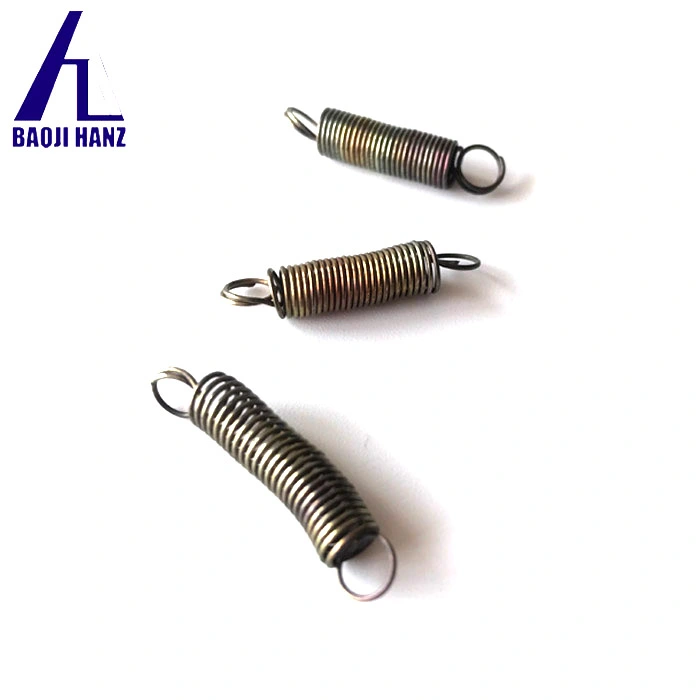
The answer to why you should invest in custom nitinol titanium springs lies in their unique combination of shape memory effect and superelasticity. Unlike traditional steel springs, nitinol titanium springs can recover from significant deformation while maintaining consistent force output across a wide temperature range. When manufactured from shape memory nitinol square shape wire or other specialized forms, these springs can be precisely engineered to trigger specific responses at predetermined temperatures, enabling smart functionality in applications ranging from actuators to biomedical implants. This adaptability, combined with exceptional fatigue resistance and biocompatibility, makes custom nitinol titanium springs an invaluable choice for demanding applications where reliability and performance cannot be compromised.
Unmatched Mechanical Properties and Performance Characteristics
Superior Elasticity and Deformation Recovery
The nitinol titanium spring exhibits extraordinary elastic properties that far exceed those of conventional spring materials. With the ability to sustain strains up to 8-10% while still returning to its original shape, these springs demonstrate a superelastic behavior that is unparalleled in metallurgy. This remarkable characteristic stems from the stress-induced martensitic transformation that occurs within the nickel-titanium alloy structure. When loaded, the material undergoes a reversible phase transformation that allows it to accommodate substantial deformation without permanent plastic deformation. This means that in practical applications, a nitinol titanium spring can be compressed or extended far beyond what would permanently damage a steel spring, yet still return perfectly to its original dimensions upon unloading. The maximum recovery stress of 600 MPa achieved by quality nitinol springs from manufacturers like Baoji Hanz Metal Material Co., Ltd. ensures that these components can handle demanding cyclic loading conditions while maintaining their functional integrity over millions of cycles.
Exceptional Fatigue Resistance and Longevity
When evaluating spring materials for long-term applications, fatigue resistance becomes a critical consideration, and this is where the nitinol titanium spring truly excels. Traditional spring materials typically fail after a limited number of load cycles due to crack propagation and material degradation. However, nitinol's unique crystallographic structure and transformation behavior provide inherent resistance to fatigue failure. The material's ability to dissipate energy through phase transformation rather than through plastic deformation means that stress concentrations are distributed more evenly throughout the component. Research has demonstrated that properly processed nitinol springs can withstand over 10 million cycles without significant degradation in performance. This exceptional durability translates directly into reduced maintenance requirements, lower replacement costs, and enhanced reliability in critical applications. For industries such as medical devices, where device failure could have serious consequences, or aerospace applications, where component replacement is extremely costly, the extended service life of nitinol titanium springs represents substantial value both in terms of safety and economics.
Temperature-Responsive Shape Memory Functionality
One of the most remarkable advantages of the nitinol titanium spring is its shape memory effect, which enables temperature-activated functionality that opens entirely new design possibilities. This property allows engineers to create springs that change their configuration, force output, or stiffness in response to temperature changes. When a nitinol spring is deformed below its transformation temperature and then heated above its austenite finish temperature (AF), it returns to its pre-programmed shape, generating significant force in the process. Baoji Hanz Metal Material Co., Ltd. produces nitinol titanium springs with precisely controlled transformation temperatures, with AF temperatures around 55°C, allowing for customization based on specific application requirements. This thermomechanical coupling enables the design of intelligent systems such as automatic temperature-responsive actuators, thermal circuit breakers, and self-adjusting mechanisms that require no external power source or complex control systems. The ability to program multiple shape memory states into a single component provides designers with unprecedented flexibility in creating compact, reliable, and energy-efficient solutions for complex engineering challenges.
Industry-Specific Applications and Versatility
Medical Device Innovation and Biocompatibility
The medical industry has been revolutionized by the introduction of nitinol titanium springs, particularly in minimally invasive procedures and implantable devices. The biocompatibility of nickel-titanium alloys, meeting stringent standards such as ASTM F2063-05, makes these springs ideal for direct contact with human tissue and bodily fluids. In orthodontic applications, nitinol springs provide consistent, gentle forces that facilitate tooth movement while minimizing patient discomfort and reducing treatment time. The superelastic properties of the nitinol titanium spring allow orthodontic archwires and auxiliaries to maintain nearly constant force despite large deflections, which is crucial for effective and comfortable tooth alignment. Beyond orthodontics, these springs are integral components in cardiovascular stents, where their self-expanding properties enable deployment through small catheters, and in surgical instruments where their flexibility and strength allow for navigation through tortuous anatomical pathways. The corrosion resistance of nitinol in physiological environments ensures long-term stability and performance, with the material's oxide layer providing excellent protection against degradation. Furthermore, the ability to sterilize these components using standard medical sterilization protocols without affecting their mechanical properties makes them highly practical for clinical use.
Aerospace and Automotive Engineering Solutions
In aerospace and automotive applications, where weight reduction, reliability, and performance under extreme conditions are paramount, the nitinol titanium spring offers compelling advantages. The aerospace industry utilizes these springs in various systems including deployable structures, actuation mechanisms, and vibration damping applications. The high strength-to-weight ratio of nitinol, with a density of 6.45 g/cm³ and tensile strength reaching 1300 MPa, provides significant weight savings compared to traditional spring materials while maintaining or exceeding performance requirements. In satellite deployment mechanisms, nitinol springs can remain compressed for extended periods during launch and then reliably deploy solar panels or antennas upon reaching orbit, triggered by temperature changes in space. The automotive industry leverages nitinol titanium springs in smart suspension systems, where temperature-responsive properties can automatically adjust damping characteristics based on operating conditions. Additionally, these springs are employed in safety systems, sensor applications, and increasingly in electric vehicle thermal management systems where their shape memory properties enable passive temperature regulation without requiring electronic controls or additional power consumption.
Robotics and Consumer Electronics Integration
The robotics and consumer electronics sectors have embraced the nitinol titanium spring for applications requiring compact, lightweight, and highly responsive actuation solutions. In soft robotics, where traditional rigid actuators are unsuitable, nitinol springs provide muscle-like actuation that enables gentle grasping, compliant manipulation, and biomimetic movement patterns. The high power density of these springs, capable of generating substantial force from small, lightweight components, makes them ideal for miniature robotic systems where space and weight constraints are critical. The precise dimensions and consistent performance ensured through advanced manufacturing processes allow for reliable integration into sophisticated control systems. Consumer electronics manufacturers incorporate nitinol titanium springs into smartphones for haptic feedback mechanisms, in cameras for auto-focus and image stabilization systems, and in wearable devices where their biocompatibility and durability are essential. The ability of these springs to function reliably across a wide temperature range, from -200°C to +100°C depending on the specific alloy composition, ensures consistent performance across diverse environmental conditions. The fatigue resistance of nitinol springs is particularly valuable in consumer devices that may undergo millions of actuation cycles throughout their service life, from phone vibration motors to camera shutter mechanisms.
Manufacturing Excellence and Quality Assurance
Advanced Production Technologies and Material Processing
The production of high-quality nitinol titanium springs requires sophisticated manufacturing techniques that precisely control the material's microstructure and resulting properties. Baoji Hanz Metal Material Co., Ltd. employs state-of-the-art production methods including cold working, heat treatment, and precision machining to ensure optimal performance. The cold working process involves deforming the nitinol alloy at room temperature through controlled wire drawing and spring coiling operations, which increases the material's strength and refines its grain structure. This process requires careful control of deformation rates and amounts to avoid introducing defects while achieving the desired mechanical properties. The heat treatment stage is particularly critical for nitinol titanium springs, as this process determines the transformation temperatures and shape memory behavior. Through carefully controlled thermal cycles, the material undergoes solution annealing and aging treatments that optimize the precipitation of secondary phases and establish the desired austenite finish temperature. Precision machining operations, including cutting, grinding, and surface finishing, are performed using specialized equipment capable of handling nitinol's unique properties. The material's work hardening characteristics and tendency to generate heat during machining require specific tooling, cutting parameters, and cooling strategies to achieve the required dimensional accuracy and surface quality without compromising the material's functional properties.
Comprehensive Quality Control and Testing Protocols
Ensuring consistent performance and reliability in nitinol titanium springs demands rigorous quality control measures throughout the entire manufacturing process. Baoji Hanz Metal Material Co., Ltd. implements comprehensive inspection and testing protocols that validate dimensional accuracy, material integrity, and functional performance. Dimensional inspection utilizes precision measurement equipment including optical comparators, coordinate measuring machines, and laser scanning systems to verify that each spring meets exacting specifications. Material integrity testing involves multiple techniques such as X-ray fluorescence spectroscopy to confirm alloy composition, differential scanning calorimetry to determine transformation temperatures, and metallographic examination to assess microstructural homogeneity. Mechanical testing protocols evaluate the load-displacement characteristics of springs under both quasi-static and cyclic loading conditions, ensuring that they meet specified force requirements and fatigue life expectations. Functional testing of the shape memory effect involves thermomechanical cycling to verify recovery behavior and transformation temperature accuracy. All production processes are documented according to ISO 9001:2000 standards, with traceability maintained through batch tracking systems that allow any component to be linked back to its raw material source and processing history. These quality assurance measures, combined with retention of production monitoring documents for at least five years, provide customers with confidence in the reliability and performance of their nitinol titanium springs.
Customization Capabilities and Engineering Support
One of the most significant advantages of working with specialized manufacturers like Baoji Hanz Metal Material Co., Ltd. is access to extensive customization capabilities and expert engineering support. Custom nitinol titanium springs can be designed with specific transformation temperatures, force-displacement characteristics, and geometric configurations tailored to unique application requirements. The company's technical team provides professional consultation throughout the design process, helping customers optimize spring parameters such as wire diameter, coil diameter, pitch, and number of active coils to achieve desired performance objectives. Advanced simulation tools enable prediction of spring behavior under various loading and thermal conditions before committing to production, reducing development time and costs. The availability of various wire forms including round, square, and rectangular cross-sections provides additional design flexibility. Processing services such as bending, welding, cutting, and surface treatments allow for creation of complex spring geometries and assemblies. The company's OEM services extend beyond standard spring configurations to include specialized alloy compositions with modified nickel-titanium ratios, altered transformation temperatures, or enhanced corrosion resistance for specific environments. With a minimum order quantity of 500 pieces, customers can access custom solutions without the prohibitive costs often associated with specialty materials, while large stock inventories of standard sizes enable rapid delivery for urgent requirements.
Conclusion
Custom nitinol titanium springs represent a transformative technology that delivers exceptional value through their unique combination of superelasticity, shape memory functionality, and superior mechanical properties. These remarkable components enable innovative solutions across medical, aerospace, automotive, robotics, and consumer electronics applications where conventional springs simply cannot meet performance requirements. The advantages of enhanced fatigue resistance, biocompatibility, and temperature-responsive behavior make nitinol springs an investment in reliability, longevity, and design flexibility that pays dividends throughout a product's lifecycle.
As a leading China nitinol titanium spring factory, China nitinol titanium spring supplier, China nitinol titanium spring manufacturer, and China nitinol titanium spring wholesale provider, Baoji Hanz Metal Material Co., Ltd. brings seven years of specialized expertise in Nitinol Shape Memory Alloy, Superelastic Nitinol Alloy, and Nickel Titanium Alloy to every project. Our direct supply model offers significant cost advantages while maintaining the highest quality standards certified by ISO 9001, SGS, and TUV. With extensive stock inventories ensuring fast delivery of standard sizes and comprehensive OEM capabilities for custom solutions, we are equipped to meet your specific requirements regardless of project complexity. Our dedicated team works closely with clients throughout the entire process, from initial design consultation through production and after-sales support, ensuring seamless integration of our products into your applications. Ready to experience the advantages of custom nitinol titanium springs? Contact us today at baojihanz-niti@hanztech.cn to discuss your requirements and discover how our expertise can elevate your product performance.
References
1. Duerig T., Pelton A., Stöckel D. "An Overview of Nitinol Medical Applications." Materials Science and Engineering: A, 1999.
2. Otsuka K., Ren X. "Physical Metallurgy of Ti-Ni-Based Shape Memory Alloys." Progress in Materials Science, 2005.
3. Morgan N.B. "Medical Shape Memory Alloy Applications—The Market and Its Products." Materials Science and Engineering: A, 2004.
4. Stoeckel D., Waram T. "Use of Ni-Ti Shape Memory Alloys for Thermal Sensor-Actuators." Proceedings of the Second International Conference on Shape Memory and Superelastic Technologies, 1997.
5. Miyazaki S., Otsuka K. "Development of Shape Memory Alloys." ISIJ International, 1989.