Why Choose a Heat-Activated medical nitinol rod?
2025-12-29 09:14:27
Heat-activated medical nitinol rods represent a breakthrough in advanced materials engineering, combining shape memory properties with biocompatibility to revolutionize medical device manufacturing. These sophisticated medical nitinol rod products leverage thermoelastic martensitic phase transformation, enabling them to return to predetermined shapes when heated to specific activation temperatures. The unique composition of approximately 50% nickel and 50% titanium creates extraordinary mechanical properties that are particularly valuable in minimally invasive surgical procedures, orthodontic applications, and cardiovascular interventions. With activation temperatures ranging from -10°C to 100°C, these medical nitinol rod materials offer unprecedented flexibility in design and function, making them indispensable for modern healthcare solutions where precision, reliability, and biocompatibility are paramount.
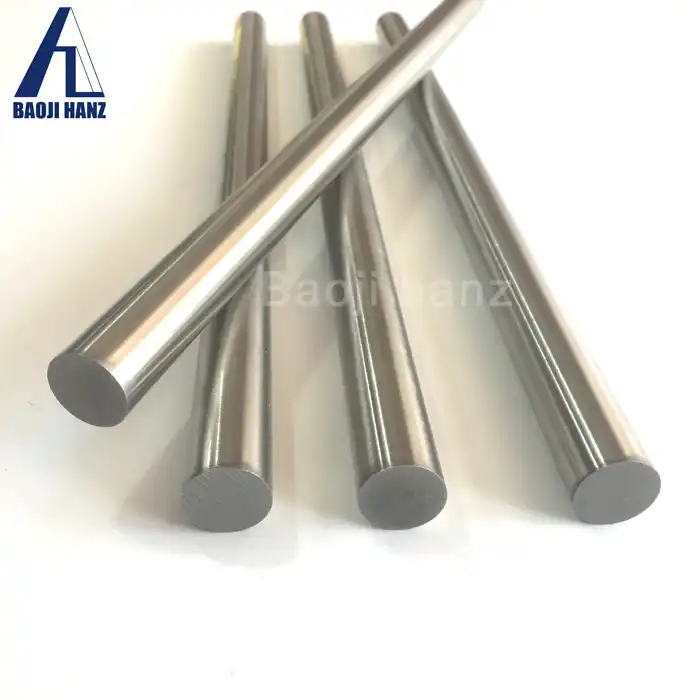
Superior Shape Memory Properties for Medical Applications
Thermoelastic Transformation Mechanisms in Clinical Settings
The fundamental advantage of heat-activated medical nitinol rod technology lies in its thermoelastic martensitic phase transformation, which occurs at body temperature. When a medical nitinol rod is manufactured at Baoji Hanz Metal Material Co., Ltd., it undergoes precise thermal processing to establish specific transformation temperatures, with Active Af ranging from -10°C to 18°C depending on the application requirements. This transformation enables the material to exist in a soft, malleable martensitic state at lower temperatures and transition to a rigid, predetermined austenitic shape when exposed to body heat. The medical significance cannot be overstated: surgeons can insert devices made from medical nitinol rod materials through small incisions while the material is cool and flexible, then watch as body temperature activates the shape memory effect, allowing the device to expand or reconfigure into its functional form. This property dramatically reduces surgical trauma, shortens recovery times, and improves patient outcomes across cardiovascular stents, orthopedic implants, and dental arch wires. The material's ability to generate recovery forces up to 1,378 MPa while maintaining elongation exceeding 10% ensures that medical devices remain functional under physiological stress without permanent deformation.
Customizable Activation Temperature Ranges
One of the most compelling reasons to choose heat-activated medical nitinol rod products is the ability to customize transformation temperatures for specific clinical applications. Baoji Hanz Metal Material Co., Ltd. manufactures medical nitinol rod materials with activation temperatures spanning from -10°C to 100°C, conforming to ASTM F2063 standards. This versatility allows medical device engineers to select the optimal thermal response for their particular application. For instance, cardiovascular stents require activation at precisely 37°C to ensure deployment occurs immediately upon reaching body temperature, while certain orthodontic applications benefit from slightly lower activation temperatures around 20°C to provide continuous gentle force as ambient temperature fluctuates. The medical nitinol rod composition can be fine-tuned through controlled processing, with even minor variations in the nickel-titanium ratio producing significant changes in transformation characteristics. Low-temperature superelastic nitinol alloy variants, with Af temperatures between -20°C and -10°C, remain fully austenitic and superelastic even in cold environments, making them ideal for applications requiring consistent performance regardless of external temperature. This level of customization, combined with diameters ranging from 0.1mm to 3mm and customizable lengths, ensures that every medical nitinol rod can be precisely tailored to meet the demanding specifications of modern medical devices.
Enhanced Biocompatibility and Long-Term Performance
The biocompatibility of medical nitinol rod materials represents a critical factor in their widespread adoption throughout the healthcare industry. The naturally forming titanium oxide layer on medical nitinol rod surfaces provides exceptional corrosion resistance and prevents nickel ion leaching, which is essential for long-term implantation without adverse tissue reactions. Baoji Hanz Metal Material Co., Ltd. produces medical nitinol rod products with various surface treatments including polished and black oxide finishes, each optimized for specific biological environments and sterilization protocols. Clinical studies spanning decades have demonstrated that properly processed medical nitinol rod implants exhibit excellent hemocompatibility, minimal inflammatory response, and stable mechanical properties throughout years of service within the human body. The material's density of 6.45g/cm³ closely approximates human bone, reducing stress shielding effects in orthopedic applications. Furthermore, the shape memory effect remains stable through millions of thermal cycles, ensuring that devices manufactured from medical nitinol rod materials maintain their functional properties throughout their intended service life. The permanent set of less than 0.5% after straining to 8% demonstrates exceptional elastic recovery, allowing medical devices to withstand repeated loading without degradation. This combination of biological inertness and mechanical resilience makes medical nitinol rod the material of choice for critical, long-term implantable devices.
Exceptional Superelastic Characteristics for Device Design
Strain Recovery and Flexibility Benefits
The superelastic properties of medical nitinol rod materials provide device designers with capabilities impossible to achieve with conventional metals. Unlike traditional stainless steel or cobalt-chromium alloys, a medical nitinol rod can undergo strains up to 8-10% and recover completely to its original dimensions without plastic deformation. This extraordinary elastic behavior results from stress-induced martensitic transformation, where mechanical loading causes a reversible phase change at constant stress levels, creating the characteristic flat plateau in stress-strain curves. For medical device applications, this translates to instruments and implants that can navigate tortuous anatomical pathways, compress for delivery through small catheters, and then expand to full functional size upon deployment. Guidewires manufactured from medical nitinol rod materials at 0.025mm to 3mm diameters exhibit superior kink resistance compared to stainless steel alternatives, maintaining their structural integrity even when bent through acute angles repeatedly. The ultimate tensile strength ranging from 1,103 MPa to 1,378 MPa, depending on the specific alloy composition and processing, ensures that even slender medical nitinol rod components possess sufficient strength for demanding applications. The flexibility-to-strength ratio is particularly advantageous in catheter-based interventions, where devices must be both delicate enough to avoid vessel damage and robust enough to push through calcified lesions or stenotic valves.
Fatigue Resistance and Cyclic Loading Performance
Medical devices often experience millions of loading cycles during their service life, making fatigue resistance a critical material property. Heat-activated medical nitinol rod products demonstrate exceptional resistance to fatigue failure, outperforming traditional medical alloys by orders of magnitude in cyclic loading applications. When a medical nitinol rod undergoes repeated stress-induced martensitic transformations, the material exhibits stable hysteresis loops without the progressive damage accumulation typical of conventional metals. Baoji Hanz Metal Material Co., Ltd. manufactures medical nitinol rod materials specifically optimized for high-cycle applications, with careful control of composition, grain structure, and surface finish to maximize fatigue life. Testing conducted at body temperature reveals that medical nitinol rod samples can endure over ten million cycles at 6% strain amplitude—a performance level essential for cardiovascular stents that must flex with every heartbeat, orthodontic wires that apply forces through thousands of jaw movements daily, and surgical instruments that undergo repeated activation cycles. The polished surface finish available on medical nitinol rod products further enhances fatigue performance by eliminating surface defects that could serve as crack initiation sites. This remarkable durability, combined with the material's ability to distribute stress uniformly through the phase transformation mechanism rather than concentrating it at discrete locations, explains why medical nitinol rod has become the preferred material for critical, high-cycle medical applications where failure is not acceptable.
Design Flexibility and Miniaturization Opportunities
The unique mechanical properties of medical nitinol rod materials enable unprecedented miniaturization and design innovation in medical devices. The superelastic behavior allows engineers to create devices with complex geometries and multiple functional elements that would be impossible with conventional materials. A medical nitinol rod can be processed into intricate mesh patterns for stents, precision-wound springs for deployment mechanisms, or delicate picking tools for minimally invasive surgery—all while maintaining reliable shape memory activation. The material's high strength-to-diameter ratio permits the use of extremely fine medical nitinol rod components without sacrificing structural integrity, enabling next-generation catheters with working channels as small as 0.1mm. Baoji Hanz Metal Material Co., Ltd. offers medical nitinol rod products in diameters from 0.1mm to 3mm, with the capability for custom sizing to meet specific design requirements. The ability to pre-program complex three-dimensional shapes through thermal processing means that a single medical nitinol rod component can perform multiple functions—acting as both structural element and actuator. This design versatility has catalyzed innovation across specialties: neurovascular devices that navigate cerebral vasculature, orthodontic arch wires that deliver programmed force systems, and surgical graspers that provide tactile feedback through their superelastic response. The combination of miniaturization potential and functional complexity makes medical nitinol rod an enabling technology for the next generation of minimally invasive medical devices.
Quality Manufacturing and Reliable Supply Chain
Advanced Production Capabilities and Quality Control
Selecting a heat-activated medical nitinol rod from a manufacturer with sophisticated production infrastructure ensures consistent material properties and regulatory compliance. Baoji Hanz Metal Material Co., Ltd. operates a complete suite of precision equipment for medical nitinol rod production, from vacuum induction melting for creating high-purity ingots to advanced thermomechanical processing systems that establish precise transformation temperatures. The company maintains ISO9001, SGS, and TÜV certifications, demonstrating commitment to quality management systems that meet international medical device standards. Every batch of medical nitinol rod undergoes rigorous testing protocols including differential scanning calorimetry to verify transformation temperatures, tensile testing to confirm mechanical properties, and metallographic examination to ensure proper microstructure. The production process monitoring documents are retained for at least five years, providing complete traceability for regulatory audits and post-market surveillance. This level of quality control is essential for medical applications where material consistency directly impacts device performance and patient safety. The medical nitinol rod products manufactured by Baoji Hanz Metal Material Co., Ltd. conform to ASTM F2063 specifications, the recognized standard for wrought nickel-titanium shape memory alloys used in medical devices. The company's technical team provides comprehensive support for material selection, processing parameters, and application engineering, ensuring that customers receive not just a medical nitinol rod product, but a complete solution backed by materials expertise and manufacturing excellence.
Cost-Effectiveness and Direct Supply Advantages
Working directly with a China factory like Baoji Hanz Metal Material Co., Ltd. provides significant cost advantages for medical nitinol rod procurement without compromising quality or reliability. As both a China manufacturer and China supplier, the company eliminates intermediary markups while maintaining large inventories of standard sizes for rapid delivery. The minimum order quantity of just 1 kilogram makes medical nitinol rod accessible even for prototype development and small-scale production runs, while volume pricing ensures competitiveness for large-scale medical device manufacturing. Seven years of specialized expertise in nitinol shape memory alloy, superelastic nitinol alloy, and nickel-titanium alloy production have enabled Baoji Hanz Metal Material Co., Ltd. to optimize processes and reduce waste, translating to better pricing for customers. The company's position as a China wholesale source means device manufacturers can secure stable supply agreements at competitive rates, essential for managing production costs in the highly regulated medical device industry. Fast delivery from substantial stock inventories—typically 25-30 working days for custom specifications—supports just-in-time manufacturing strategies and reduces working capital tied up in inventory. The pricing structure accounts for both size and quantity requirements, with transparent quotations that facilitate accurate project budgeting. This combination of competitive pricing, flexible order quantities, and reliable delivery makes medical nitinol rod from this China supplier an economically sound choice for medical device companies seeking to balance cost control with uncompromising material quality.
Comprehensive Technical Support and OEM Services
The decision to source medical nitinol rod should consider not only material properties but also the manufacturer's ability to provide ongoing technical support and customization services. Baoji Hanz Metal Material Co., Ltd. offers comprehensive OEM services tailored to specific client requirements, from custom diameters and lengths to specialized surface treatments and alloy compositions. The company's professional customer service staff and technical experts provide detailed consultation on nickel-titanium superelastic and memory alloy applications, helping device engineers optimize material selection for their particular application constraints. This pre-sale support extends through the entire product lifecycle, with order tracking services ensuring transparency and timely delivery according to strict efficiency principles. Post-sale support includes detailed usage tracking, comprehensive industry solutions, and responsive technical assistance—critical services when qualifying materials for regulated medical device applications. The technical team can assist with processing recommendations for bending, welding, decoiling, cutting, and punching operations on medical nitinol rod materials, ensuring that device manufacturers achieve optimal results in their fabrication processes. The company's capability to supply medical nitinol rod in various forms—straight rods, coiled configurations, or custom-spooled arrangements—demonstrates manufacturing flexibility that accommodates diverse production workflows. Professional packaging using soft paper interiors and wooden case exteriors ensures that medical nitinol rod arrives in pristine condition, while comprehensive material test certificates and photographic documentation provide verification before shipment. This level of service distinguishes a true materials partner from a simple commodity supplier, adding value throughout the product development and manufacturing process.
Conclusion
Heat-activated medical nitinol rod materials offer unparalleled advantages for modern medical device applications through their unique combination of shape memory properties, superelastic behavior, and biocompatibility. The ability to customize transformation temperatures, exceptional fatigue resistance, and design flexibility make these materials indispensable for minimally invasive procedures and long-term implants. Selecting a qualified manufacturer with comprehensive quality control systems and technical support capabilities ensures optimal device performance and regulatory compliance.
Ready to advance your medical device development with premium medical nitinol rod materials? Baoji Hanz Metal Material Co., Ltd., your trusted China factory, China supplier, China manufacturer, and China wholesale partner, brings 7 years of expertise in nitinol shape memory alloy, superelastic nitinol alloy, and nickel titanium alloy to your projects. Save money with our direct supply and cost advantages while benefiting from fast delivery from our large stock of standard sizes. Our OEM services accommodate custom sizes, specific alloy compositions, and tailored packaging options to meet your exact requirements. Let our experienced team collaborate with you to ensure our medical nitinol rod products integrate seamlessly into your innovative medical devices. Contact us today at baojihanz-niti@hanztech.cn to discuss your specific needs and receive a competitive quotation.
References
1. Duerig T, Pelton A, Stöckel D. "An Overview of Nitinol Medical Applications." Materials Science and Engineering: A, 1999.
2. Morgan NB. "Medical Shape Memory Alloy Applications—The Market and Its Products." Materials Science and Engineering: A, 2004.
3. Shabalovskaya SA, Anderegg J, Van Humbeeck J. "Critical Overview of Nitinol Surfaces and Their Modifications for Medical Applications." Acta Biomaterialia, 2008.
4. Machado LG, Savi MA. "Medical Applications of Shape Memory Alloys." Brazilian Journal of Medical and Biological Research, 2003.
5. Ryhänen J, Niemi E, Serlo W, Niemelä E, Sandvik P, Pernu H, Salo T. "Biocompatibility of Nickel-Titanium Shape Memory Metal and Its Corrosion Behavior in Human Cell Cultures." Journal of Biomedical Materials Research, 1997.