Why Use Medical Nitinol Wire in Catheters and Guidewires?
2026-01-16 20:45:08
When cardiovascular surgeons navigate through tortuous blood vessels during life-saving procedures, they face a critical challenge: how to maneuver instruments through complex anatomical pathways without causing vessel trauma or device failure. Medical nitinol wire solves this problem by offering unparalleled flexibility and shape recovery that conventional materials simply cannot match. This unique nickel-titanium alloy has revolutionized minimally invasive procedures, enabling physicians to reach previously inaccessible treatment sites while maintaining precise control and patient safety throughout catheter-based interventions.
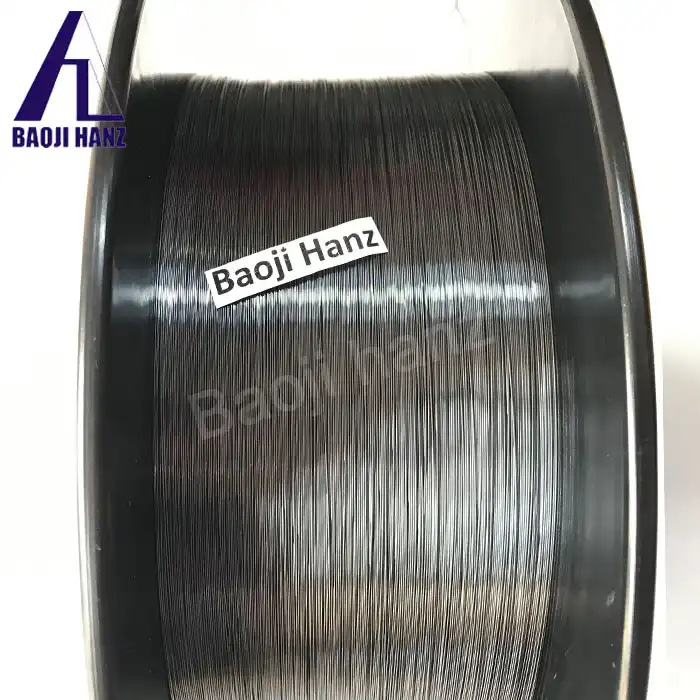
Superior Mechanical Properties of Medical Nitinol Wire for Catheter Applications
The exceptional performance of medical nitinol wire in catheters and guidewires stems from its remarkable superelastic behavior and shape memory characteristics. Unlike traditional stainless steel wires that permanently deform under stress, medical nitinol wire can withstand strains up to 8-10% and still return to its original configuration once the load is removed. This superelasticity proves invaluable during catheter navigation through the cardiovascular system, where the wire must bend around acute angles, traverse bifurcations, and adapt to vessel curvature without kinking or losing structural integrity. The material's austenitic phase at body temperature provides an elastic modulus of 70-80 GPa, significantly lower than stainless steel, allowing for enhanced flexibility while maintaining sufficient column strength to advance through stenotic lesions.
Kink Resistance and Torque Transmission
Medical nitinol wire demonstrates superior kink resistance compared to conventional guidewire materials, a critical factor in complex interventional procedures. When physicians manipulate catheters through tortuous anatomy, the guidewire must transmit rotational forces from the proximal end to the distal tip without buckling or forming permanent deformations. The superelastic properties of medical nitinol wire enable it to recover from extreme bending angles that would permanently damage stainless steel alternatives. This characteristic becomes particularly important in neurovascular interventions and peripheral arterial procedures where vessel geometry creates challenging navigation conditions. The wire's ability to maintain torque fidelity while flexing through small-radius curves ensures precise tip control, allowing physicians to steer catheters accurately toward target lesions even in anatomically complex territories.
Temperature-Responsive Functionality
The shape memory effect of medical nitinol wire activates at specific austenite finish temperatures ranging from 25°C to 40°C, depending on the alloy composition and heat treatment. This temperature-responsive behavior creates unique opportunities for catheter and guidewire design. Manufacturers can pre-program specific shapes into the wire that manifest when the device reaches body temperature, enabling self-expanding stents, atraumatic guidewire tips, and deployable baskets for stone retrieval. The transition from martensite to austenite phase occurs predictably within the physiological temperature range, ensuring reliable performance during clinical use. Medical nitinol wire with an AF temperature calibrated between 32-37°C provides optimal function for intravascular applications, where the material transitions to its programmed shape upon contact with blood flow, eliminating the need for mechanical deployment mechanisms.
Biocompatibility and Corrosion Resistance in Physiological Environments
Medical nitinol wire exhibits excellent biocompatibility due to the formation of a stable titanium oxide passivation layer on its surface, which effectively prevents nickel ion release into surrounding tissues. This protective barrier remains intact even during prolonged exposure to body fluids, making medical nitinol wire suitable for both temporary and permanently implanted devices. The material meets stringent ASTM F2063 standards for nickel-titanium alloys intended for medical applications, ensuring consistent quality and performance. Clinical studies have demonstrated that properly manufactured medical nitinol wire produces minimal inflammatory response and shows no significant cytotoxic effects when in contact with blood vessels or soft tissues. The alloy's corrosion resistance matches or exceeds that of surgical-grade stainless steel, with superior performance in chloride-rich environments like blood plasma, where pitting corrosion poses risks for other metallic biomaterials.
Long-Term Stability and Fatigue Performance
The durability of medical nitinol wire under cyclic loading conditions makes it ideal for applications involving repeated mechanical stress, such as self-expanding stents that must withstand millions of cardiac pulsation cycles. Unlike materials that experience work-hardening or fatigue-induced failure, properly processed medical nitinol wire maintains its superelastic properties through extended use. The material's high damping capacity absorbs mechanical energy during cyclic deformation, reducing stress concentrations that lead to crack initiation and propagation. This fatigue resistance becomes critical in peripheral vascular stents where arterial flexion during limb movement subjects the device to continuous bending stress. Medical nitinol wire fabricated with optimal cold-working and heat treatment protocols can endure over 10 million strain cycles without structural degradation, ensuring reliable long-term performance in demanding clinical applications.
Optimized Guidewire Performance in Interventional Procedures
Medical nitinol wire has transformed guidewire technology by enabling the creation of devices with variable stiffness profiles along their length. Modern interventional guidewires typically feature a stiff proximal shaft for pushability combined with a flexible, tapered distal segment for trackability and safety. The unique properties of medical nitinol wire allow manufacturers to achieve these graduated mechanical characteristics through precise diameter reduction and thermal processing, creating smooth transitions that prevent stress concentration points. In coronary interventions, medical nitinol wire guidewires provide the necessary support to deliver balloons and stents through calcified lesions while maintaining a soft, atraumatic tip that minimizes vessel injury risk. The radiopaque markers incorporated into medical nitinol wire constructions enhance fluoroscopic visibility, allowing physicians to monitor guidewire position during complex procedures.
Enhanced Navigation Through Complex Anatomy
The combination of flexibility and torque response in medical nitinol wire guidewires enables physicians to access previously unreachable vascular territories. In chronic total occlusion procedures, where guidewires must penetrate through completely blocked arteries, the balance between support and flexibility proves crucial for success. Medical nitinol wire provides sufficient column strength to advance through resistant tissue while conforming to vessel curvature without causing perforations or dissections. The material's shape retention prevents guidewire prolapse when advancing catheters, maintaining position stability throughout device exchanges. Neurointervention specialists particularly value medical nitinol wire guidewires for their ability to navigate through the carotid siphon and other tortuous cerebrovascular segments, where excessive stiffness creates stroke risk but inadequate support compromises device deliverability.
Manufacturing Excellence at Baoji Hanz Metal Material Co., Ltd.
Baoji Hanz Metal Material Co., Ltd. specializes in producing high-quality medical nitinol wire that meets the exacting requirements of catheter and guidewire manufacturers worldwide. Our production facilities employ advanced vacuum melting and precision drawing technologies to create medical nitinol wire with consistent mechanical properties and surface quality. Every batch undergoes rigorous testing to verify compliance with ASTM F2063 specifications, including chemical composition analysis confirming 50-55% nickel and 45-50% titanium content, transformation temperature verification, and mechanical property validation. We offer medical nitinol wire in diameter ranges from 0.15mm to 1.0mm, with customizable AF temperatures between 25°C and 40°C to match specific application requirements. Our quality management system holds ISO9001, SGS, and TUV certifications, ensuring that every meter of medical nitinol wire leaving our factory meets international medical device standards.
Conclusion
Medical nitinol wire represents the optimal material choice for catheters and guidewires due to its unique combination of superelasticity, biocompatibility, and fatigue resistance that conventional alloys cannot replicate.
Cooperate with Baoji Hanz Metal Material Co., Ltd.
As a leading China medical nitinol wire manufacturer and China medical nitinol wire supplier, Baoji Hanz Metal Material Co., Ltd. offers 7 years of expertise in nitinol shape memory alloy production. Our China medical nitinol wire factory provides cost advantages through direct supply, with fast delivery from extensive stock of standard sizes. We offer high quality medical nitinol wire for sale at competitive medical nitinol wire prices, backed by comprehensive OEM services for custom specifications. Whether you need China medical nitinol wire wholesale quantities or specialized alloy compositions, our technical team provides expert consultation throughout your procurement process. Contact us at baojihanz-niti@hanztech.cn for inquiries and discover how our medical nitinol wire solutions can enhance your catheter and guidewire products.
References
1. Duerig T, Pelton A, Stöckel D. "An Overview of Nitinol Medical Applications." Materials Science and Engineering: A, authors from Nitinol Devices & Components.
2. Morgan NB. "Medical Shape Memory Alloy Applications—The Market and Its Products." Materials Science and Engineering: A, author from Memry Corporation.
3. Stoeckel D, Bonsignore C, Duda S. "A Survey of Stent Designs." Minimally Invasive Therapy & Allied Technologies, authors from Cordis Corporation and University of Frankfurt.
4. Shabalovskaya SA. "Surface, Corrosion and Biocompatibility Aspects of Nitinol as an Implant Material." Bio-Medical Materials and Engineering, author from Special Metals Corporation.
5. Kleinstreuer C, Li Z, Basciano CA, Seelecke S, Farber MA. "Computational Mechanics of Nitinol Stent Grafts." Journal of Biomechanics, authors from North Carolina State University and University of North Carolina.