How nitinol sheet 0.3 mm delivers shape-memory performance?
2025-12-29 09:14:25
The nitinol sheet 0.3 mm delivers exceptional shape-memory performance through its precisely engineered nickel-titanium composition, which enables the material to undergo reversible phase transformations between austenite and martensite crystal structures. This specific thickness optimizes the balance between flexibility and mechanical strength, allowing the sheet to recover its original shape when heated above its transformation temperature. The 0.3 mm dimension provides sufficient material volume for reliable shape recovery while maintaining the lightweight characteristics essential for medical devices. Through careful control of thermal processing and composition ratios, the nitinol sheet 0.3 mm achieves predictable actuation behavior, making it ideal for applications requiring consistent shape-memory responses in surgical instruments, orthodontic devices, and minimally invasive medical tools.
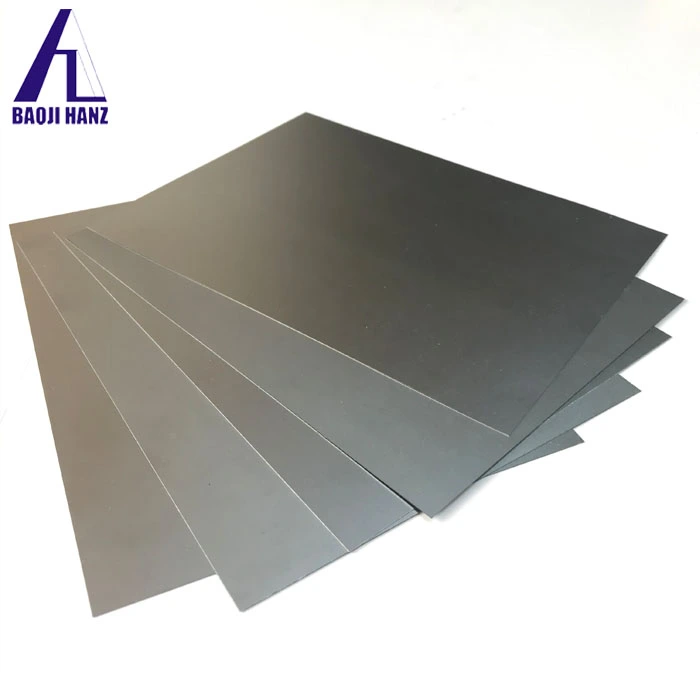
The Metallurgical Foundation of Shape-Memory Effect in 0.3 mm Nitinol Sheets

Crystal Structure Transformation Mechanisms
The shape-memory performance of nitinol sheet 0.3 mm fundamentally relies on the reversible martensitic transformation occurring at the atomic level within the nickel-titanium alloy. This transformation involves a coordinated movement of atoms between two distinct crystal structures: the high-temperature austenite phase and the low-temperature martensite phase. At Baoji Hanz Metal Material Co., Ltd., our manufacturing process ensures that the nickel content exceeds 50.4% while titanium content remains above 44%, creating the optimal compositional balance for robust shape-memory behavior. The 0.3 mm thickness allows for complete phase transformation throughout the material cross-section without introducing thermal gradients that could compromise performance. During the manufacturing process, cold rolling techniques are employed to refine the grain structure, enhancing the uniformity of phase transformation and ensuring that every region of the Superelastic Nitinol Sheets exhibits consistent shape-memory characteristics. The density of 6.5g/cm³ contributes to the material's ability to store and release mechanical energy during transformation cycles, making these sheets particularly effective for applications requiring precise dimensional recovery.
Thermal Processing and Transformation Temperature Control
The shape-memory capabilities of nitinol sheet 0.3 mm are intricately linked to the transformation temperatures established during thermal processing stages. Our manufacturing protocols at Baoji Hanz Metal Material Co., Ltd. incorporate precise heat treatment cycles that program the austenite finish (AF) temperature range between -20°C and 100°C, allowing customization based on specific application requirements. The 0.3 mm thickness provides an optimal thermal mass that enables rapid heating and cooling during shape-memory activation while preventing thermal overshooting that could degrade material properties. During solution annealing and aging processes, the material develops its characteristic two-way shape-memory effect, where the Superelastic Nitinol Sheets can remember both high-temperature and low-temperature shapes. This sophisticated thermal programming is achieved through controlled furnace environments where temperature uniformity is maintained within tight tolerances, ensuring that the entire sheet volume experiences identical thermal histories. The polished surface treatment applied to our nitinol sheet 0.3 mm products not only enhances biocompatibility but also promotes uniform heat distribution during activation, contributing to reliable and repeatable shape-memory performance across multiple thermal cycles.
Compositional Fine-Tuning for Enhanced Performance
The precise nickel-titanium ratio in nitinol sheet 0.3 mm serves as the cornerstone of its shape-memory functionality, with even minor compositional variations significantly affecting transformation temperatures and mechanical responses. At Baoji Hanz Metal Material Co., Ltd., we maintain strict compositional controls that comply with ASTM F2063 and GB 24627 standards, ensuring that every batch of Superelastic Nitinol Sheets delivers consistent performance characteristics. The nickel content above 50.4% establishes the transformation temperature range while titanium content above 44% provides the necessary mechanical strength, with the remaining elements carefully balanced to optimize shape-memory properties. The 0.3 mm gauge thickness allows for homogeneous alloy distribution achieved through advanced melting and casting techniques, eliminating compositional gradients that could create localized variations in transformation behavior. Our quality control protocols include spectroscopic analysis at multiple points across each sheet to verify compositional uniformity, ensuring that the shape-memory response remains predictable throughout the material. This meticulous attention to compositional details enables our nitinol sheet 0.3 mm products to achieve tensile strengths of 850 MPa while maintaining the flexibility required for complex medical device applications, where both structural integrity and shape-memory reliability are paramount.
Mechanical Properties Enabling Superior Shape Recovery
Superelastic Behavior and Strain Recovery
The nitinol sheet 0.3 mm exhibits remarkable superelastic characteristics that complement its shape-memory properties, enabling the material to accommodate substantial deformations and return to its original configuration without permanent damage. This superelasticity stems from stress-induced martensitic transformation, where mechanical loading triggers the austenite-to-martensite phase change even at temperatures above the AF point. At Baoji Hanz Metal Material Co., Ltd., our Superelastic Nitinol Sheets are engineered to display recoverable strains exceeding eight percent, substantially surpassing conventional metallic materials that typically fail beyond two percent strain. The 0.3 mm thickness provides an ideal balance where the material possesses sufficient mass to generate meaningful forces during shape recovery while remaining thin enough to conform to complex geometries in medical devices. During superelastic deformation, the material follows a distinctive stress-strain curve characterized by stress plateaus corresponding to phase transformation, allowing controlled energy absorption and release. This unique mechanical signature makes nitinol sheet 0.3 mm particularly valuable for applications such as cardiovascular stents, where the device must compress for catheter delivery and then expand to predetermined dimensions upon deployment, relying entirely on the material's intrinsic superelastic recovery forces.
Fatigue Resistance and Cyclic Performance
The long-term reliability of nitinol sheet 0.3 mm in shape-memory applications depends critically on its exceptional fatigue resistance, which allows the material to undergo millions of transformation cycles without performance degradation. Our manufacturing processes at Baoji Hanz Metal Material Co., Ltd. incorporate advanced thermo-mechanical treatments that optimize the material's microstructure for enhanced fatigue life, ensuring that Superelastic Nitinol Sheets maintain consistent shape-memory responses throughout extended service periods. The 0.3 mm thickness minimizes internal stress concentrations during repeated bending and shape recovery cycles, distributing mechanical loads uniformly across the material cross-section and preventing the initiation of fatigue cracks. Research demonstrates that properly processed nitinol alloys can withstand over ten million loading cycles at strains approaching six percent, performance levels unattainable with conventional spring materials or shape-memory polymers. The cold-rolled manufacturing technique employed for our nitinol sheet 0.3 mm products creates a refined grain structure with minimal defects, establishing a microstructural foundation that resists fatigue crack propagation. This exceptional durability proves essential for medical implants such as orthopedic fixation devices and orthodontic archwires, where the material must maintain precise shape-memory behavior despite continuous physiological loading over months or years of service.
Force Generation and Work Output Capabilities
The ability of nitinol sheet 0.3 mm to generate substantial forces during shape recovery represents a defining advantage in actuator and medical device applications. When constrained from returning to its programmed shape, the material develops significant recovery stresses that can exceed 500 MPa, providing powerful actuation capabilities in compact form factors. At Baoji Hanz Metal Material Co., Ltd., we optimize the thermo-mechanical processing of Superelastic Nitinol Sheets to maximize work output density, ensuring that each gram of material delivers maximum useful mechanical energy during transformation. The 0.3 mm gauge provides an optimal volume-to-surface-area ratio that enables efficient thermal activation while generating forces sufficient for practical applications such as surgical tool actuation and orthodontic tooth movement. The mechanical work output during shape recovery depends on both the volume of material undergoing transformation and the degree of constraint imposed during heating, with properly designed systems extracting over twenty joules per kilogram of nitinol sheet 0.3 mm. This high specific work output, combined with the material's biocompatibility and corrosion resistance, positions nitinol as the preferred choice for minimally invasive surgical instruments where compact, powerful, and reliable actuation mechanisms are required to perform delicate procedures within confined anatomical spaces.
Processing and Application Integration Strategies
Manufacturing Precision for Consistent Performance
The production of nitinol sheet 0.3 mm with reliable shape-memory characteristics requires extraordinary manufacturing precision and quality control protocols that Baoji Hanz Metal Material Co., Ltd. has perfected through years of specialized experience. Our cold rolling processes achieve thickness tolerances within micrometers, ensuring that every section of the Superelastic Nitinol Sheets possesses identical mechanical and thermal properties necessary for uniform shape-memory activation. The polished surface finish applied through controlled grinding and electrochemical techniques eliminates surface defects that could serve as stress concentration sites or contamination sources in medical applications, while simultaneously enhancing the material's aesthetic appearance and biocompatibility. Advanced inspection protocols incorporating ultrasonic testing and optical microscopy verify the absence of internal voids, inclusions, or laminations that might compromise shape-memory performance or structural integrity. The stringent quality standards maintained throughout production, validated through ISO9001, SGS, and TUV certifications, guarantee that each nitinol sheet 0.3 mm meets or exceeds the performance specifications required for demanding medical device applications. Our commitment to manufacturing excellence extends to maintaining detailed production documentation for minimum five-year periods, enabling complete traceability and supporting our customers' regulatory compliance requirements in medical device markets worldwide.
Customization and Design Optimization
Successful integration of nitinol sheet 0.3 mm into functional devices requires careful design optimization that accounts for the material's unique shape-memory properties and operational characteristics. At Baoji Hanz Metal Material Co., Ltd., our technical team collaborates closely with customers to develop customized solutions incorporating Superelastic Nitinol Sheets tailored to specific application requirements, including modified transformation temperatures, alternative surface treatments, or unique dimensional specifications. The 0.3 mm thickness serves as an excellent starting point for many medical device applications, but our capabilities extend to producing sheets from 0.05 mm to 2.0 mm thickness and widths up to 500 mm, accommodating diverse design requirements. Design engineers must consider factors such as the constraint conditions during shape recovery, heating methods for transformation activation, and the mechanical loads imposed during device operation to fully exploit the shape-memory capabilities of nitinol sheet 0.3 mm. Our OEM services support prototype development and iterative design refinement, providing material samples with various transformation temperature ranges and mechanical properties to identify optimal configurations for specific applications. This collaborative design approach has enabled successful product development across multiple medical specialties, including cardiovascular interventions, orthopedic surgery, and dental orthodontics, where the unique combination of biocompatibility, shape-memory effect, and mechanical properties available in nitinol provides capabilities unattainable with alternative materials.
Clinical Applications and Performance Validation
The clinical success of devices incorporating nitinol sheet 0.3 mm depends on thorough performance validation demonstrating that shape-memory characteristics remain stable and predictable throughout the product lifecycle. Medical device manufacturers working with Superelastic Nitinol Sheets from Baoji Hanz Metal Material Co., Ltd. benefit from our comprehensive testing documentation and material characterization data that support regulatory submissions to agencies such as the FDA and CE marking authorities. The 0.3 mm thickness proves particularly advantageous for applications such as orthodontic archwires, where the material must generate consistent forces for tooth movement while accommodating the complex three-dimensional geometries encountered in oral environments. In cardiovascular applications, stents fabricated from nitinol sheet 0.3 mm demonstrate reliable expansion behavior and long-term biocompatibility, maintaining vessel patency while minimizing restenosis risks through optimal radial force generation and flexibility. Surgical instruments utilizing shape-memory activation enable innovative approaches to minimally invasive procedures, where tools can be inserted through small incisions in compact configurations and then deployed to functional shapes through body temperature activation or external heating. Our after-sales support includes detailed usage tracking and technical consultation, ensuring that customers achieve optimal performance from their nitinol sheet 0.3 mm implementations while addressing any application-specific challenges that emerge during clinical use or commercial production scaling.
Conclusion
The nitinol sheet 0.3 mm delivers exceptional shape-memory performance through precisely controlled metallurgical composition, optimized thermal processing, and advanced manufacturing techniques that ensure consistent phase transformation behavior. This unique combination of superelasticity, biocompatibility, and reliable shape recovery makes it indispensable for modern medical device applications. Baoji Hanz Metal Material Co., Ltd. stands as your trusted partner in accessing world-class nitinol solutions backed by rigorous quality standards.
With seven years of expertise in Nitinol Shape Memory Alloy, Superelastic Nitinol Alloy, and Nickel Titanium Alloy, we deliver cost-effective solutions through direct supply advantages and maintain extensive inventory for rapid fulfillment. Whether you're seeking a China nitinol sheet 0.3 mm factory, a reliable China nitinol sheet 0.3 mm supplier, an experienced China nitinol sheet 0.3 mm manufacturer, or competitive China nitinol sheet 0.3 mm wholesale options, our OEM services provide customized solutions including specific sizes, alloy compositions, and packaging tailored to your project requirements. Our dedicated team collaborates closely with you to ensure seamless integration of our products into your innovations. Contact us today at baojihanz-niti@hanztech.cn to discuss how our superelastic nitinol sheets can elevate your next medical device project to new heights of performance and reliability.
References
1. Duerig T, Pelton A, Stöckel D. An overview of nitinol medical applications. Materials Science and Engineering: A, 1999, 273-275: 149-160.
2. Otsuka K, Ren X. Physical metallurgy of Ti-Ni-based shape memory alloys. Progress in Materials Science, 2005, 50(5): 511-678.
3. Morgan NB. Medical shape memory alloy applications—the market and its products. Materials Science and Engineering: A, 2004, 378(1-2): 16-23.
4. Elahinia MH, Hashemi M, Tabesh M, Bhaduri SB. Manufacturing and processing of NiTi implants: A review. Progress in Materials Science, 2012, 57(5): 911-946.
5. Miyazaki S, Otsuka K. Development of shape memory alloys. ISIJ International, 1989, 29(5): 353-377.