Why can nickel titanium tubes be used in the medical field
2025-12-02 14:01:30
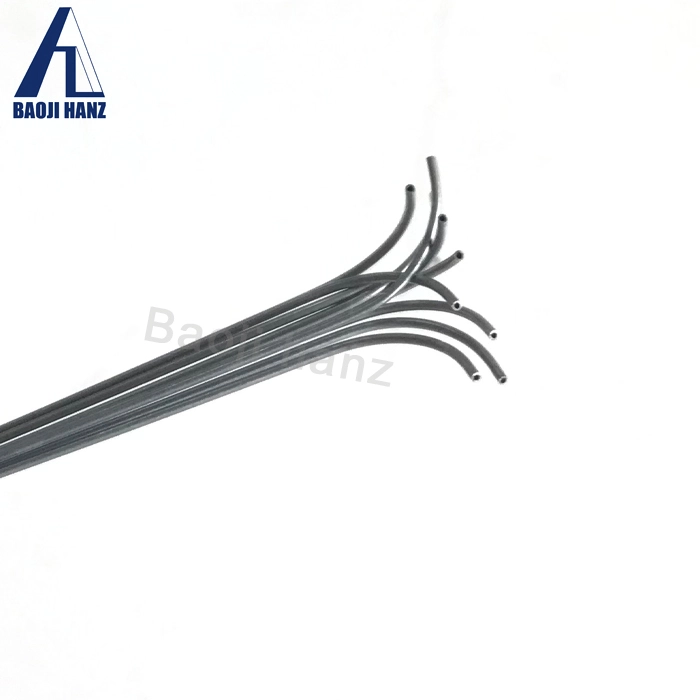
Medical nitinol tube can be widely used in the medical field, mainly due to their excellent characteristics that meet the urgent needs of medical scenarios. Whether it is the mechanical properties suitable for minimally invasive surgery or the biological and chemical properties that ensure human safety, they far exceed many traditional medical materials. The specific reasons are as follows:
1. Unique shape memory effect adapted to minimally invasive implantation requirements
Nickel titanium tubes can be easily deformed and maintained in this state at low temperatures. When the temperature rises to the transition temperature (such as human body temperature of 37 ℃), they can accurately return to the preset initial shape. This feature is crucial for minimally invasive implantable devices, such as coronary stents, which can be compressed at low temperatures and inserted into catheters to be delivered through blood vessels to narrow areas. After implantation, they can automatically restore their original state and dilate the blood vessels with the help of body temperature; There is also a nickel titanium orthopedic rod for correcting scoliosis, which is personalized and shaped according to the patient's spinal curvature at low temperatures. After implantation, the ideal shape is restored by body temperature, providing continuous and stable correction force for the spine.

2. Super elastic adaptation to the dynamic physiological environment of the human body
It can withstand large recoverable deformations such as 6% -8% strain, quickly rebound after the external force disappears, and has a very high fatigue life. It can withstand millions of cycles of deformation without failure. In the dynamic environment of the human body, this characteristic has obvious advantages. For example, the electrode protective cover of a pacemaker can flexibly stretch and bend with the contraction and expansion of the heart, avoiding electrode displacement and damage; The microcatheter used in neurosurgery, with its super elasticity, can smoothly shuttle through tortuous and narrow cerebral blood vessels, reducing scratches on the vessel wall and greatly improving surgical safety.
3. Excellent biocompatibility ensures in vivo safety
A stable and dense titanium oxide film will form on the surface of the nickel titanium tube, which can effectively block the release of nickel ions and greatly reduce the potential human toxicity and immune rejection caused by nickel elements. A large amount of clinical data shows that the incidence of complications caused by biocompatibility issues in patients using nickel titanium alloy implants is only 3% -5%, far lower than some traditional implant materials. Whether it is short-term surgical instruments or long-term implants such as heart stents, they can coexist harmoniously with human tissues without causing significant inflammatory reactions.

4. Excellent corrosion resistance suitable for complex body fluid environments
The titanium oxide protective film on its surface not only has stable chemical properties and can resist the erosion of acidic and alkaline substances and electrolytes in human body fluids, but also can achieve a certain degree of self repair after slight damage. In tests simulating human body fluids, the annual corrosion rate of nickel titanium tubes is less than 0.001mm, far below the medical safety threshold. Even if exposed to complex environments such as blood and esophageal acidity for a long time, there will be no problems such as corrosion, fracture, or degradation. For example, biliary stents can withstand the special environment inside the bile duct for a long time and stably provide support and drainage.
5. Can be precisely customized to meet diverse medical scenarios
Nickel titanium pipes can achieve high-precision size customization. Some manufacturers can produce pipes with an outer diameter of 0.20-20mm, an inner diameter of 0.10-18mm, and a minimum tolerance of ± 0.02mm. They can also adapt to different instrument requirements through different surface treatment processes. This customization capability enables it to adapt to various segmented medical scenarios, such as 0.7mm narrow diameter stents for pediatric ureters, ultra-thin wall large-diameter medical nitinol tube for nerve thrombectomy stents, as well as various special functional catheters such as IVUS catheters and ablation catheters, fully meeting the manufacturing needs of treatment equipment for different diseases.
Contact us
