Why Engineers Prefer 1mm Nitinol Wire for Robotic Actuators?
2026-06-30 19:07:52
Finding materials that are both very flexible, very accurate, and very resistant to wear is always a problem for engineers who are making robotic actuators. The 1mm diameter nitinol wire has become the best choice for these needs. This size is just right for a mix between mechanical strength and quick actuation, which lets it change its shape repeatedly even when space is limited. The 1mm diameter nitinol wire is essential for advanced automation systems because it ensures uniform performance over hundreds of thousands of actuation cycles, unlike thicker diameters that make the system less sensitive or thinner versions that are more likely to break mechanically.
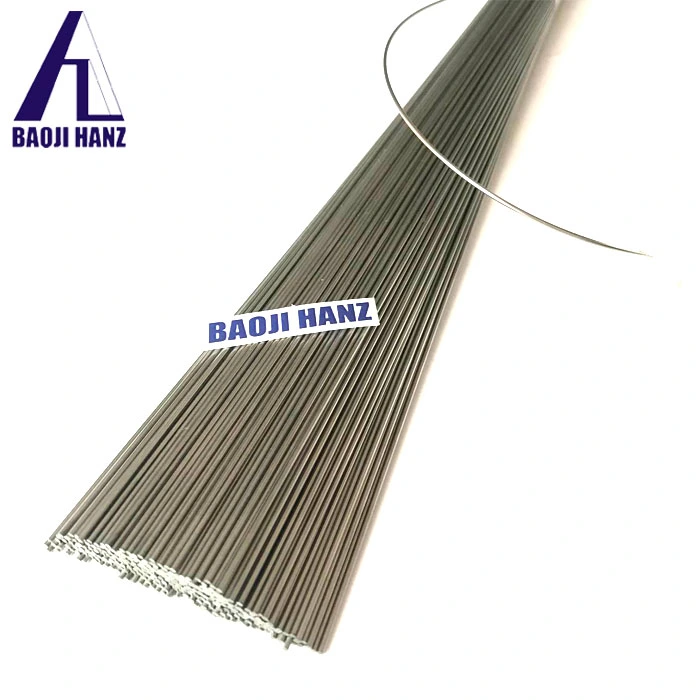
Understanding 1mm Nitinol Wire: Properties and Technical Advantages
Material Composition and Alloy Foundation
Nitinol wire is made from a combination of nickel and titanium that is almost perfectly balanced in terms of atoms. It usually has a makeup ratio of about 55% nickel to 45% titanium by weight. This exact ratio makes two qualities possible that can change things: the shape memory effect and superelasticity. The material can change between its martensite (low temperature) and austenite (high temperature) solid structures, which is what makes it behave mechanically the way it does.
Manufacturers like Baoji Hanz Metal Material Co., Ltd. make 1mm diameter nitinol wire that meets ASTM F2063 standards. This makes sure that the quality of the metal is always the same. This standard controls important factors like transformation temperatures, tensile strength (usually more than 1070 MPa), and stretch properties. With a density of 6.45 g/cm³, the material is lighter than steel but still has better tensile properties.
Shape Memory Effect and Actuation Mechanism
Nitinol wire has a shape memory effect that lets it return to its original shape when heated above its transformation temperature. Engineers can use controlled heat treatment methods to shape the wire into specific forms while it is being made. When the wire cools to its martensitic phase, it can be bent with little force. When heated past the austenite finish temperature (Af), which can be changed from 30°C to 150°C based on changes to the alloy makeup, the wire returns to the shape it had before it was heated. This happens more than 99% of the time.
This device makes it possible for robotic systems to move precisely. The 1mm diameter nitinol wire gives the cross-sectional area enough to produce a useful actuation force while still allowing for quick heat reaction. Thinner wires heat up faster but don't provide enough force for most actuator uses. On the other hand, bigger wires need more energy to work and respond more slowly.
Superelasticity and Mechanical Flexibility
Nitinol that is superelastic can change shape by 10-15%, which is a lot more than the 1-2% strain that stainless steel usually has. When the material is used above its austenite finish temperature, this feature starts to work. It is possible for the wire to bend and stretch a lot, but it will instantly straighten out again when the load is taken off.
The 1mm diameter nitinol wire strikes the best mix between being flexible and being strong. This width can handle more than 100,000 deformation cycles without breaking due to wear, which is a major problem with current actuator materials. The steady elastic stiffness during these cycles makes sure that the actuator works the same way for as long as it is used.
Corrosion Resistance and Environmental Durability
Nitinol wire has a thick layer of titanium dioxide (TiO₂) on its surface that protects it from rust better than 304 stainless steel. This trait is very important for robotic uses that work in wet, acidic, or basic conditions. The material works well in temperatures ranging from -50°C to 300°C, so it can be used in a wide range of commercial settings.
Surface processes like pickling and black oxide covering on 1mm diameter nitinol wire make it even more resistant to the environment. These finishes protect the wire while it is being handled and put together, but they don't change the superelastic qualities that are needed for the actuator to work.
Performance Comparison: 1mm Nitinol Wire vs Alternative Materials
Superelastic Nitinol Versus Stainless Steel Wire
Because it is easy to get and has a long history of supply, stainless steel wire is still commonly used in industrial systems. But when you compare how well different actuators work, it's clear that nickel-titanium metal is better. Stainless steel permanently changes shape when stretched beyond its 1-2% elastic limit, so it needs to be replaced after only a few rounds of use. Its elastic modulus stays the same no matter how much pressure there is, so it doesn't adapt to different loads.
The 1mm diameter nitinol wire, on the other hand, has a superelastic peak that gives it a non-linear stress-strain reaction. Because of this property, the force can stay the same across a range of displacements, which isn't possible with regular spring steels. The material doesn't rust, so protection coats aren't needed. Coats add weight and complexity to robotic systems.
Diameter Optimization: 1mm Versus Alternative Sizes
During the growth of a component, actuator makers often look at a number of nitinol wire diameters. Because it has a smaller cross-sectional area, the 0.8mm version responds to heat more quickly, allowing for faster heating and cooling processes. This width, on the other hand, produces less actuator force and is more likely to break during installation.
On the other hand, 1.2mm wire gives off more force but needs more electricity to be applied for heat activation. The bigger heat mass slows down reaction time, which means it can't be used in systems that need to cycle quickly. The 1mm diameter nitinol wire is the best size for engineering purposes because it generates enough force, responds quickly enough, and is strong enough for production and assembly processes.
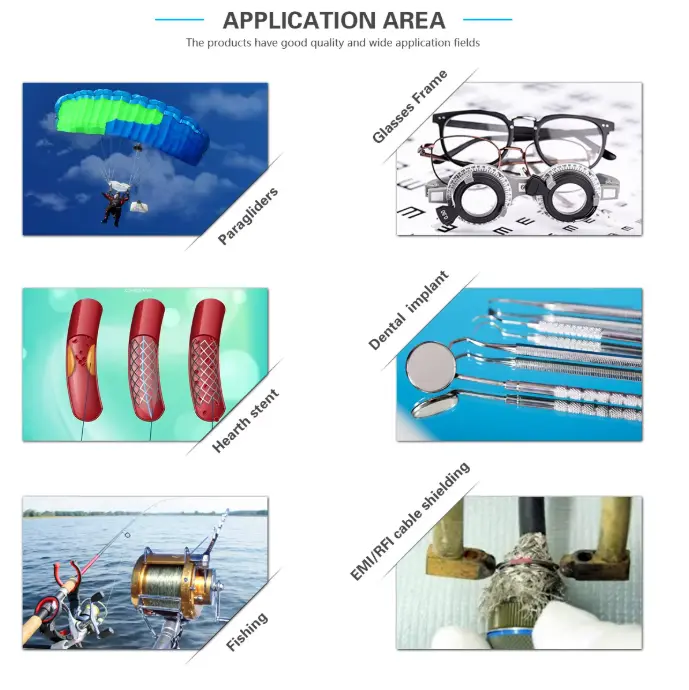
The industrial application of 1mm diameter nitinol wire
Manufacturing temperature control actuators, shock-absorbing components, corrosion-resistant woven nets, micro flexible traction/steering wires, and automated self-locking accessories.
Case
1. Heating and ventilation temperature control valve memory wire;
2. Chemical corrosion environment woven filter screen;
3. Flexible transmission cable for equipment.
Advantages
It features shape memory, super elastic rebound resistance to bending, resistance to acid and alkali corrosion, and integrates sensing and driving functions. It is lightweight and can replace traditional mechanical structures.
Why 1mm Nitinol Wire Is Ideal for Robotic Actuators?
Actuation Efficiency and Energy Considerations
For electrical resistance heating, which is the most frequent way to turn something on or off, the 1mm diameter nitinol wire gives the best thermal conductivity. Based on the wire's specific resistance and the change temperature that is wanted, engineers can figure out how much current is needed. The diameter has a cross-section that is large enough for strong electrical links while keeping the power needs doable.
Transformation of 1mm diameter nitinol wire takes between 2 and 5 seconds, based on the environment and the amount of power input, which is long enough for most industrial automation cycle times. The wire's ability to produce a steady force during its superelastic plateau gets rid of the need for complicated feedback control systems. This makes it easier to build actuators and lowers the cost of the system.
Handling and Integration Practicality
Manufacturing experts like how the 1mm diameter nitinol wire strikes a good mix between durability and usability. When properly heated, the wire can be bent into tight curves without cracking on the surface, which makes it possible to fit into small actuator housings. Standard crimping and mechanical binding methods work well for thicker gauges, but they need special connection methods for smaller gauges.
Because the material is flexible, it can be pre-shaped into coils, zigzag patterns, or other shapes that make the best use of stroke length within the envelope's limits. These arrangements can be heated up during production, so there's no need for complicated hold-down systems in the final assembly.
Long-Term Reliability in Production Environments
For industrial automation systems to work, their parts need to keep performing at the same level for years and years. If the 1mm diameter nitinol wire is used according to its design parameters, its transformation properties don't change much over millions of activation cycles. Because the material doesn't work harden, the force-displacement shapes stay the same over its service life.
Due to the alloy's natural resistance to corrosion and the lack of wearing touch areas that are common in standard motors, it doesn't need much maintenance. This means less downtime and a lower total cost of ownership in factory settings where the output of the process is directly affected by how reliable the equipment is.
Procurement Considerations for 1mm Nitinol Wire
Supplier Selection and Quality Certification
To get shape memory alloy wire, you need to work with makers who can show they have metallurgy knowledge and quality control skills. Suppliers should show proof that their materials are in line with ASTM F2063 standards. This should include checking the melting and stretching points, as well as the chemicals that make up the material. Baoji Hanz Metal Material Co., Ltd. has ISO 9001 approval as well as SGS and TUV confirmation, which makes sure that the quality is the same from batch to batch.
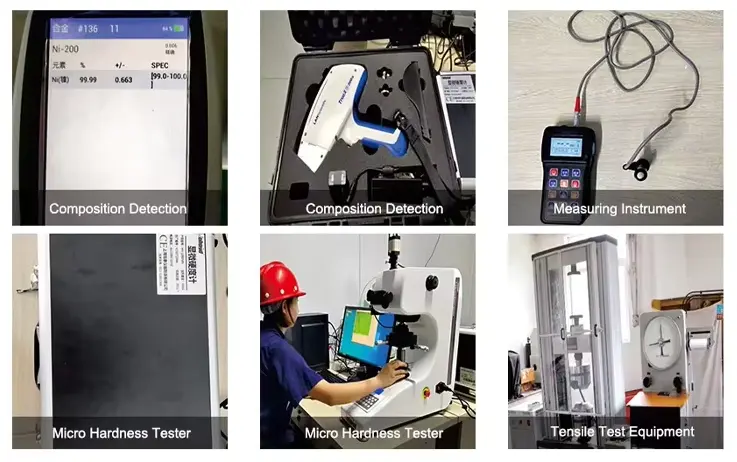
Ask the supplier for proof of their thermal processing skills, as the right heat treatment affects how the wire changes shape and its mechanical qualities. Manufacturers who have their own testing tools, like Differential Scanning Calorimetry (DSC) and tension testing equipment, can give detailed information about the materials they use to meet specific needs.
Minimum Order Quantities and Customization Options
In industrial buying, inventory costs and supply consistency are usually weighed against each other. The usual minimum order quantity for 1mm diameter nitinol wire is 5 kilograms, which is enough for prototyping needs while still being able to be used for medium-scale production projects. This limit lets you do cost-effective sampling without having to commit to large amounts of material during the design approval stages.
Customization options are necessary for actuators to work at their best. Engineers should check with sources to see if they can change transformation temperatures by changing the makeup or the way the materials are heated. Depending on the needs of the product, custom surface treatments, tight diameter limits, and strict standards for wire straightness may be needed. Manufacturers that offer these services cut down on the time it takes to build new products and get rid of the need for multiple supply chain partners.
Logistics and International Procurement Planning
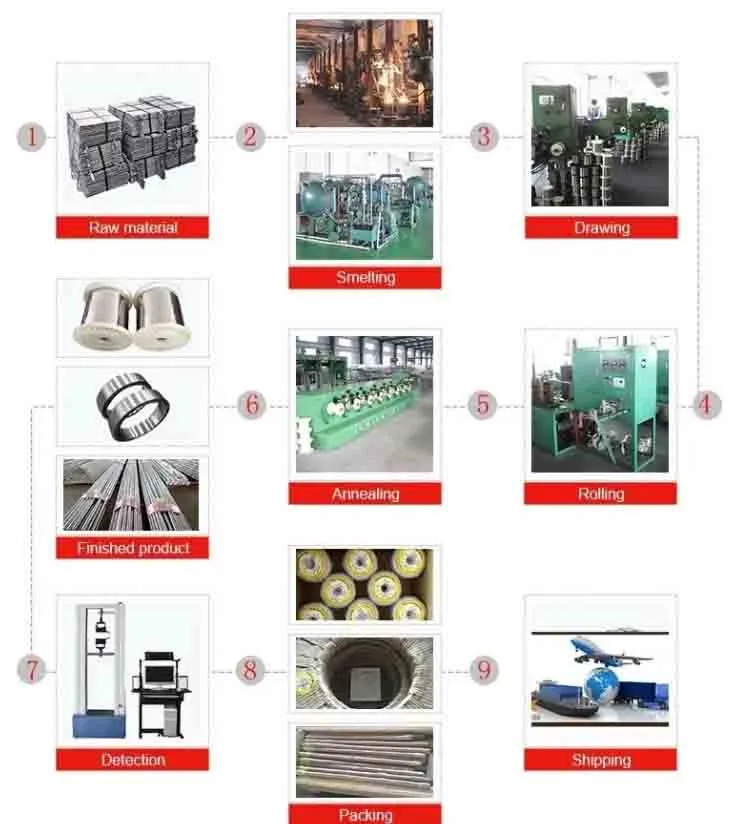
When you buy 1mm diameter nitinol wire rare metals from around the world, you have to pay attention to shipping times and customs rules. Nitinol wire usually ships as non-hazardous material, which makes it easier to move things between countries. Lead times are usually between 4 and 8 weeks for normal specs and 10 to 14 weeks for custom compositions or heat treatments.
Some things that need to be thought about when packaging are keeping the goods safe from damage during transport and controlling wetness to keep the surfaces from rusting. Make sure that the sources you're working with offer the right spooling or coil packaging to keep the wire's mechanical qualities. To keep quality high all along the supply chain, documentation should include test results on the materials, certificates of compliance, and handling instructions.
How to Optimize Usage of 1mm Nitinol Wire in Your Robotic Actuators?
Design Integration Best Practices
To successfully integrate an actuator, you must first understand how the wire changes shape in your particular situation. Figure out how much force is needed to move the part by looking at the superelastic peak stress, which is usually between 400 and 600 MPa for shape-set wire. To make sure the wear life is good, design the stroke length with the realistic strain limit of 6–8 percent in mind.
Managing temperature turns out to be very important for steady success. To keep change temperatures and cycle times under control, make sure there are enough cooling paths or active cooling devices. Keep heat-sensitive parts away from the wire while making sure that the heat can easily escape into the air. To avoid localized overheating that could change transformation qualities, electrical links should have as little contact resistance as possible.
Mechanical Forming and Shape Setting Techniques
To shape the 1mm diameter nitinol wire into actuator shapes, controlled methods are needed that keep the material's qualities. To keep the metal from deforming plastically, it should be bent at temperatures below the martensite finish (Mf) temperature. Use smooth mandrels that don't have any sharp ends that could cause stress concentrations that cause the part to fail early.
To set the shape, the wire has to be shaped in a certain way and then heated at temperatures ranging from 400°C to 550°C, based on the desired change temperature. Usually, it lasts between 5 and 20 minutes. When something is quickly cooled after being heated, the shape is locked in place. To keep the temperature just right for this process, no grains should grow or the makeup should change in a way that breaks down the mechanical qualities.
Storage and Lifecycle Management
Proper keeping keeps materials usable for longer and stops them from breaking down before they are integrated. Nitinol wire should be kept in a controlled setting with a temperature range of 15 to 25°C and a relative humidity below 60%. Stay away from temperatures above the austenite finish temperature for a long time. This could cause the shape to return during storage without meaning to.
Make sure that older stock gets used first by implementing inventory rotation practices. Nitinol has a long shelf life as long as it is kept properly, but keeping track of batch dates and checking the transformation temperature before using it in important ways gives you even more peace of mind. Testing stored items with DSC on a regular basis makes sure that their change properties stay within the acceptable range. This is especially true for items that have been kept for more than 12 months.
Conclusion
The 1mm diameter nitinol wire is the best that engineers have come up with for robotic actuator uses because it has great shape memory, is very durable, and is easy to handle. Its mechanical qualities make it work the same way after hundreds of thousands of cycles, and they also keep it from rusting and make it light. For implementation to go well, you need to work with qualified providers who can provide certified materials, the ability to make changes, and expert help during the entire planning and production process. Nitinol wire can be used by engineers who know how the material changes and how it needs to be integrated to make small, reliable control systems that work better in harsh industrial settings than other technologies.
FAQ
What makes 1mm diameter specifically better than other sizes for robotic actuators?
The 1mm diameter nitinol wire size strikes a good mix between thermal reaction speed and force generation ability. It has enough cross-sectional area to make an actuator force that makes sense while still allowing for fast heating and cooling processes. Thinner diameters answer more quickly but aren't as strong mechanically, while bigger ones need more energy to respond and do so more slowly.
Can the rate of transformation be changed to fit different working conditions?
Through changes in composition and heat treatment methods, transformation temperatures can be carefully controlled to within ±2°C. Transformation temperatures for standard industrial actuators are usually between 70°C and 90°C. For special uses, temperatures may need to be between 30°C and 150°C, based on the needs of the job and the temperature of the environment.
How does the finish on the surface affect how well the device works?
Surface processes like pickling, polishing, or black oxide coating change how resistant something is to rust and how well it connects to electricity without changing the core transformation qualities much. Black oxide is a cheap way to protect things in industrial settings, and smooth surfaces are the best way to keep things from wearing out quickly in high-cycle uses. The choice depends on how the product will be used and how well it needs to work.
Partner With Baoji hanz for Reliable 1mm Diameter Nitinol Wire Supply
Baoji Hanz Metal Material Co., Ltd. has seven years of experience working with superelastic nitinol metal and shape memory materials. They can help you with your robotic actuator projects. Our ability to manufacture directly cuts out middlemen and their markups, giving you cost savings that improve the economics of your project without lowering quality. A lot of normal 1mm diameter nitinol wire is kept in stock by us, so we can send it quickly to meet your production needs. Our expert team helps you with everything, from choosing the right materials to integrating them into production, to make sure they work perfectly in your application.
If you need standard ASTM F2063 material or change temperatures that are specific to your work setting, our OEM services can meet your needs for makeup, diameter tolerance, surface treatment, and packing. Procurement experts and materials engineers are welcome to ask for examples, detailed datasheets, or quotes that are tailored to their specific projects. Get in touch with our team at baojihanz-niti@hanztech.cn to talk about your needs with skilled 1mm diameter nitinol wire suppliers who know what it takes to make precision actuators. You can look at our full selection of nickel-titanium alloy products and services at hznitinol.com.
References
Otsuka, K. and Wayman, C.M. (1998). Shape Memory Materials. Cambridge University Press, Cambridge, UK.
Duerig, T., Pelton, A., and Stöckel, D. (1999). "An overview of nitinol medical applications." Materials Science and Engineering: A, 273-275, pp. 149-160.
Mohd Jani, J., Leary, M., Subic, A., and Gibson, M.A. (2014). "A review of shape memory alloy research, applications and opportunities." Materials & Design, 56, pp. 1078-1113.
Humbeeck, J.V. (1999). "Non-medical applications of shape memory alloys." Materials Science and Engineering: A, 273-275, pp. 134-148.
Morgan, N.B. (2004). "Medical shape memory alloy applications—the market and its products." Materials Science and Engineering: A, 378, pp. 16-23.
Lagoudas, D.C. (2008). Shape Memory Alloys: Modeling and Engineering Applications. Springer Science, New York, USA.