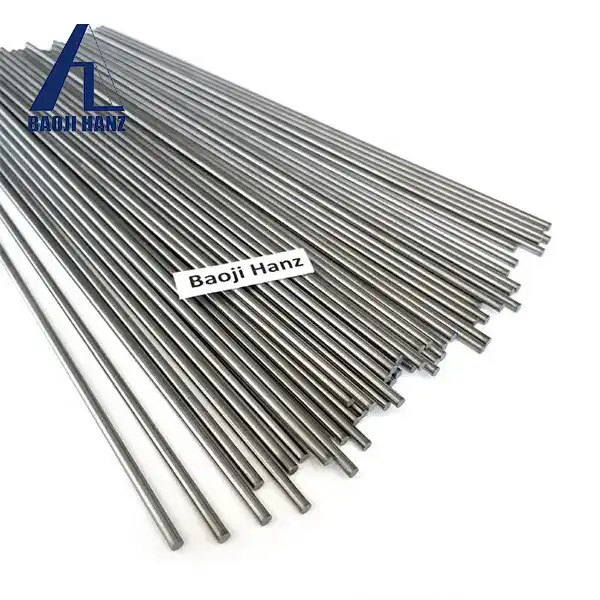
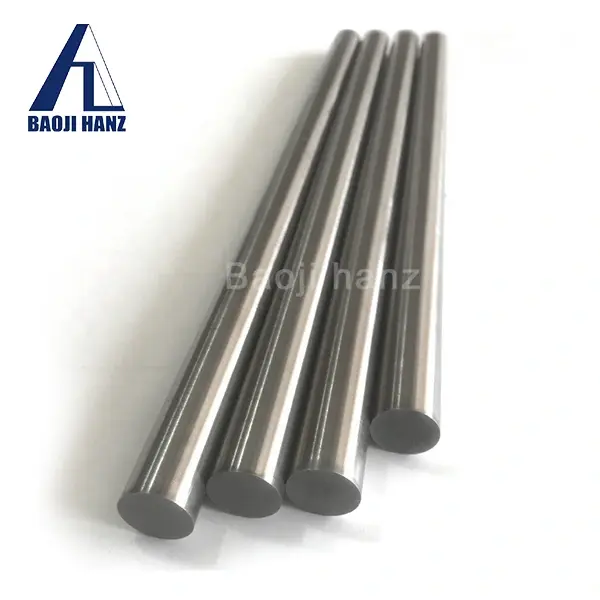
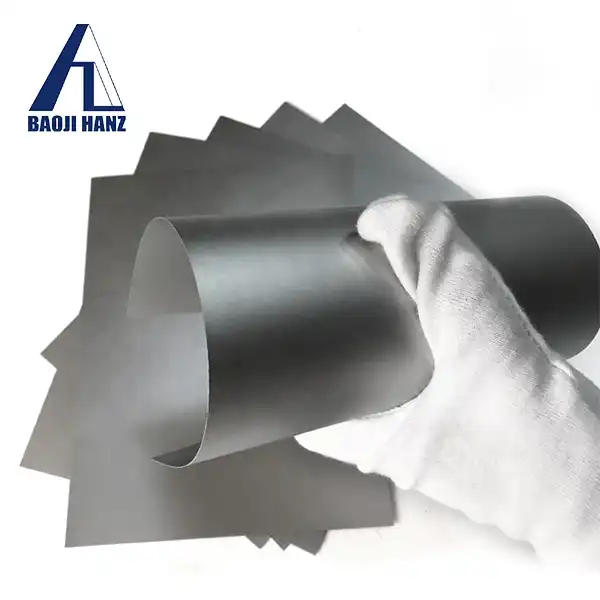
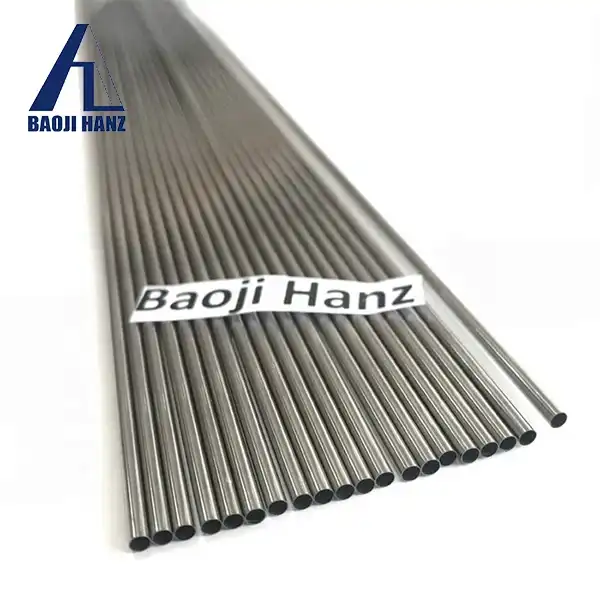
Nitinol Foil Sheet


Af: -20°C to 100°C (customizable)
MOQ:1PCS
Density: 6.45g /cm³
Titanium content: 45%
Nitinol Foil Sheet for Medical & Industrial Use - Ultra-Thin Precision, Custom Af Temperature, Superelastic Performance
Nitinol Foil Sheet is made by Baoji Hanz Metal Material Co., Ltd. The thickness range is 0.03 to 1 mm. Tensile strength falls somewhere between 550–1900 MPa. Af temperature can be set from −20 °C to 100 °C. Every sheet comes out of vacuum melting and cold rolling at the Baoji Titanium Valley Nonferrous Metals Base. Dimensional tolerances stay as tight as ±0.003 mm. These sheets meet both GB 24627-2009 and ASTM F2063-18. Chemical composition falls under those standards. So do mechanical properties and phase-transformation performance.
What Makes Nitinol Foil Different?
Nitinol is part of the nickel-titanium family. Its shape can be remembered. Two traits define it: shape memory effect and superelasticity. Bend the metal out of shape. Then heat it, or release the stress, and it goes back to the geometry it was given. Most ordinary metal alloys cannot do that in thin-foil form.
Some designs call for smaller parts. Others need actuation they can trust, or a long cycle life. Where all of that has to coexist, this material is a good fit. The ultra-thin format helps as well. You can cut and stamp it straight into precision micro-components. No extra intermediate processing steps are needed.
Technical Specifications
| Attribute | Details |
|---|---|
| Material | Nitinol (Nickel-Titanium Alloy) |
| Thickness Range | 0.01mm – 0.2mm |
| Width | Up to 300mm |
| Length | Customizable based on order |
| Surface Finish | Smooth, polished or as required |
| Density | 6.45 g/cm³ |
| Shape Memory Activation | 50°C to 100°C |
| Certification | ISO9001:2015, ISO13485:2016, EU CE |
| MOQ | 1 piece |
| OEM Services | Available |

Key Characteristics
Tight dimensional tolerances. Thickness holds to ±0.003 mm. Performance stays steady from batch to batch because of that. Inside a microdevice, a small change in size alters how the part works.
Superelastic recovery. The foil bends a long way and still comes back. It returns to the shape it was given. Cycle it over and over, and it keeps coming back. Load-bearing parts that work nonstop need that kind of behaviour.
Thermal actuation by Af selection. Af gets set during production. Any point between −20 °C and 100 °C is possible. Your part can then switch at body temperature, or when the surrounding air warms up. A thermal input of your own choosing works too.
Biocompatibility you can count on through years of service. The alloy is a mix of nickel and titanium. Implant accessories are one place that mix fits. So are parts used in minimally invasive instruments. It also meets the material standards this product is certified against.
Comes cuttable and stampable. Standard stamping and cutting operations turn the foil into spring elements, flexible structural parts, and precision micro-components.
Applications
Medical Devices
Nitinol Foil Sheet ends up in foils for interventional devices. Micro-implant accessories use it as well. So do springs inside minimally invasive instruments. Often these parts must flex and deploy in vivo, then keep actuating through long service periods. Superelastic recovery and biocompatibility are why the material fits that job.
Industrial and Aerospace
This alloy has a phase-transformation behavior built in. Several part types depend on it. Thermal-actuated components are one example. Sensor springs are another. Microswitches and aerospace flexible parts use it too. When they place an order, engineers can state the Af value. That lets them set the actuation temperature to fit their operating conditions.
The thin cross-section helps too. Tensile strength in this foil reaches 1900 MPa. Corrosion resistance comes with it. Put those two traits together and the foil could replace heavier parts in assemblies where weight counts.

Why Source from Baoji Hanz Metal Material Co., Ltd.?
Production stays in-house, from melt to finish. Vacuum melting happens inside the plant. Cold rolling and final heat treatment also stay there. Process parameters stay under direct control that way. Chemical composition stays consistent. So does transformation behavior.
Compliant with GB 24627-2009 and ASTM F2063-18. Chemical composition, mechanical properties, and phase-transformation performance are all covered by both standards. Medical and industrial buyers lean on them for the main acceptance criteria.
Configurable specifications. Thickness, Af temperature, and surface finish can be specified per order. Both raw foil and shape-set formed parts are available, supporting prototype development through to series production.
Batch documentation. Chemical composition, mechanical properties, and DSC phase-transformation temperature are included in batch test reports, which are available upon request for traceability purposes.
MOQ starts at 1 kg. You can start with a small trial lot. That lets you see how the material works in real use before you place a larger order.
Technical help is available. Tell us what you plan to build. Our team will then help you pick the Af temperature. We can give advice on the surface condition too. Need tolerances for Nitinol Foil Sheet? We will help you pick those.




Request a Quote for Nitinol Foil Sheet
Medical or industrial project? Send the specs to our team. You will get a direct reply from us. Thickness? Tell us what you want. Give us the Af temperature too. Surface condition? Send that as well. We also need the quantity.
Frequently Asked Questions
Q: What is the minimum order quantity?
A: The smallest amount we ask for is 1 kg. Trial sizes are fine too. That lets you see how the material behaves before you commit to a bigger order.
Q: Can the Af transformation temperature be customized?
A: Yes. You can set the Af temperature anywhere from −20 °C to 100 °C. Medical work uses the body-temperature actuation part of that span. Industrial work uses the higher ranges.
Q: What surface conditions are available?
A: The foil is available in pickled, bright polished, and ground surface conditions. Selection depends on downstream processing requirements and surface quality specifications.
Q: How close are the thickness tolerances?
A: Work to somewhere between ±0.003 mm and ±0.02 mm. Where you land in that range comes down to the thickness you choose. Keep in mind these are micro-components. Get the dimensions off by a fraction and the part fails completely.
Q: What standards does the product meet?
A: We make every foil to GB 24627-2009 and ASTM F2063-18. Those two standards set the chemical composition and the mechanical properties. Phase-transformation performance falls under them as well.
Q: What is the typical lead time?
A: Normal lead time runs 15–30 working days. How complex the spec is, and how big the order is, will move that figure. Get in touch with us to confirm what is available for your requirements.
Contact Us
Got specs to send, or a technical question to ask? Write to baojihanz-niti@hanztech.cn. Every message about Nitinol Foil Sheet that reaches us gets a quick reply.
YOU MAY LIKE

_1740042005804.webp "Nickel titanium coil springs")