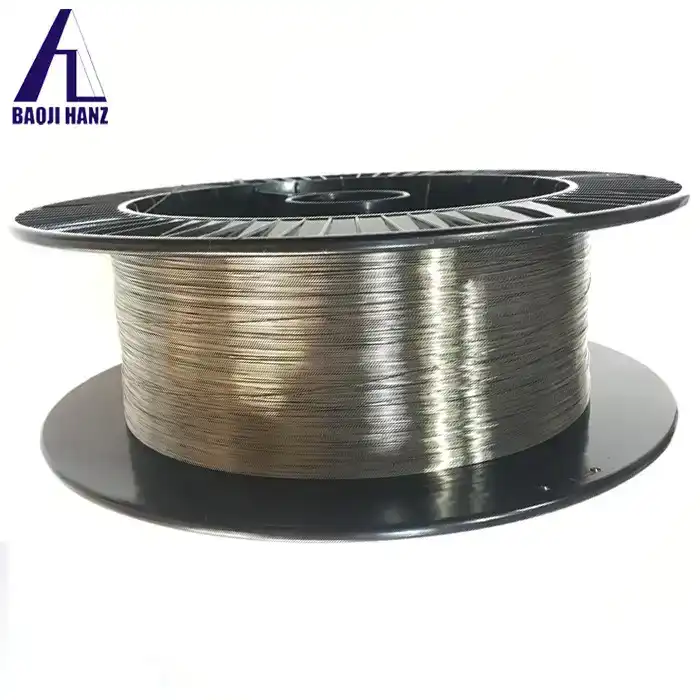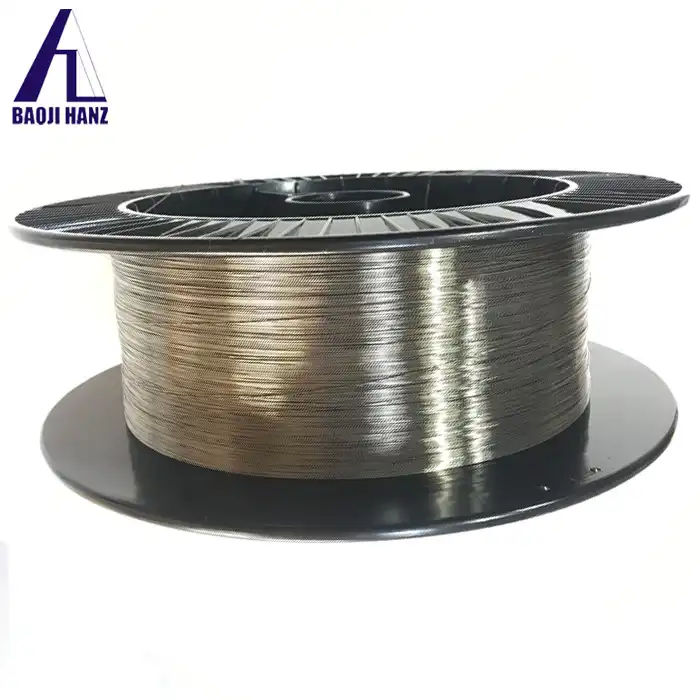
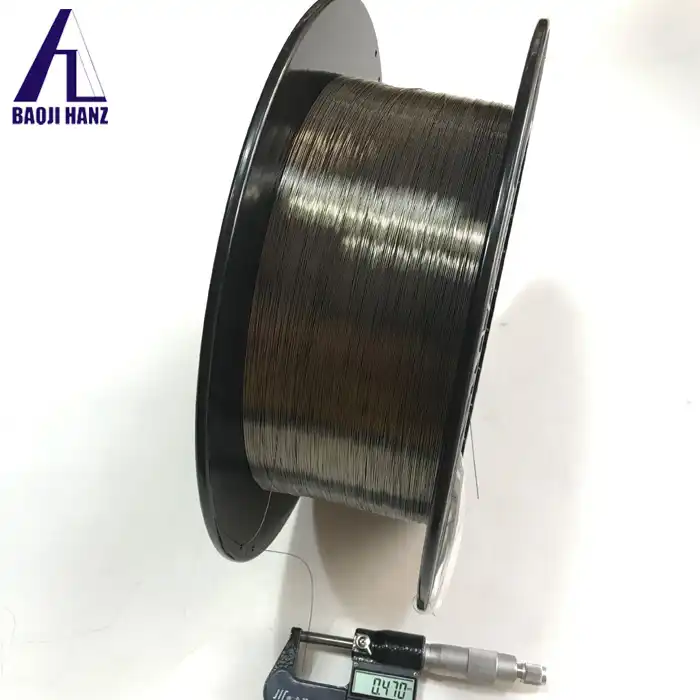
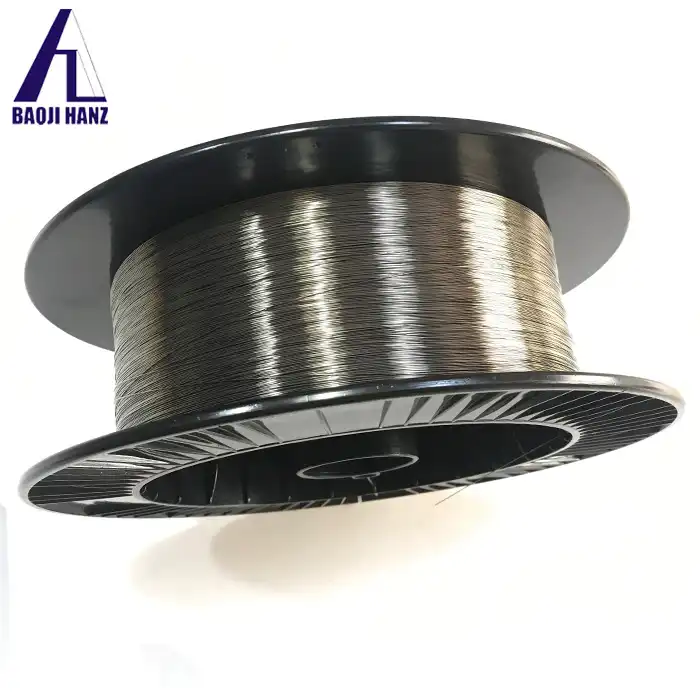
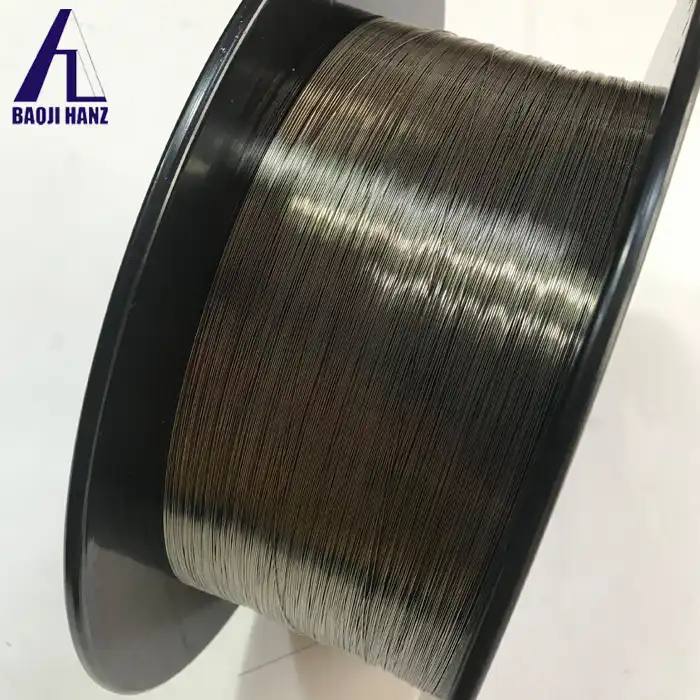





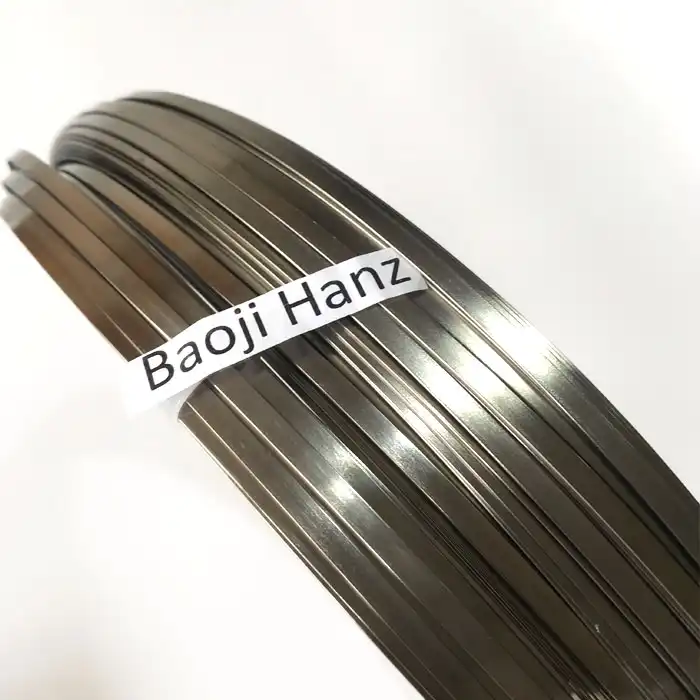
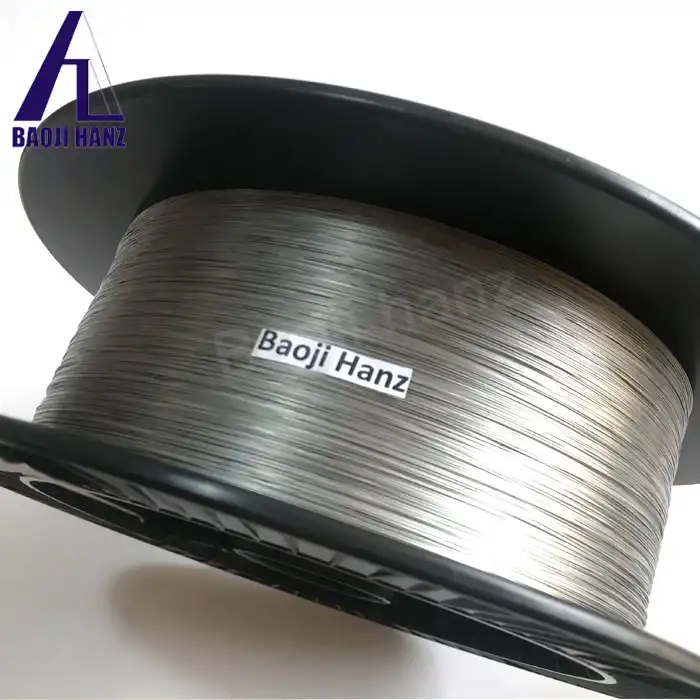
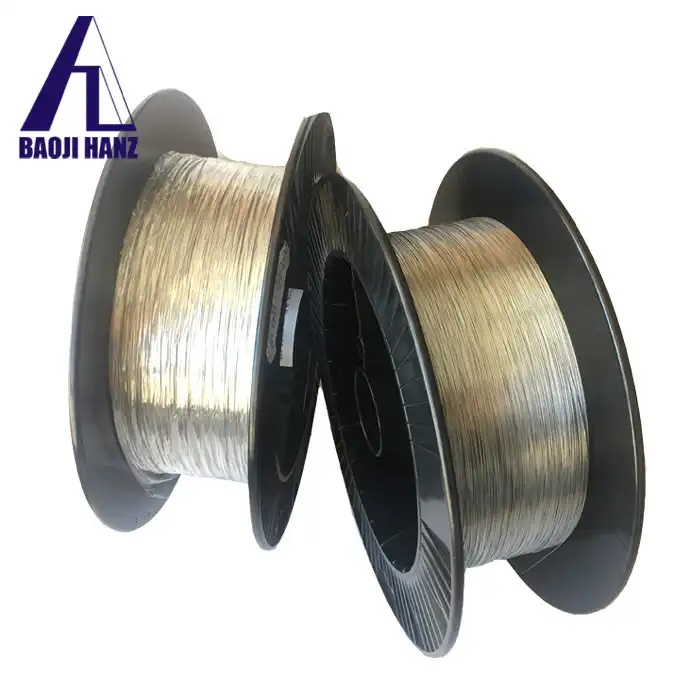
Medical nitinol wire is a shape memory alloy material composed of nickel and titanium, widely used in the medical field due to its unique properties. Here is a detailed introduction:
Characteristics:
Shape Memory Effect: Nickel-titanium wire exhibits a shape memory effect. Under low temperature or high stress, it transforms from an austenitic phase to a martensite phase, allowing for significant plastic deformation and maintaining its deformed shape. When the temperature rises to a certain level (above the austenitic transformation initiation temperature As) or the stress is removed, it automatically returns to its original shape in the austenitic phase.
Superelasticity: In its austenitic state, nickel-titanium wire can generate strain far exceeding the elastic limit of ordinary materials under external force. Upon unloading, the strain automatically recovers, and its elastic limit is far greater than that of ordinary materials, no longer obeying Hooke's Law.
Good Biocompatibility: Nickel-titanium wire is non-toxic to human tissue. The titanium oxide film on its surface acts as a barrier, inhibiting nickel release, thus giving it good biocompatibility and making it suitable for use in medical devices inserted into the human body.
Corrosion Resistance: Its corrosion resistance is similar to that of stainless steel wire, exhibiting excellent resistance to body fluids, seawater, and various chemical media, allowing it to remain stable in the human body environment.
High Damping Performance: It can absorb vibration and impact energy, making it suitable for shock absorption and noise reduction, offering advantages in some medical devices requiring vibration damping.
Parameters
| Performance Parameter | Value Range |
| Density | 6.5g/cc |
| Tensile Strength | 800~1100 MPa |
| Yield Strength (Austenitic State) | 150~300 MPa |
| Elongation | 20%~40% |
| Elastic Modulus (Austenitic State) | 70~80 GPa |
| Hardness (HV) | 250~350 |
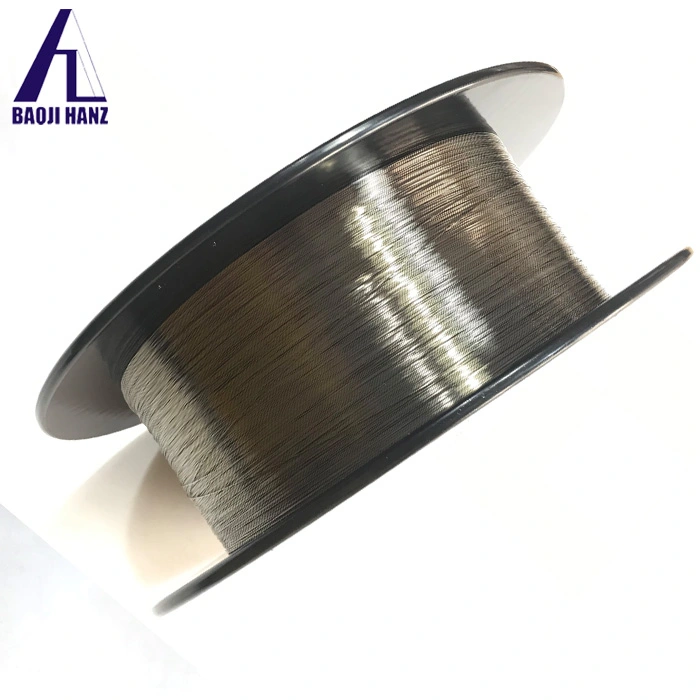
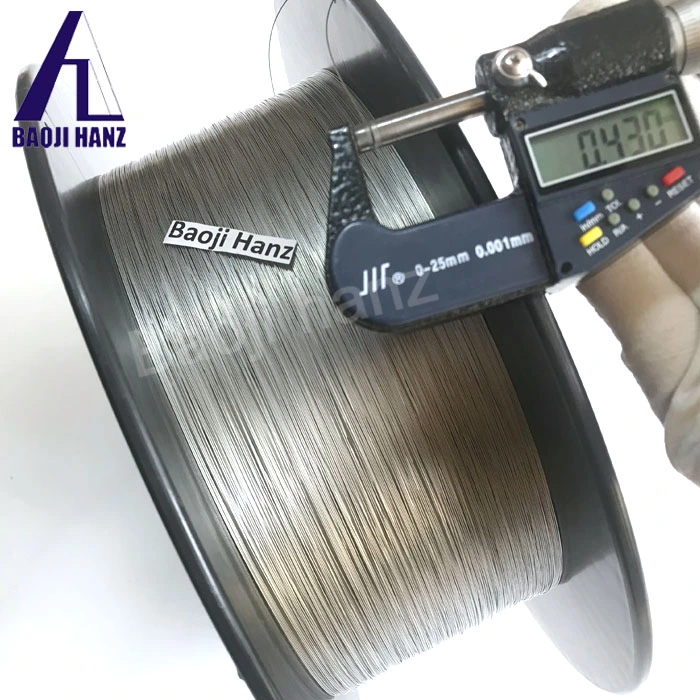
What applications does medical nitinol wire have?
The shape memory effect of medical nickel-titanium wire (i.e., after deformation at low temperatures, it can return to its original shape when heated to the phase transition temperature) combined with biocompatibility has the following core applications in the medical field:
Cardiovascular stents: The stent is compressed to a small size outside the body and inserted into the narrowed area of the blood vessel through a catheter. Triggered by body temperature (36.5~37.5℃), it returns to its pre-set tubular support shape, opening the narrowed blood vessel and restoring blood flow. It is suitable for conditions such as coronary heart disease and vascular occlusion.
Orthodontic archwires: Pre-bent to a shape matching the ideal dentition, they are adjusted at low temperatures in clinical practice to conform to the patient's current dentition and then ligated and fixed. Under the influence of oral temperature, they gradually return to their pre-set shape, continuously applying gentle and stable orthodontic forces to guide teeth to their normal position and correct problems such as malocclusion and excessive gaps between teeth. Urological Stone Removal Basket: The basket is compressed into a thin shape outside the body and inserted into the endoscopic cavity to the location of the stone. After being heated, it returns to its open net shape, precisely enveloping the stone for easy removal or fragmentation by the doctor. It is suitable for the treatment of kidney stones, ureteral stones, etc.
Gynecological Memory-Type IUD: The IUD's support wire is pre-shaped into a specific support structure. During insertion into the uterine cavity, it deforms into a compact shape at low temperature to reduce insertion difficulty. Once inside the body, it returns to its original shape, conforming to the uterine cavity wall for stable contraception. During removal, it can be further reduced in size by low-temperature deformation, minimizing patient discomfort.
Surgical Minimally Invasive Instrument Components: The elastic components of some minimally invasive surgical instruments, such as graspers and retractors, are made of nickel-titanium wire. These instruments fold and deform outside the body to be inserted through a small incision. They return to their working shape at body temperature to perform tissue grasping and retraction operations, reducing surgical trauma.
Technical Parameter Comparison Table
| Field | Type | Diameter Range | AF Temperature | Core Shape Memory Function |
| Cardio - cerebrovascular Department | Vascular Stent Wire | 0.15~0.5 mm | 32~37℃ | Compressed to small diameter in vitro, and restored to tubular supporting shape at human body temperature in vivo |
| Stomatology | Orthodontic Archwire | 0.2~0.55 mm | 28~35℃ | Bent into tooth - aligned shape at low temperature, restored to ideal dental arch curvature at oral temperature, and exerted continuous force for orthodontics |
| Urology Department | Stone Retrieval Basket Wire | 0.2~0.8 mm | 30~36℃ | Compressed into linear shape in vitro, restored to net shape in vivo to wrap stones |
| Gynecology Department | Shape Memory IUD Stent Wire | 0.3~0.6 mm | 33~37℃ | Deformed into compact state at low temperature during implantation, and restored to supporting shape in vivo to fit uterine cavity |
| Minimally Invasive Surgery | Instrument Elastic Component Wire | 0.4~1.0 mm | 25~35℃ | Folded and deformed in vitro to pass through minimally invasive incision, and restored to working shape in vivo |
Why choose us?
Baoji hanz as expert of medical nitinol wire, has dealt with client's in many countries, such as North America, Europe, Mid Asia etc.
We have advanced equipment and entire production line, from selecting material to final inspecyion, every step has own workers to keep production goes well.
When you need customized size and quantity, please contact us freely, we are always here for you.
Contact us
Email: baojihanz-06@hanztech.cn
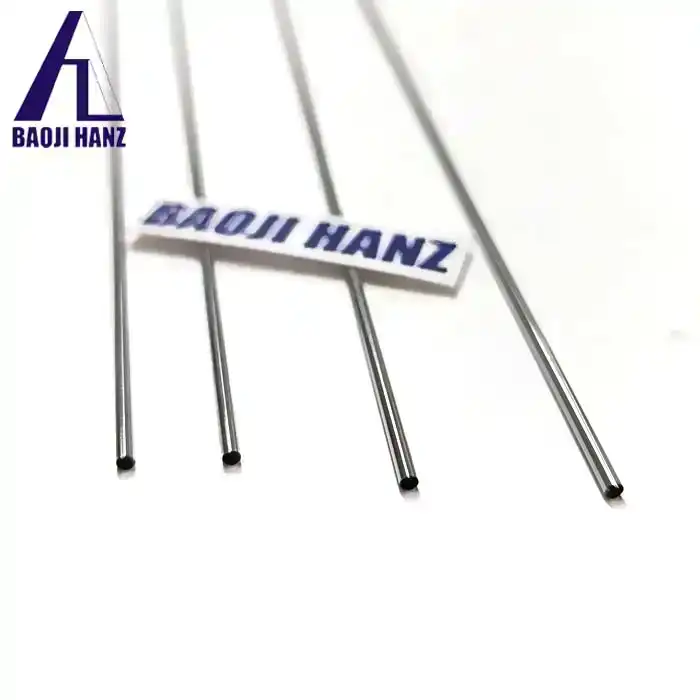
_1753930177984.webp "nitinol ingot")
_1751266472736.webp "nitinol bar")
_1750148477057.webp "Superelastic Nitinol Wire with room temperature")