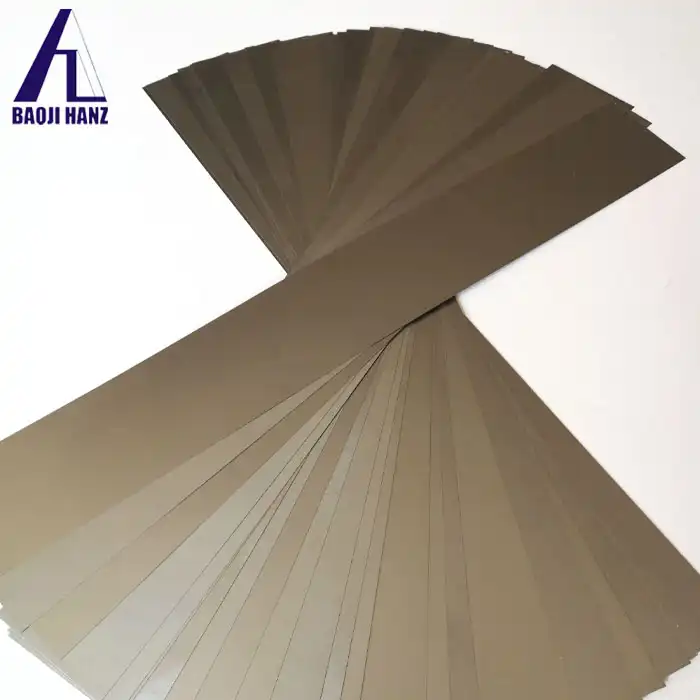
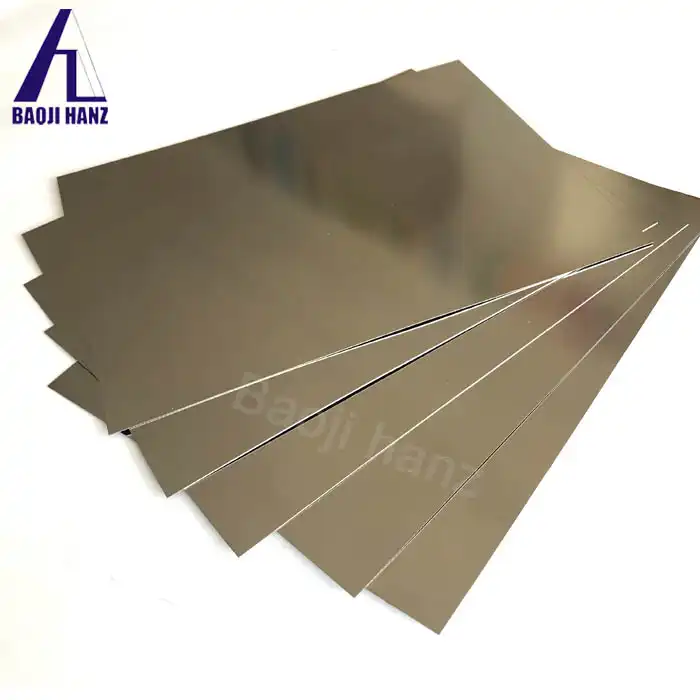





Shape Memory Nitinol Foils for Precision Medical & Industrial Applications — Ultra-Thin, High-Performance Nitinol Sheet Solutions
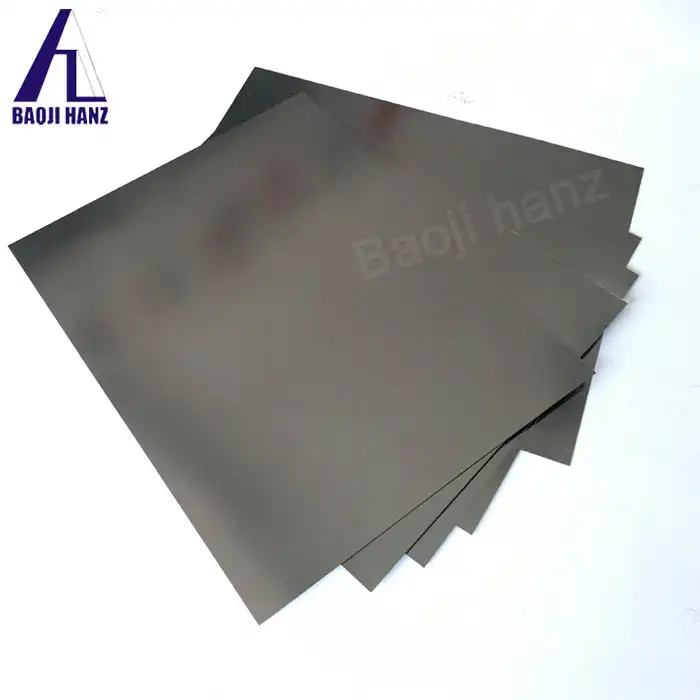
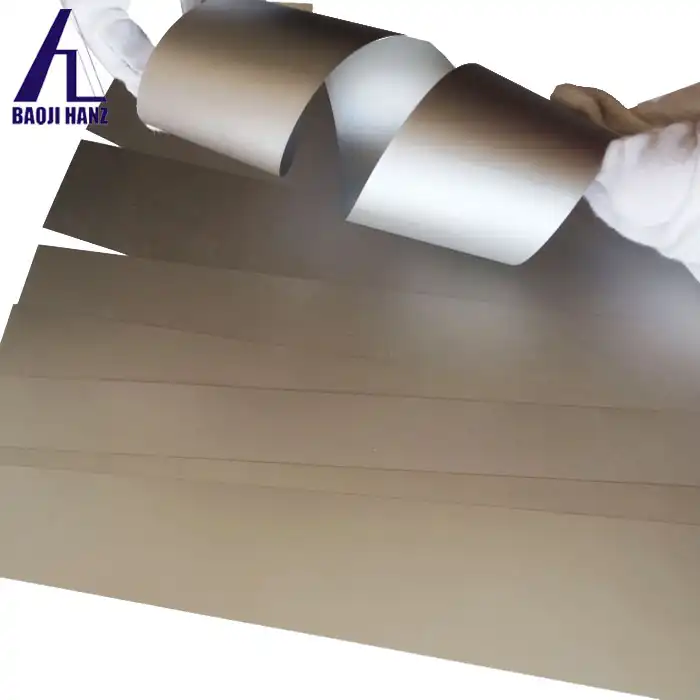
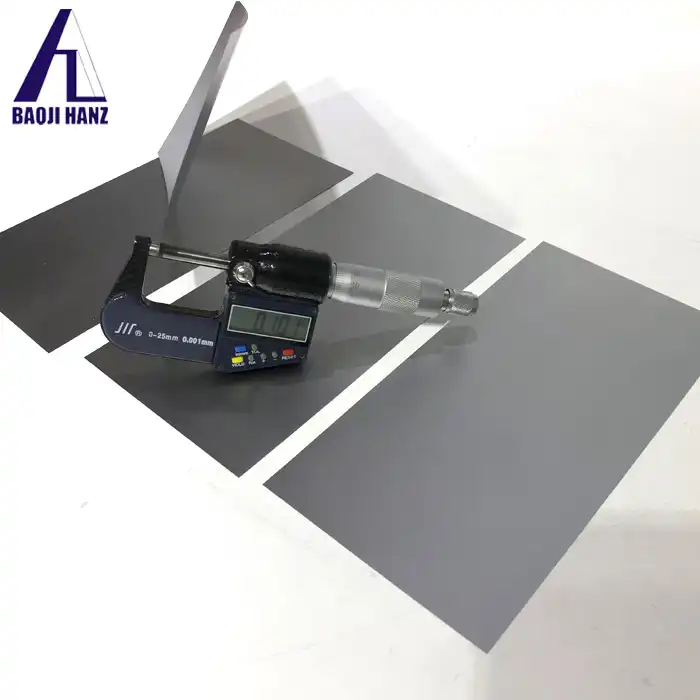
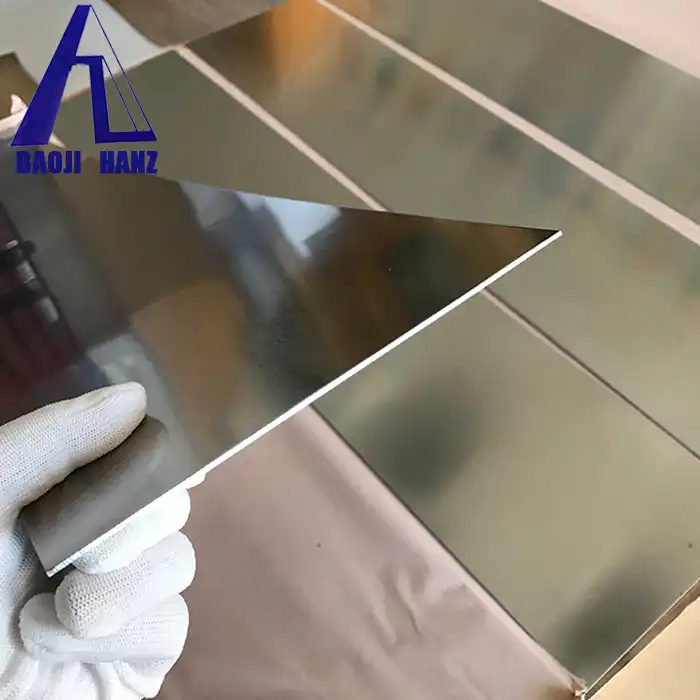
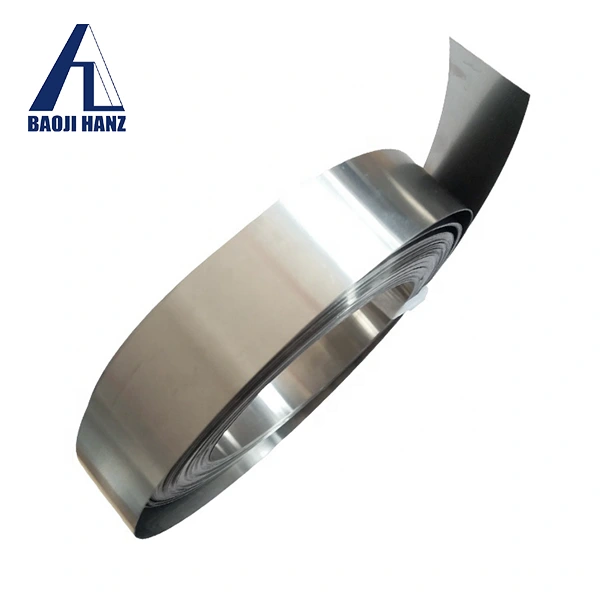
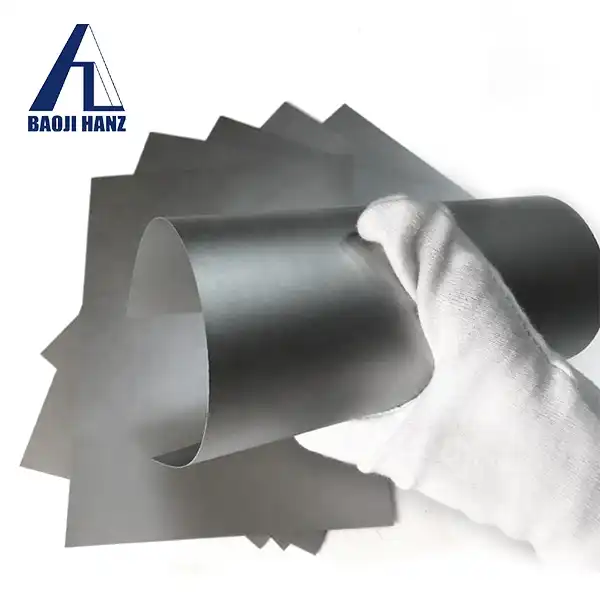
Baoji Hanz Metal Material Co., Ltd. supplies Shape Memory Nitinol Foils manufactured from NiTi alloy with nickel content above 50.4% and titanium minimum 44%, cold-rolled to precision tolerances. Compliant with ASTM F2063 and GB 24627-2009, these foils offer a density of 6.45 g/cm³, tensile strength ranging from 550 to 1900 MPa, and thickness from 0.03 to 1 mm with dimensional tolerance as tight as ±0.003 mm. With customizable Af transformation temperatures from -20°C to +100°C and a low MOQ of 1 kg, they serve both medical-grade and industrial-grade application requirements with full in-house manufacturing capability.
What Are Shape Memory Nitinol Foils?
Nitinol foils are ultra-thin, high-precision sheets engineered from near-equiatomic Nickel-Titanium alloys. Their defining characteristic is a reversible phase transformation between Martensite and Austenite crystal structures — this is what gives them both shape memory and superelastic behavior.
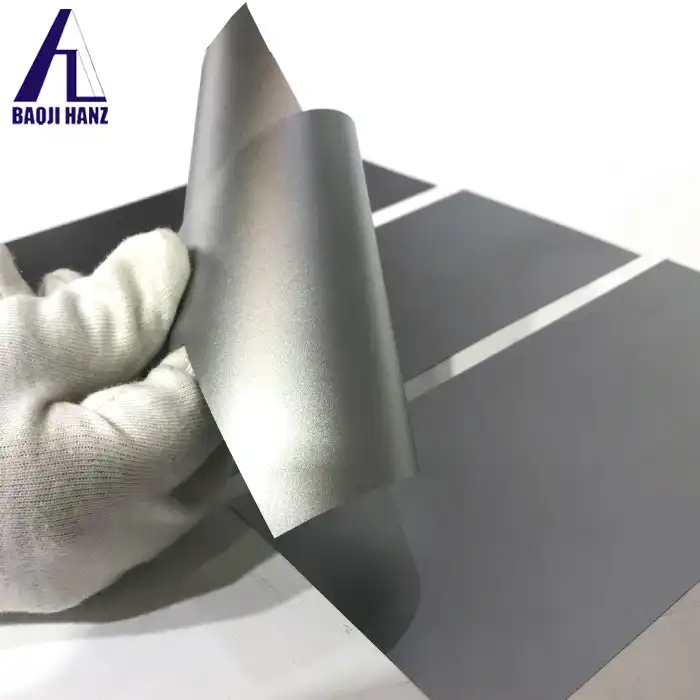
When heated above the Af point, the material contracts and recovers its original shape. When cooled, it returns to a deformable state. This makes them fundamentally different from conventional metal sheets, which deform permanently under stress.
For engineers designing microdevices, flexible actuators, or implantable components, conventional metals fall short due to poor elasticity, low shape recovery, and weak fatigue resistance. Nitinol foils directly solve these limitations.
|
|
|


Key Product Characteristics
These foils deliver a combination of properties that few materials can match at this thickness range:
· Shape memory and superelasticity: Capable of recovering after repeated deformation cycles without permanent damage
· Ultra-thin precision: Thickness controllable from 0.03 mm with tolerance as tight as ±0.003 mm
· Fatigue and corrosion resistance: Corrosion performance comparable to 300-series stainless steel; biocompatibility suitable for medical use
· Customizable phase transition temperature: Af adjustable from -20°C to +100°C to match your thermal actuation requirements
· Machinability: Cuttable and stampable, suitable for micro-component fabrication
The high surface-area-to-volume ratio of the foil format enables rapid heat dissipation, resulting in faster actuation cycle rates compared to Nitinol wire products. Superelastic strain recovery reaches up to 8% without permanent deformation — a critical advantage in dynamic, high-cycle environments.
Shape Memory Nitinol Foils Specifications
| Place of Origin | Shaanxi, China |
| Brand Name | Baoji hanz |
| Color | Bright surface |
| Materials | Nitinol alloy |
| Density | 6.45 gm/cm3 |
| Ti (Min) | 45% |
| Processing Service | Bending, Welding, Decoiling |
| Feature | Shape memory |
| Supply Status | Full annealed |
| Standard | ASTM F2063-18 |
| Certificate | ISO9001:2015 |
| Application | Cutting Processing Service |
| Chemical element | Af range | Available production Line | Usage | Sample |
| Nickel 55% Titanium 45% | 0℃to 100℃ | Rod&wire,Plate&sheet,Strip&foil | Medical&Industry | On stock (various specification) |
| Nickel 55% +V +Ti | ||||
| Nickel 55% +Fe +Ti | Subzero 30℃ to -5 ℃ | Rod&wire,Plate&sheet | Industry | On stock |
| Nickel 55%+Cr +Ti | (limitedspecification) | |||
| Nickel 55% +Hf +Ti | Above 100C | Ingot | Ingot | Updating |
| Mechanical Properties | ||||
| Thickness | UTS | Elongation | Upper Plateau Stress | Active Af |
| mm | σb MPa (min.) | δ % (min) | σload MPa (min.) | ℃ |
| 0.1 ~ 0.3 | 1100 | 15 | 480 | |
| 0.3 ~ 0.6 | 920 | 15 | 440 | - 20 ~ 100 ℃ |
| 0.6 ~ 6.0 | 850 | 15 | 440 | |
| Tolerance | |
| Nominal Thickness in mm | Permissible Variation from Nominal in mm |
| 6.00 ~ 1.00 | ± 0.05 |
| 1.00 ~ 0.26 | ± 0.03 |
| 0.26 ~ 0.15 | ± 0.02 |
| 0.15 ~ 0.10 | ± 0.01 |
Quality Control and Testing
Consistent performance in high-cycle applications depends entirely on microstructural integrity and thermomechanical precision. Every Shape Memory Nitinol Foils at Baoji Hanz goes through a structured inspection process.
Transformation temperature verification is performed using Differential Scanning Calorimetry (DSC) per ASTM F2004, identifying Austenite Start (As) and Finish (Af) temperatures to within ±2°C. This ensures your actuators behave predictably across the intended temperature range.
Mechanical performance is validated through uniaxial tensile testing per ASTM F2516, confirming Upper and Lower Plateau Stress values and verifying that residual elongation remains minimal after unloading — typically below 0.2%.
Inclusion analysis via metallographic inspection checks that non-metallic inclusions such as TiC and Ti₄Ni₂Ox remain below critical size thresholds. In ultra-thin foils, surface defects caused by inclusions can lead to immediate fracture, so this step is non-negotiable.
Dimensional tolerance is monitored using non-contact laser micrometers, maintaining thickness consistency down to ±2 μm where MEMS-level precision is required.
Full test reports covering chemical composition, mechanical properties, and DSC phase-transformation temperature are provided upon request.
Application Areas
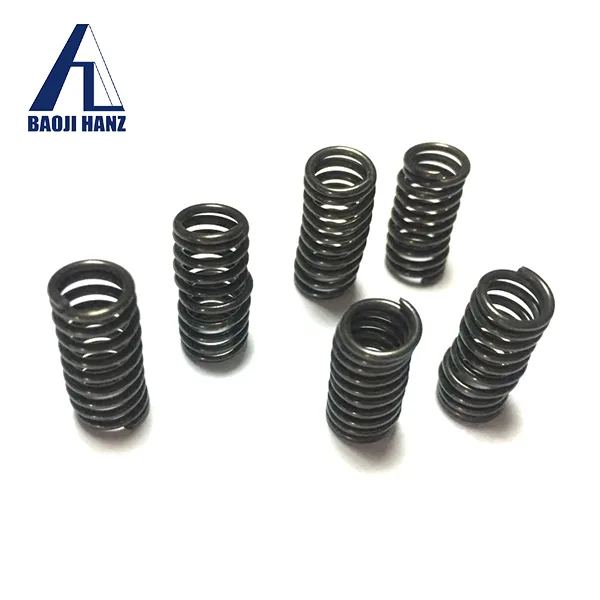
Medical devices: These foils are used in interventional device components, micro-implant accessories, minimally invasive instrument springs, thin-film heart valve coverings, and neurovascular flow diverters. The superelastic property allows devices to be crimped into micro-catheters and self-expand reliably within tortuous vascular anatomies.
MEMS and micro-actuators: In optical image stabilization systems, micro-fluidic pumps, and precision sensors, the shape memory effect allows the foil to contract on joule heating. Work densities are approximately 100× higher than traditional magnetic solenoids within a significantly smaller footprint — a compelling advantage for miniaturized electronics.
Industrial thermal actuation: Thermal-actuated components, sensor springs, and microswitches benefit from the precise, repeatable actuation behavior. The customizable Af temperature allows designers to match actuation onset to specific operating environments.
Aerospace: Active flow control devices and morphing wing structures use nitinol actuation skins that function reliably across extreme temperature fluctuations from -50°C to +70°C and high-vibration stress conditions.
Customization and Supply Advantages
You can specify thickness, Af transformation temperature, surface treatment, packaging method, and transportation approach. Both medical-grade and industrial-grade products are available within the same supply chain.
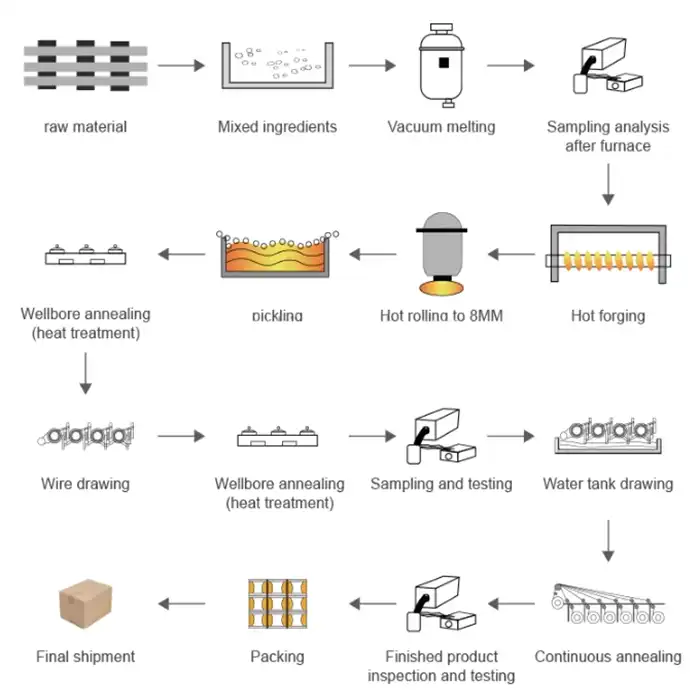
Full in-house manufacturing covers the entire process from vacuum melting through cold rolling to final heat treatment. This means no third-party dependency for quality consistency. The professional engineering team also provides direct technical support to help you resolve application-specific challenges.
Packaging is shockproof and moisture-proof, with horizontal transport orientation to protect dimensional integrity during shipping.

FAQ
Q1: What solutions do Shape Memory Nitinol Foils provide for microdevice design?
They supply ultra-thin memory metal sheet solutions for microdevices, flexible spring components, thermal-actuated parts, and precision medical devices. They solve the deficiencies of poor elasticity, low shape recovery, and weak fatigue resistance found in conventional metals.
Q2: How does foil thickness affect actuation speed?
Thinner foils have a higher surface-to-volume ratio, allowing much faster cooling and reset times compared to wires or thicker sheets. This translates to higher frequency response in thermal actuator applications.
Q3: What is the difference between superelastic and shape memory foils?
Superelastic foils have an Af below room temperature, existing as Austenite and acting like a spring under stress. Shape memory foils have an Af above room temperature, existing as Martensite and contracting when heated above that threshold.
Q4: Are these foils biocompatible for long-term implant use?
Yes, provided they are manufactured from restricted chemistry ingots meeting ASTM F2063 and have undergone proper surface passivation to prevent nickel leaching. Baoji Hanz supplies both medical-grade and industrial-grade versions.
Q5: What is the typical fatigue life of a Nitinol foil actuator?
Under controlled strain limits below 2% and with proper electropolishing to remove micro-cracks, Shape Memory Nitinol Foils can achieve millions of thermal actuation cycles.
Q6: Can these foils be laser welded or further processed?
Yes. Laser welding requires precise control of the Heat Affected Zone and an argon inert gas shield to prevent oxidation. The foils are also cuttable and stampable, making them compatible with standard micro-component fabrication workflows.
Contact Us
Ready to source precision Shape Memory Nitinol Foils foil for your project? Contact our team at baojihanz-niti@hanztech.cn for specifications, samples, or a custom quote.
.webp "ASTM F2063 Superelastic Nitinol Capillary Tube")
.webp "Astm F2063 Superelastic Nitinol Straight Wire")