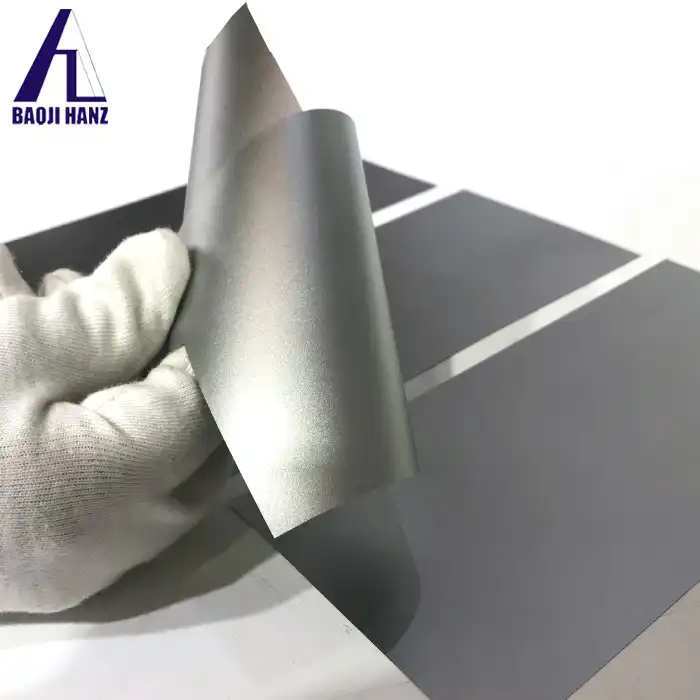


Nitinol sheet plate


2.AF temperature range:-20-100 degree C
3.Dimensions;MIN THK0.075mm-20mm*width50-300mm*L
4.Suface: acid cleaning/ polished
5.MOQ:2PCS
6.Unit price:50-150USD/pc based on size
7.Lead time: 5-15 days based on stock situation
Nitinol Sheet Plate for Medical & Industrial Applications
Medical device designers turn to Baoji Hanz Metal Material Co., Ltd. when they need Nitinol sheet plate. So do industrial engineers. They want shape memory and superelastic behavior they can rely on. The sheet is thin and rolled to tight tolerances. Thickness begins at 0.075 mm. Width can reach 300 mm. Af temperature ranges from −20°C to 100°C. Nickel stays at 54.5–57.0 wt%. Titanium makes up the rest. Supply follows GB 24627-2009 and ASTM F2063-18. Request batch test reports. They ship with the order.
How plate Differs From Conventional Metal Sheet
Stainless steel hits the same limit. Copper alloys and spring steel hit it too. Push any of them past the elastic range and the bend will not come back. The original shape is lost for good. Repeated loading brings on fatigue. Accuracy starts to drift over time.
This product follows a different rule. A single material holds two properties at the same time. Shape memory comes first. Heat it to its Af temperature and it goes back to the geometry you set. Superelasticity is the second property. Under load it takes a large elastic strain. Then it springs back with no permanent set. You can tune both through composition and heat treatment.
Plain metals stop working at this point. The combination gets past those limits. Microdevices are one example. So are thermally actuated components and flexible springs. Precision medical instruments hit the same failure modes, and ordinary metals cannot solve them.
Characteristics
Dimensional Range and Tolerance
1.Name: This product
2.AF temperature range:-20-100 degree C
3.Dimensions;MIN THK0.075mm-20mm*width50-300mm*no more than Length 1000mm
4.Suface: acid cleaning/ polished
5.MOQ:2PCS
6.Unit price:50-150USD/pc based on size
7.Lead time: 5-15 days based on stock situation
Mechanical and Physical Properties
| Property | Value |
|---|---|
| Density | 6.45 g/cm³ |
| Tensile Strength | 550–1,900 MPa |
| Elongation | 10–20% |
| Af Temperature Range | −20°C to 100°C (customizable) |
| Ni Content | 54.5–57.0 wt% |
| Ti Content | Balance |
| Dimension Tolerance | ±0.003–±0.02 mm |
| Thickness Range | 0.031–1 mm (customizable) |
| Delivery Condition | Cold-rolled / Shape-set annealed |
Fatigue Resistance and Biocompatibility
Nickel-titanium sheet holds up well to fatigue when loads keep cycling. That matters for implant components. It matters for actuator springs too, since both work where deformation repeats. Body fluids cause no trouble. Sterile processing conditions are fine as well, because the sheet resists corrosion and is biocompatible.
Technical Specifications
| Parameter | Details |
|---|---|
| Product Name | Nitinol Sheet / Foil |
| Standards | GB 24627-2009 / ASTM F2063-18 |
| Thickness | 0.075 mm – 20 mm (standard); 0.031 mm (custom minimum) |
| Width | 50–300 mm |
| MOQ | 2 PCS / 1 kg |
| Unit Price | USD 50–150/pc (size-dependent) |
| Lead Time | 5–15 days (stock); 15–30 working days (custom) |
| Processing | Cold rolling / Vacuum melting |
| Packaging | Shockproof and moisture-proof; horizontal transport |
Application Scenarios
Medical Devices
Interventional device components get built on shape memory foil. Springs inside minimally invasive instruments rely on it. So do the accessories used in microimplants. Af temperature can be tuned to fire at body temperature. Near body temperature is another option. Inside the body it deploys, then does its shape-driven job.
Tight limits control the thickness. Biocompatible surface finishes can be ordered too. Thanks to those two traits, the material suits catheter parts. It also suits micro-actuated surgical instrument components. In those spots, dimensional consistency decides whether a part works.
Industrial and Aerospace
Thermally actuated components made from Nitinol sheet plate can trigger mechanical responses at defined temperatures, replacing motorized or electronic actuator assemblies in some configurations. The response is passive and repeatable within the material's transformation range.
Superelastic properties in this alloy get used in aerospace too. Sensor springs are one example. So are microswitches, and flexible structural parts as well. Deformation is absorbed, and then the part returns to its original geometry without permanent set.
Working with Baoji Hanz Metal Material Co., Ltd. for Nitinol sheet plate
Full-Process Manufacturing
Vacuum melting, final heat treatment, and everything between runs under one roof. So the chemical composition stays consistent. Batch to batch, phase-transformation performance holds steady too.
Standard Compliance and Testing
Production follows GB 24627-2009 and ASTM F2063-18. Every batch gets tested. That covers chemical composition, mechanical properties, and DSC phase-transformation temperature. Ask for test reports with your order and we issue them.
Customization Options
You can specify thickness and Af transformation temperature. Surface finish and packaging format are also up to you. Raw material sheets come in medical-grade and industrial-grade options. The same goes for shape-set formed parts.
Low MOQ for Sampling and R&D
The minimum order is 2 PCS. That lets you try the material out or make a prototype, and you don't have to commit to a large volume. Lead times for custom work are confirmed once you place the order.
Technical Correspondence
Got questions about material selection or processing parameters? The team answers those by email. They can also help with Nitinol sheet plate requirements for your specific application. Just write to them before you order.


Request a Quote or Sample
Need a set thickness, Af temperature, or surface finish? Just send your specs. After that, ask for a quote or place a sample order so you can test it.
Frequently Asked Questions
Q: What temperature range does Af cover?
A: Our standard Af covers −20°C to 100°C. Would a different point inside that spread suit your build better? Just tell us when you order. We will then set it for your medical or thermal-actuation application.
Q: How thin can the sheet go?
A: Standard minimum thickness sits at 0.075 mm. Custom runs get down to 0.031 mm. Tolerance is held to ±0.003–±0.02 mm.
Q: Are material test reports provided?
A: Yes. Batch test reports are available for each order. Just ask. They cover chemical composition and mechanical properties. DSC phase-transformation temperature is included too.
Q: For micro-components, can the sheet be laser-cut or stamped?
A: Yes. The precision-rolled condition works for laser cutting and stamping. Fine blanking is possible too. You can make micro-scale parts this way for medical and industrial uses.
Q: What surface finishes are offered?
A: Available finishes are acid-cleaned (pickled), bright polished, and ground. Selection depends on downstream processing requirements or end-use environment.
Q: Is both medical-grade and industrial-grade material available?
A: Yes. Implant and device use calls for biocompatibility and purity, and medical-grade material meets both. For actuators, sensors, or aerospace parts, industrial-grade material does the job.
Contact Us
Send your specifications or inquiries to baojihanz-niti@hanztech.cn. We respond to technical questions and quote requests for Nitinol sheet plate by email.
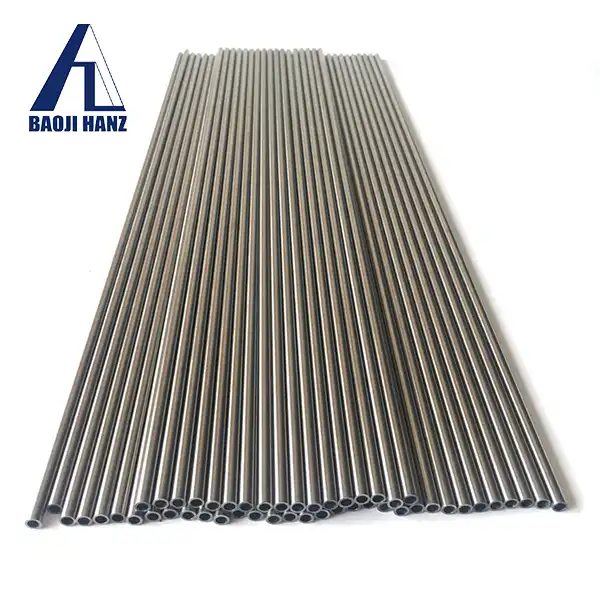
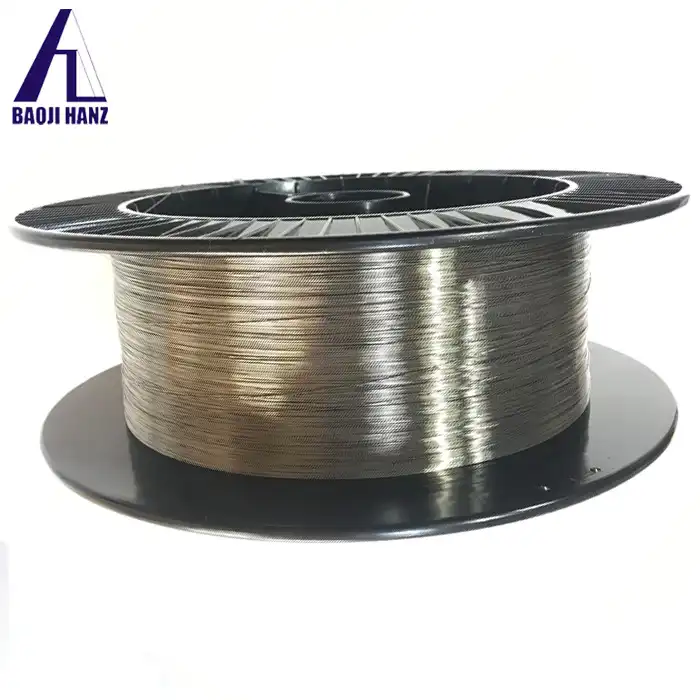
_1766124837102.webp "nitinol sheet 0.3mm")
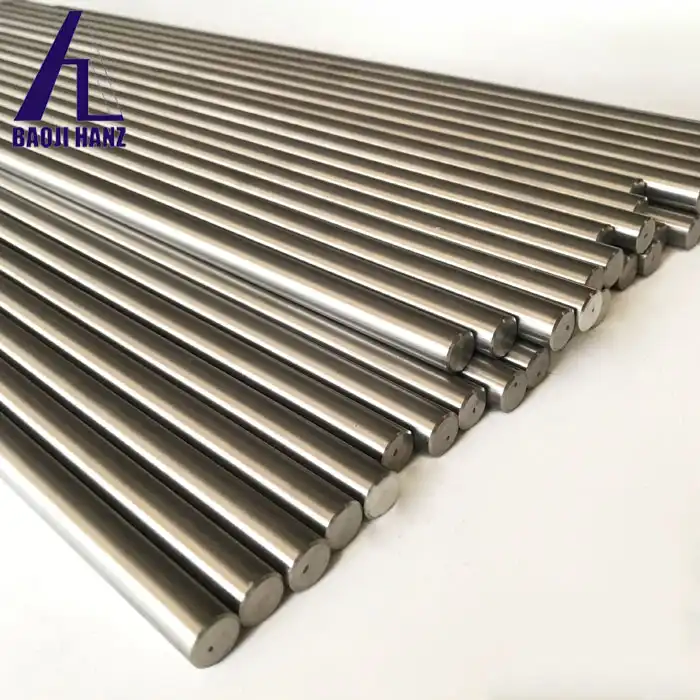
_1753930177984.webp "nitinol ingot")