Nitinol Strips Super Elastic & Shape Memory ASTM F2063
2026-09-23 16:51:13
ASTM F2063 nitinol strip is the standard for nickel-titanium materials that are used to find improved functional alloys for important medical and industry uses. This standard tells worked nitinol flat products what chemicals they must have, how they must behave mechanically, and how they must be biocompatible. This makes sure that the products always have consistent superelastic behavior and shape memory functionality. Baoji Hanz Metal Material Co., Ltd. is an expert at making high-purity nitinol strips that meet the strict ASTM F2063 standards. We can provide you with solid base materials for your precision engineering projects.
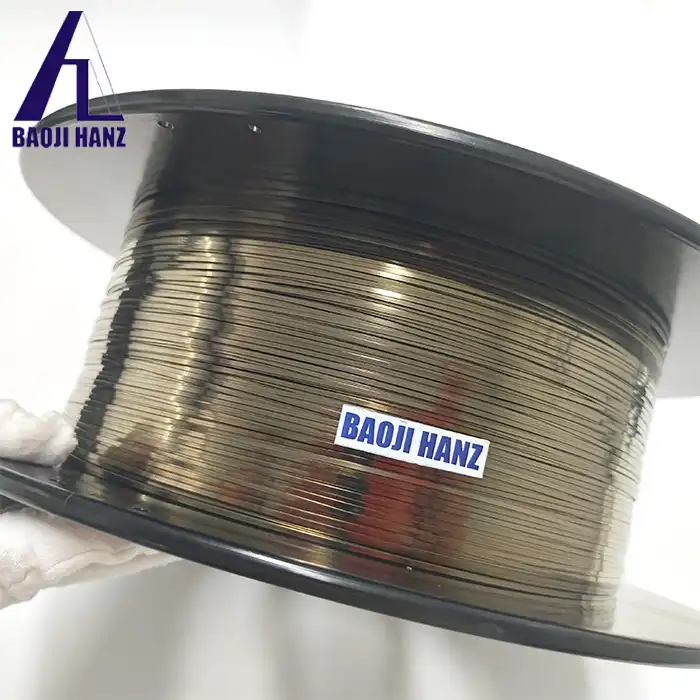
Understanding ASTM F2063 Nitinol Strips: Composition, Properties, and Manufacturing
Chemical Composition and Purity Standards
ASTM F2063 sets clear limits for the makeup of wrought nickel-titanium flat goods. The standard calls for a nearly equal atomic ratio, which is usually between 54.5 and 57% weight percent nickel and the rest being titanium. This small range of chemical differences is very important because even small changes of up to 0.1 atomic percent can move transformation temperatures by around 10°C, which has a direct effect on the superelastic performance.
In addition to the main nickel-titanium balance, ASTM F2063 sets tight limits on other elements that are not nickel or titanium. The oxygen level can't be more than 500 parts per million (ppm), the carbon level can't be more than 300 ppm, and the nitrogen level should stay below 100 ppm. These limits stop the formation of harmful TiC and NiOx inclusions, which build up stress and cause wear cracks to start when the material is loaded and unloaded over and over again. To get the amount of cleanliness needed for medical-grade uses, we use the vacuum arc remelting (VAR) and vacuum induction melting (VIM) methods.
Superelastic and Shape Memory Properties
The way nitinol strips behave mechanically is completely determined by how the service temperature and change temperatures relate to each other. The material is superelastic when the Austenite Finish temperature (Af) is below the working environment. It can go through 6-8% strain and recover fully when it is unloaded. This behavior shows up as a typical peak in the stress-strain curve, where stress stays pretty much the same over a large range of strains.
When Af is higher than the atmospheric temperature, shape memory behavior shows up. When these conditions are met, the material can be shaped while it is in its martensitic state. When heated above Af, it will return to its previous shape. The difference in temperature between Austenite Start (As) and Martensite Finish (Mf) is usually between 30°C and 50°C, which makes a processing window for thermal activation uses.
According to ASTM F2516, mechanical tests show that superelastic nitinol strips have Ultimate Tensile Strength (UTS) numbers between 900 and 1400 MPa, and they stretch more than 10% before they break. When the material is loaded, the Upper Plateau Stress (UPS) is usually between 400 and 600 MPa, and when it is unloaded, the Lower Plateau Stress (LPS) is around 100 to 200 MPa lower. This creates the feedback loop that is typical of stress-induced change.

Manufacturing Processes and Quality Control
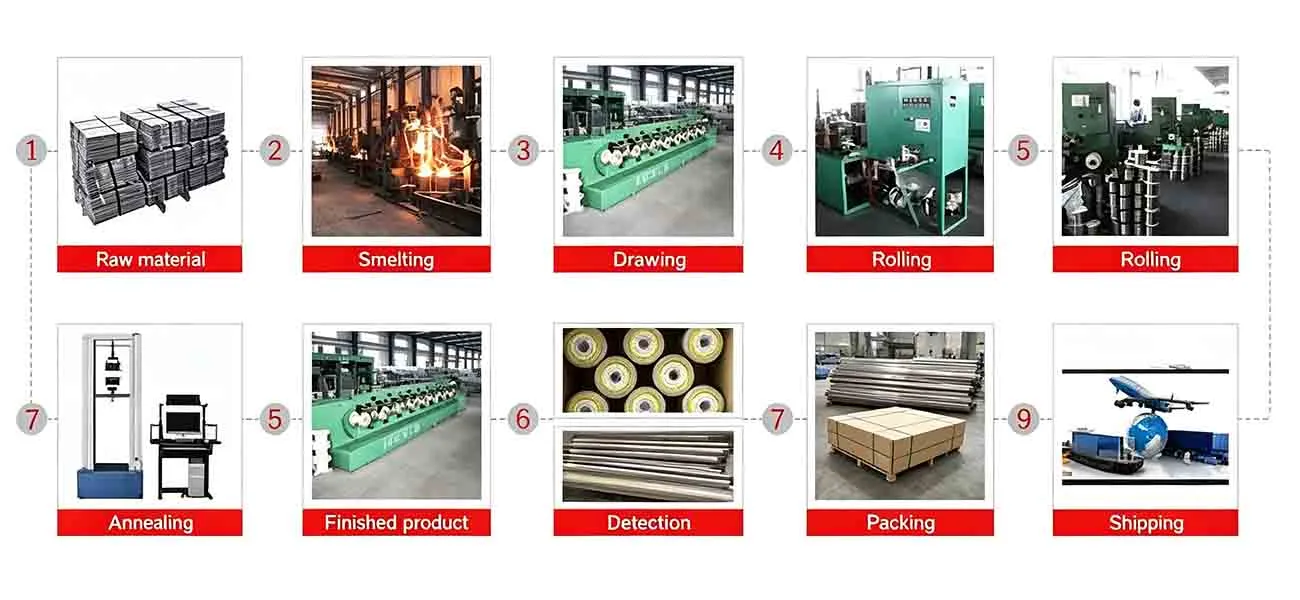
Several precise steps are needed to make nitinol strips that meet ASTM F2063 standards. The material is hot-rolled at temperatures between 700°C and 900°C to break up the cast structure and get the initial thickness decrease. This is done after ingot casting using VIM or VAR methods. After some cold rolling passes and annealing processes at 600–850°C, the thickness is gradually lowered while the grain size and roughness are kept constant.
Precision rolling equipment is used to make sure that the final dimensions of medical-grade strips are within ±0.013 mm (±0.0005 inches) for thickness and ±0.025 mm (±0.001 inches) for width. Specifications for surface finishes often call for Ra values below 0.4 μm to keep stress concentrations as low as possible and increase wear life.
The most important part of producing ASTM F2063 nitinol strip is the heat treatment, which sets the final transformation temperatures and mechanical qualities. Shape-setting usually takes place between 450°C and 550°C for minutes to hours, based on the memory properties that are wanted. Rapid cooling keeps the learned shape, and controlled cooling lets you finetune the temperatures at which the transformations happen.
Differential Scanning Calorimetry (DSC) according to ASTM F2004 is part of our quality control procedures. It checks that transformation temperatures are within ±2°C of what they should be. Testing for Bend and Free Recovery according to ASTM F2082 confirms superelastic performance. Testing for Tensile Performance according to ASTM F2516 confirms plateau stress levels and fixed set limits (usually less than 0.05% leftover strain after 6% strain cycling). Metallographic examination according to ASTM E112 makes sure that the grain sizes are within certain ranges, and inclusion analysis according to ASTM E1245 makes sure that the level of cleanliness is right for implantable uses.
Comparing ASTM F2063 Nitinol Strip with Alternative Materials
Performance Against Conventional Alloys
Compared to 316L stainless steel, ASTM F2063 nitinol strips have a much better ability to recover from elastic strain (about 8% vs. 0.2% for stainless steel). This means that parts can bend a lot of times without permanently changing shape or becoming harder over time. Nitinol strips that have been properly treated can withstand 10⁷ to 10⁸ cycles at 2% to 3% alternate strain amplitudes, which is better than stainless steel under the same loading conditions.
Titanium Grade 5 (Ti-6Al-4V) is very resistant to corrosion and is biocompatible, but it doesn't have the useful qualities of nitinol. Titanium has an elastic modulus of 110 GPa, which is between stainless steel's 190 GPa and austenitic nitinol's 70–80 GPa. However, it doesn't have the constant-force plateau behavior or thermally activated shape return that make nitinol useful.
There are important differences between ASTM F2063 and other nitinol standards. The ASTM F2063 standard talks about cast flat goods that are used in medical devices. It focuses on biocompatibility and compositional purity. ASTM F2063 replaced earlier standards by adding stricter requirements for cleanliness and mechanical properties. ASTM F2082, on the other hand, gives standard test methods instead of material requirements.
Cost-Efficiency and Lifecycle Value
The initial cost of materials for ASTM F2063 nitinol strips is usually three to five times higher per kilogram than for stainless steel and titanium. This higher price is because of the special melting, processing, and quality control that are needed to meet the strict requirements of the design. The price of materials changes based on changes in the nickel market, the number of orders, and any special needs, like required transformation temperatures or size limits.
Lifecycle study often shows that the higher starting cost is worth it. Components made from nitinol strips might get rid of the need for complicated spring systems, shorten the time between repair visits because they don't wear out as quickly, or allow designs that would not be possible with normal materials. The superelastic behavior makes it naturally flexible, so it can react to changing loads or shapes without the need for adjustment tools. This makes the system simpler and less likely to fail.
Total cost of ownership is greatly affected by how reliable the supplier is. Transformation temperatures or mechanical qualities that don't stay the same can lead to expensive rework, approval testing, or failures in the field. When you buy from a well-known company with strong quality systems, traceability protocols, and expert help, you can avoid the risks and costs that come with getting different materials.
Why Choose ASTM F2063 Nitinol Strips? Key Advantages for Your Business?
Superior Flexibility and Durability
ASTM F2063 nitinol strips have a superelastic plateau behavior that lets parts go through multiple big deflections without getting damaged. Compared to regular spring materials that lose force over time due to work hardening and stress relaxation, this feature cuts down on upkeep needs and increases service life. Nitinol doesn't easily break down after being bent millions of times, which makes it useful for applications that need to do that.
Shape memory of ASTM F2063 nitinol strip makes it possible for clever materials to react consistently to heat. Self-regulating systems can adapt to changing conditions without monitors, controls, or power sources from outside the system. The reversed phase change happens over and over again for thousands of cycles, making sure that the actuator works reliably for the whole life of the part.
Corrosion protection that is about the same as titanium makes sure that performance stays stable in harsh settings. The inactive oxide layer forms naturally on the surfaces of nitinol. It protects the material below from chloride attack, galvanic corrosion, and biological fluids. This level of longevity is important for medical devices that are implanted and need to work for decades inside the body.
Innovation and Product Design Benefits
Because of their special features, ASTM F2063 nitinol strips allow designers to use them in ways that would not be possible with regular materials. When mechanisms behave with constant force over big deflection ranges, they are easier to understand because they don't need complicated links or variable-ratio springs. Shape memory effect-based compact actuation cuts down on system size and weight, which is especially useful for portable, aircraft, or slightly invasive uses.
Biocompatibility certification from strict tests according to ISO 10993 increases the number of people who can buy medical equipment. The material has a history of being safe in circulatory, dental, and surgical uses. This makes it easier for regulators to approve new products and lowers the risk of them not being sold.
Customization features let you get the best results for your unique application. Changes in makeup and processing factors can be made to change transformation temperatures between -50°C and +120°C. Different performance qualities can be achieved by changing the mechanical properties, surface finishes, and dimensional requirements to fit particular design needs.
Quality Assurance and Market Trends
Consistency from batch to batch is made possible by strict factory controls and thorough testing methods. Documented quality systems that can be fully tracked help with governmental filings and give customers peace of mind about the reliability of their long-term supply. Certificate of Conformance packages contain raw data from a number of different test methods. This lets the customer check that the material meets requirements without having to do extra tests.
As more industries, like aircraft, medicine, and manufacturing use it, researchers are always looking for ways to make processing better and create new applications. Improvements in thermomechanical processing allow for more precise control of the change temperature, and methods for changing the surface make it more biocompatible and resistant to fatigue. Because of these changes in technology, ASTM F2063 nitinol is becoming a more useful base material.
High-performance functional metals are in high demand because the markets for minimally invasive medical treatments, lightweight aircraft structures, and adaptive robotic systems are growing. Using ASTM F2063 nitinol strips in procurement plans is in line with industry trends toward smart materials, simpler systems, and better product performance traits that set products apart in competitive markets.
How to Source and Procure ASTM F2063 Nitinol Strips Efficiently?
Identifying Qualified Suppliers
To get medical-grade ASTM F2063 nitinol strip, you need to buy them from companies that have quality control systems that are certified to ISO 13485 or a similar standard for medical devices. As per AMS 2750 or related standards, manufacturing sites should be able to show that they have precision rolling tools with calibration records and heat treatment furnaces that keep the same temperature all the way through the process.
Certification packages should have test reports for the material that show its chemical make-up using inductively coupled plasma (ICP) spectroscopy, its transformation temperatures from DSC analysis, its mechanical properties from tensile testing, and its microstructure and inclusion content as seen by metallography. Being able to trace a finished product back to its ingot lot number makes it possible to look into any major problems and helps with regulatory compliance.
Suppliers who understand application needs are different from commodity sellers because they offer technical help. Manufacturers with a lot of experience can offer the best transformation temperature ranges for different uses, as well as heat treatment factors for setting the shape and joining methods or surface treatments that keep the superelastic qualities.
Ordering Specifications and Logistics
If you want to buy ASTM F2063 nitinol strips, you should include the thickness, width, length, transformation temperature range (usually Af ± 5°C), surface finish needs, and edge condition choices (slit, cut, or as-rolled). Tighter limits on dimensions, specific UPS/LPS values, or extra tests like fatigue characterization or biocompatibility proof could be part of custom specs.
Minimum order amounts depend on the provider and the level of customization. Smaller amounts of standard sizes with widely stated Af values (0°C, 10°C, 22°C) may be available from stock. However, for custom transformation temperatures or tight tolerances, production lots must be at least 5–25 kilograms. For qualified development projects, it is often possible to discuss sample amounts for assessment reasons.
Lead times range from two to four weeks for stock configurations to ten to sixteen weeks for special configurations that need their own melting campaigns. Things that are on the critical path are making the ingots (4-6 weeks), rolling and intermediate annealing (3-5 weeks), testing and the final heat treatment (2–3 weeks), and putting together the certification package (1 week). For pressing needs, you may be able to pay more for expedited handling.
Price Negotiation and Cost Drivers
There is a strong link between the cost of materials and nickel market prices, transformation temperature requirements, physical tolerances, and order volume. Tightly controlled specs (±2°C) cost more because of more tests and scrap, while standard Af temperatures (±5°C window) cost less. In the same way, industrial tolerances (±0.025 mm thickness) are cheaper than precise grades (±0.013 mm).
Price cuts are possible because of better production scheduling and lower setup costs that come with volume agreements. Both sides benefit from stable supply chains and good prices that come with annual deals with quarterly releases. Blanket buy orders with flexible calloff dates can handle changes in demand without giving up volume savings.
Shipping, security, tariffs, and quality check costs should all be added to the total landed cost. When sending expensive goods across international borders, you need to make sure you have full insurance coverage and reliable shipping providers. Even with certified suppliers, incoming screening routines protect against shipping damage and make sure that materials are in good shape before they are used in production.
Conclusion
Additionally, ASTM F2063 nitinol strips are an important material for uses that need superelastic flexibility, shape memory, and high resistance to wear. Understanding the specification's standards for makeup, mechanical qualities, and production controls helps people who buy things decide which sources to work with and make sure the materials are right. Comparing performance to other materials makes the value offer clearer, and looking at real-world uses shows that the product is reliable in many different fields. To do efficient buying, you need to pay attention to the qualifications of the suppliers, the details of the orders, and the cost drivers that affect the total lifetime value. ASTM F2063 nitinol strips are a great choice for organizations that want to be on the cutting edge of technology because they have unique useful qualities, are biocompatible, and can be customized.
FAQ
What determines whether nitinol strip exhibits superelastic or shape memory behavior?
How well something works is based on how the Austenite Finish temperature (Af) of the material affects the service temperature. When Af drops below the working temperature, the material stays in the austenitic phase and shows superelasticity, which means it can recover big stress when it is loaded. When Af is higher than the service temperature, the material is in the martensitic state and has a shape memory effect. It will only return to its trained shape when heated above Af. For medical device uses, Af is usually set between 5°C and 15°C to make sure that the material works well at body temperature.
How do thickness tolerances affect component performance and cost?
Tighter diameter limits have a direct effect on both the cost of production and the integrity of the product. When compared to industrial grades (±0.025 mm), precision tolerances (±0.013 mm) mean more rolling passes, more frequent gauge readings, and more scrap. This makes the cost of the material 15–30% higher. Different thicknesses change how much force is output in spring uses, how much horizontal force is output in stents, and how stiff it is to bend in guidewires. For important uses, precise tolerances are needed, but for less important uses, market types can be used to get the best cost-performance balance.
Can ASTM F2063 nitinol strips be welded or joined?
Laser welding is possible, but it's hard to do properly. To keep the process from oxidizing and making brittle Ti₂Ni intermetallic phases, a neutral gas covering (argon or helium) is needed. The Heat Affected Zone (HAZ) usually loses its superelastic qualities because of limited annealing, which could lead to stress concentration sites. When joining parts together, mechanical crimping, glue bonding, or shape-setting around the completed parts are often more effective ways that keep the material's performance features. Is it possible to bond or join ASTM F2063 nitinol strips?
Partner with HANZ for Premium ASTM F2063 Nitinol Strip Solutions
Baoji Hanz Metal Material Co., Ltd. has been making superelastic and shape-memory nickel-titanium alloys for seven years and can help you with even the hardest tasks. As a straight seller of ASTM F2063 nitinol strip, we don't have to pay markups to middlemen and meet strict ISO 9001, SGS, and TUV certification standards. Our high-tech VIM-VAR melting rooms and precise rolling machines make medical-grade materials with temperature changes managed to within ±2°C and size errors to within ±0.013 mm. Whether you need standard stock sizes for fast prototyping or unique specs for large-scale production, our technical team can help you with everything, from choosing the right material to making the best use of heat treatment. We keep a large stock of widely ordered setups, which lets us deliver within two to three weeks. Our OEM services can also meet specific needs for thickness, width, Af temperature, and surface finish. Email our application engineers at baojihanz-niti@hanztech.cn to talk about your nitinol strip needs and get expert advice that is tailored to your unique problems.
References
Duerig, T., Pelton, A., & Stöckel, D. (2018). Nitinol Shape Memory Alloys: Fundamentals and Clinical Applications. Materials Science Forum, Vol. 394-395.
ASTM International. (2021). ASTM F2063-18: Standard Specification for Wrought Nickel-Titanium Shape Memory Alloys for Medical Devices and Surgical Implants. West Conshohocken, PA.
Morgan, N. B. (2004). Medical Shape Memory Alloy Applications—The Market and Its Products. Materials Science and Engineering: A, 378(1-2), 16-23.
Otsuka, K., & Wayman, C. M. (1998). Shape Memory Materials. Cambridge University Press.
Pelton, A. R., Fino-Decker, J., Vien, L., Bonsignore, C., Saffari, P., Launey, M., & Mitchell, M. R. (2013). Rotary-Bending Fatigue Characteristics of Medical-Grade Nitinol Wire. Journal of Mechanical Behavior of Biomedical Materials, 27, 19-32.
Robertson, S. W., Pelton, A. R., & Ritchie, R. O. (2012). Mechanical Fatigue and Fracture of Nitinol. International Materials Reviews, 57(1), 1-37.