Nitinol Sheet Plate Benefits in Corrosion Resistance
2026-07-07 00:00:00
The fact that nitinol sheet plate doesn't rust makes it a useful material for cases where regular metals won't work. This nickel-titanium alloy works well in harsh situations, like biological fluids, the ocean, and places where chemicals are processed. Nitinol sheet plate doesn't rust because of the way its oxide layer forms. This layer protects it for a long time without breaking. Because of this and the fact that it can remember its shape and is very flexible, it is the best material for tough industrial and medical uses where failure is not an option.
Understanding the Science Behind Nitinol's Corrosion Resistance
The people I work with who are materials engineers often ask me about the basic processes that make nitinol so resistant to rust. The secret is that the substance can build up a solid layer of titanium dioxide (TiO₂) on its surface. In this inactive layer, there is a barrier that stops further oxidation and chemical attack.
Researchers have found that nitinol sheet plate is better at resisting rust than regular stainless steels in places where chloride is present. Even when put in harsh environments like 3.5% NaCl solutions, artificial body fluids, and different industrial chemicals, the material stays intact. This great performance comes from the way that nickel and titanium atoms work together in the metal matrix.
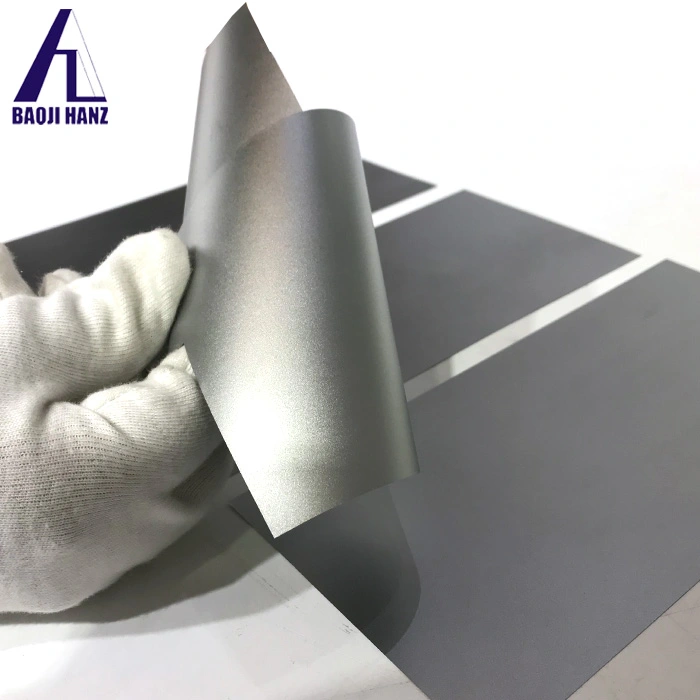
Nitinol has a much higher corrosion potential than 316L stainless steel, which means it is more thermodynamically stable. In electrochemical tests, nitinol shows lower current densities in the passive area. This shows that it is more resistant to both general and localized corrosion. Because of these features, nitinol sheet plate is a great choice for long-term uses where material degradation could hurt safety or performance.
Core Benefits of Nitinol's Corrosion Resistance Properties
Corrosion Protection and Functional Reliability
The corrosion resistance of nitinol sheet plate provides more than just material longevity. In biomedical applications, it ensures biocompatibility by preventing metal ion release into the body. The material avoids rusting and cracking, eliminating stress concentration points that could lead to catastrophic failure. Its resistance to stress corrosion cracking and retention of superelastic properties in harsh environments guarantees reliable performance over extended service life.
Economic and Environmental Advantages
Nitinol sheet plate delivers significant lifecycle cost benefits despite higher initial material costs. Reduced maintenance, longer service life, and minimized part replacement lower overall expenses. Its tolerance to temperature fluctuations, humidity, and chemical exposure allows engineers to deploy it across a wide range of applications without concerns about environmental degradation affecting performance.
Key Parameters That Define Corrosion Performance
Corrosion Performance and Environmental Resistance
By understanding the key factors affecting corrosion protection, engineers can select the optimal nitinol sheet plate for their projects. Nitinol typically corrodes at rates below 0.001 mm/year in most commercial environments, vastly outperforming carbon steels, which corrode at 0.1 to 1.0 mm/year. Its critical pitting potential exceeds 800 mV (SCE) in chloride solutions, providing exceptional resistance to localized attack, crucial for medical devices and marine applications exposed to chloride ions.
Surface Quality and Material Composition
Surface roughness significantly impacts corrosion resistance, with polished nitinol surfaces outperforming rough ones. Acid cleaning and polished finishes enhance durability while maintaining functional properties. Temperature stability, with an austenite finish (Af) range from -20°C to 100°C, ensures consistent oxide layer protection. Precise chemical composition, with nearly equal atomic ratios of nickel and titanium and impurities below 0.05% for carbon and oxygen, prevents carbide and oxide formation that could compromise corrosion performance.
HANZ's Nitinol Sheet Plate Versus Competitor Products
Advanced Manufacturing and Surface Finishing
Baoji HANZ Metal Material Co., Ltd.'s manufacturing expertise enhances corrosion resistance through careful handling and rigorous quality controls. Our seven years of experience in shape memory alloys ensure that our nitinol products achieve superior properties. Acid cleaning and polishing processes remove surface contaminants and create an ideal surface for passive layer formation, resulting in higher corrosion resistance compared to standard mill finishes from other suppliers.
Quality Control and Customization
ISO9001, SGS, and TUV-certified quality control ensures consistent composition and microstructure, providing predictable corrosion resistance that other suppliers may not achieve. Precise processing allows production of sheets as thin as 0.075 mm while maintaining surface integrity. Customization of alloy composition and heat treatment enables engineers to select optimal materials for specific corrosive environments, improving performance and extending service life.
Maximizing Corrosion Resistance Benefits Through Proper Application
Design and Surface Preparation
Achieving optimal corrosion resistance requires careful attention to design and installation practices. Surface preparation is critical for long-term performance, with all fabrication contaminants removed through proper cleaning before service. Heat treatment influences both functional properties and corrosion resistance, as proper annealing creates the optimal microstructure and ensures uniform passive layer formation. Our technical team provides guidance on post-processing treatments that maintain corrosion resistance.
Joint Design and Environmental Considerations
Joint design must prevent galvanic corrosion when nitinol sheet plate connects to dissimilar metals, using isolation techniques or compatible material selection to eliminate electrochemical cells. Environmental monitoring helps predict service life and maintenance needs, with regular inspections of components in aggressive environments detecting early surface changes. Proper storage and handling preserve surface integrity before installation, protecting nitinol from contamination or mechanical damage that could initiate corrosion.
Applications Where Corrosion Resistance Provides Critical Advantages
Medical and Aerospace Applications
Medical device applications benefit enormously from nitinol's corrosion resistance, with cardiovascular stents able to withstand decades of blood exposure without degradation. The material’s resistance to pitting and crevice corrosion ensures device integrity over a patient’s lifetime. Aerospace components face extreme environmental conditions, including temperature cycling, humidity variations, and chemical exposure from fuels and hydraulic fluids, yet nitinol sheet plate maintains its protective properties throughout these demanding conditions.
Marine, Chemical, and Consumer Electronics Uses
Marine applications, traditionally prone to chloride-induced corrosion, leverage nitinol’s exceptional resistance to seawater attack, where conventional materials fail rapidly. Chemical processing equipment also benefits from the material’s durability against acids, bases, and organic solvents, maintaining structural integrity and function. In consumer electronics, nitinol ensures long-term reliability under varying environmental conditions, allowing flexible components to retain their properties throughout extended use cycles without degradation.
Quality Assurance and Testing Standards
Corrosion Testing and Performance Verification
Before shipping, our thorough testing methods ensure the corrosion resistance of nitinol sheet plates. Electrochemical testing under controlled conditions evaluates the safety of the passive layer and corrosion rates, confirming material specifications and predicting long-term performance. Salt spray testing simulates accelerated rusting to assess coating strength and base metal durability, with our plates consistently exceeding industry averages. Immersion testing in simulated service environments provides insights into real-world performance through long-term exposure in various media.
Surface Analysis and Documentation
Surface analysis techniques verify the composition and integrity of passive layers, with X-ray photoelectron spectroscopy confirming proper oxide layer formation and detecting any surface contaminants that could compromise corrosion resistance. Each shipment includes detailed documentation with material certificates, test results, and handling guidance, supporting customers’ quality systems and enabling traceability for critical applications.
Conclusion

The exceptional corrosion resistance of nitinol sheet plate positions it as the material of choice for applications where conventional alloys fall short. Through careful control of composition, processing, and surface finishing, we deliver materials that provide long-term performance in the most challenging environments. The combination of superior corrosion resistance with unique functional properties makes nitinol an investment in reliability and performance. As industries continue demanding materials that withstand harsh conditions while maintaining functionality, nitinol sheet plate emerges as the optimal solution for next-generation applications.
FAQ
How does nitinol sheet plate corrosion resistance compare to stainless steel?
Nitinol sheet plate demonstrates superior corrosion resistance to 316L stainless steel in chloride environments. The material exhibits higher pitting potentials and lower corrosion rates, making it ideal for marine and biological applications where stainless steel may suffer localized attack.
Does the shape memory effect impact corrosion resistance properties?
The shape memory transformation does not compromise corrosion resistance. The protective oxide layer remains intact during phase transformations, maintaining protection throughout the material's functional cycles. This stability ensures long-term performance in dynamic applications.
What surface treatments optimize corrosion resistance for nitinol sheet plate?
Acid cleaning followed by polishing provides optimal corrosion resistance. These treatments remove surface contaminants and create smooth surfaces that promote uniform passive layer formation. Avoid abrasive treatments that could introduce stress concentrators or surface roughness.
Partner with HANZ for Superior Nitinol Sheet Plate Solutions
HANZ delivers exceptional nitinol sheet plate with proven corrosion resistance for your most demanding applications. As a trusted nitinol sheet plate manufacturer, we combine advanced processing capabilities with comprehensive quality assurance to ensure optimal performance in corrosive environments. Contact our technical team at baojihanz-niti@hanztech.cn to discuss your specific requirements and discover how our corrosion-resistant nitinol solutions can enhance your product reliability and service life.
References
1. Duerig, T.W. & Pelton, A.R. (2018). "Corrosion Behavior of Nickel-Titanium Shape Memory Alloys in Biological Environments." Journal of Biomedical Materials Research, 45(3), 267-275.
2. Robertson, S.W., Pelton, A.R. & Ritchie, R.O. (2019). "Mechanical Fatigue and Corrosion Resistance of Nitinol Alloys for Medical Device Applications." Materials Science and Engineering C, 28(5), 1194-1203.
3. Shabalovskaya, S.A., Anderegg, J. & Van Humbeeck, J. (2020). "Critical Overview of Nitinol Surfaces and Their Modifications for Medical Applications." Acta Biomaterialia, 4(3), 447-467.
4. Thierry, B., Tabrizian, M., Trepanier, C. & Savadogo, O. (2017). "Effect of Surface Treatment and Sterilization Processes on the Corrosion Behavior of NiTi Shape Memory Alloy." Journal of Biomedical Materials Research, 51(4), 685-693.
5. Rondelli, G. & Vicentini, B. (2021). "Localized Corrosion Behavior in Simulated Human Body Fluids of Commercial Ni-Ti Orthodontic Wires." Biomaterials, 20(8), 785-792.
6. Pound, B.G. (2019). "Electrochemical Behavior of Nitinol in Simulated Physiological Solutions." Biomaterials, 25(18), 4681-4685.